
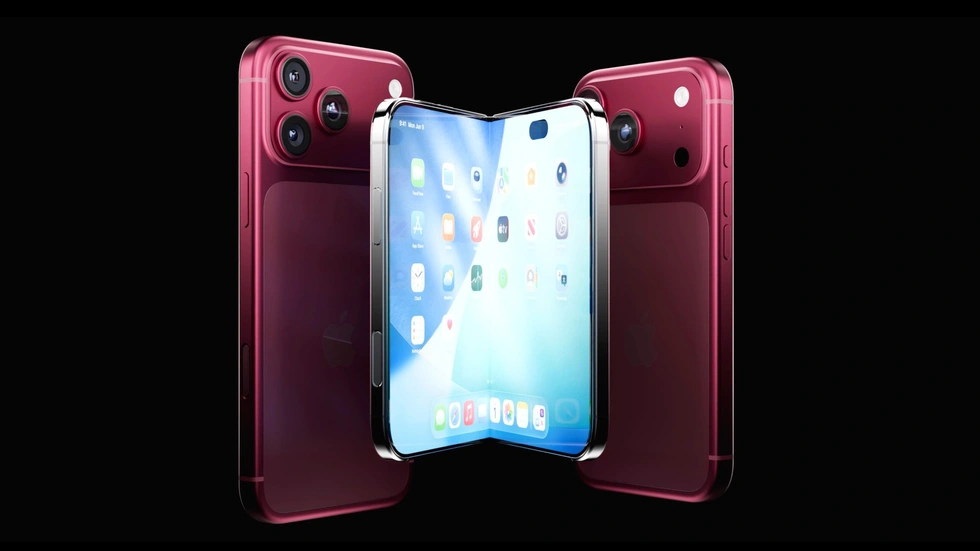
The expected $2,000-plus iPhone Ultra will test whether Apple can turn a niche form factor into its next growth engine.
MARKET INSIDER — Apple is expected to unveil its first foldable iPhone alongside the iPhone 18 Pro and Pro Max at its “Surprise and Shine” event on Wednesday, potentially introducing the company’s most consequential smartphone design since the original iPhone.
The event begins at 10 a.m. Pacific time on September 9—midnight on September 10 in Vietnam—and will be the first iPhone launch led by new Chief Executive John Ternus.
Apple has confirmed the event, but not the products. Reports concerning the iPhone Ultra name, specifications, prices and release schedule therefore remain unconfirmed until the presentation begins.
Key Highlights
- Apple is expected to introduce a book-style foldable iPhone priced above $2,000, targeting the most profitable end of the smartphone market.
- The iPhone 18 Pro lineup may add a 2-nanometer processor, variable-aperture camera and larger batteries rather than a major exterior redesign.
- The launch will test new CEO John Ternus’ ability to extend Apple’s premium hardware strategy while strengthening its position in artificial intelligence.
Apple’s first foldable iPhone takes center stage
The most closely watched product is a foldable device widely—but unofficially—referred to as the iPhone Ultra.
Reports indicate that it will use a book-style design with an external OLED display measuring approximately 5.5 inches. Opening the device would reveal a roughly 7.8-inch internal screen with proportions closer to an iPad mini than a conventional smartphone.
Apple is expected to emphasize a less visible display crease and a highly durable hinge, addressing two of the most persistent complaints about existing foldable phones.
The company entered the market years after Samsung, Huawei, Google and Motorola, allowing it to study problems involving screen durability, hinge mechanisms, application compatibility and device thickness.
That delayed approach is consistent with Apple’s broader strategy. It rarely needs to be first in a hardware category if it can deliver a more refined version, integrate it tightly with its software ecosystem and attract customers willing to pay a premium.
Foldables represented only a small percentage of global smartphone sales in 2025. Apple’s scale could nevertheless transform the category: analysts cited by Reuters expect the company to generate more than $45 billion from its foldable iPhone by the end of 2027.
A $2,000-plus test of premium demand
The iPhone Ultra is expected to start above $2,000, with higher-storage versions potentially exceeding $2,500.
That would make it considerably more expensive than Apple’s existing flagship phones and position it as a hybrid between an iPhone and a small tablet.
The strategy is designed to raise average selling prices and protect margins at a time when global smartphone volumes are under pressure and memory-chip costs are increasing.
A successful foldable could create revenue growth without requiring Apple to expand its overall market share. Selling 10 million devices at an average price above $2,000 would generate more revenue than substantially larger volumes of conventional smartphones.
The challenge is convincing consumers that the additional screen and folding mechanism justify the price.
Early buyers will probably include existing Pro Max customers, technology enthusiasts and users who would otherwise purchase both a premium phone and tablet. Broader adoption will depend on durability, battery life, application support and financing or trade-in programs that reduce the apparent upfront cost.
Apple’s official invitation confirms that the event will take place on September 9 at 10 a.m. Pacific time and will stream through its website and Apple TV app. It does not disclose the product lineup.
Ultra-thin design may require compromises
The foldable iPhone is expected to measure approximately 4.5 millimeters thick when open and about 9 millimeters when closed.
Achieving that profile could require several compromises.
Reports suggest that Apple may replace Face ID with Touch ID integrated into the side button because the folding body lacks sufficient space for the complete TrueDepth camera system.
The rear camera could use only wide and ultrawide lenses, omitting the telephoto camera found on Pro models. If confirmed, that would mean Apple’s most expensive iPhone would not necessarily have its most capable camera system.
The device may contain a battery in each half, producing combined capacity of approximately 5,400 to 5,800 milliampere-hours. Actual battery performance will depend on the size and efficiency of the internal display as well as Apple’s processor and software optimization.
A new A20 Pro chip manufactured using a 2-nanometer process is also expected. Such a transition could improve speed and energy efficiency, but claims of an 18% performance increase and energy savings of up to 30% should be treated as estimates until Apple publishes official benchmarks.
The phone may also use Apple’s internally designed C2 modem, although U.S. versions could retain Qualcomm components if Apple’s modem does not support the required mmWave 5G frequencies.
Software will determine whether folding matters
Hardware alone will not make the foldable device successful.
Apple must show that applications can move smoothly between the outside and inside displays, adapt to several aspect ratios and use the larger screen for more than simply enlarging existing iPhone interfaces.
Expected features include side-by-side applications, improved drag-and-drop controls and an iPad-style sidebar. Apple has reportedly encouraged developers to prepare applications for multiple display sizes.
The strongest use cases may involve email and calendars, document editing, video calls, trading platforms, gaming and media consumption.
If most applications merely stretch across the larger display, the Ultra risks becoming an expensive novelty. If Apple creates new multitasking behavior that remains simple enough for mainstream consumers, the device could reduce the distinction between the iPhone and iPad mini.
iPhone 18 Pro focuses on cameras and efficiency
The conventional iPhone 18 Pro and Pro Max are expected to retain the general design introduced by the previous generation.
The largest potential upgrade is a variable-aperture main camera. A physical aperture mechanism would allow the camera to control how much light reaches the sensor and provide more flexibility over depth of field.
Some reports suggest that the feature may be exclusive to the Pro Max rather than available on both models.
Apple may also adopt a three-layer stacked image sensor, potentially improving readout speed, low-light photography and dynamic range. The telephoto camera could receive a wider aperture, while the front and ultrawide cameras may remain broadly unchanged.
Other expected changes include a smaller Dynamic Island, larger batteries and simplified Camera Control hardware.
Rumored colors include dark cherry, light blue and silver. Images circulating online appear to show highly detailed display models, but they do not verify Apple’s final colors or materials.
The absence of a standard iPhone 18 would mark a more significant commercial change. Apple is reportedly preparing to launch only its premium models in September, postponing the regular iPhone 18 and other lower-priced devices until 2027.
A staggered schedule could spread revenue more evenly across the fiscal year while prioritizing higher-margin products during the important holiday quarter.
Watches, AirPods and software updates
Apple may also introduce the Apple Watch Series 12 and Apple Watch Ultra 4.
Neither is expected to receive a major redesign. Likely changes include updated processors, new materials and expanded health-monitoring capabilities. Reports suggest Apple has tested more continuous heart-rate collection, although battery and regulatory considerations may affect availability.
AirPods 5 could add an H3 processor, lower latency and improved sound quality. Apple is expected to preserve two versions, one with active noise cancellation and another without it.
The company should also announce release dates for iOS 27, iPadOS 27, macOS Golden Gate, watchOS 27, tvOS 27 and visionOS 27.
New software will be particularly important because Apple must demonstrate that its devices are becoming stronger platforms for artificial intelligence, not merely receiving annual hardware improvements.
John Ternus faces his first major test
The event marks the first iPhone presentation under John Ternus, who became Apple’s chief executive on September 1.
Apple announced the succession in April, with Tim Cook moving into the executive-chairman role after 15 years as CEO. Ternus previously led hardware engineering, giving him deep involvement in the products he will introduce.
His challenge extends beyond selling a foldable phone.
Investors want evidence that Apple can combine hardware, services and artificial intelligence into another durable upgrade cycle. The company must also manage supply constraints, component inflation, regulatory pressure and intense competition in China.
The foldable iPhone provides an opportunity to demonstrate that Apple can still reshape an established product category. It also creates risk: a device costing more than many laptops must be exceptionally reliable from its first generation.

What investors should watch
The first number will be the iPhone Ultra’s starting price. Pricing near $2,000 would broaden its potential audience, while a launch above $2,500 would position it as a lower-volume luxury device.
Availability will matter almost as much. A delayed or geographically limited launch could indicate manufacturing difficulties involving foldable displays and hinges.
Investors should also watch whether Apple publishes separate shipment expectations, offers aggressive financing and provides compelling foldable-specific software demonstrations.
For suppliers, confirmation of a 2-nanometer A20 Pro chip, advanced displays, new camera sensors and Apple-designed modems could benefit companies across Taiwan, South Korea and Japan.
Apple’s September event is unusually important because it combines a new form factor, a premium-pricing experiment and a leadership transition.
The iPhone Ultra does not need to replace the conventional iPhone immediately. It needs to prove that Apple can turn foldables from a specialist category into a commercially meaningful extension of its ecosystem.
