
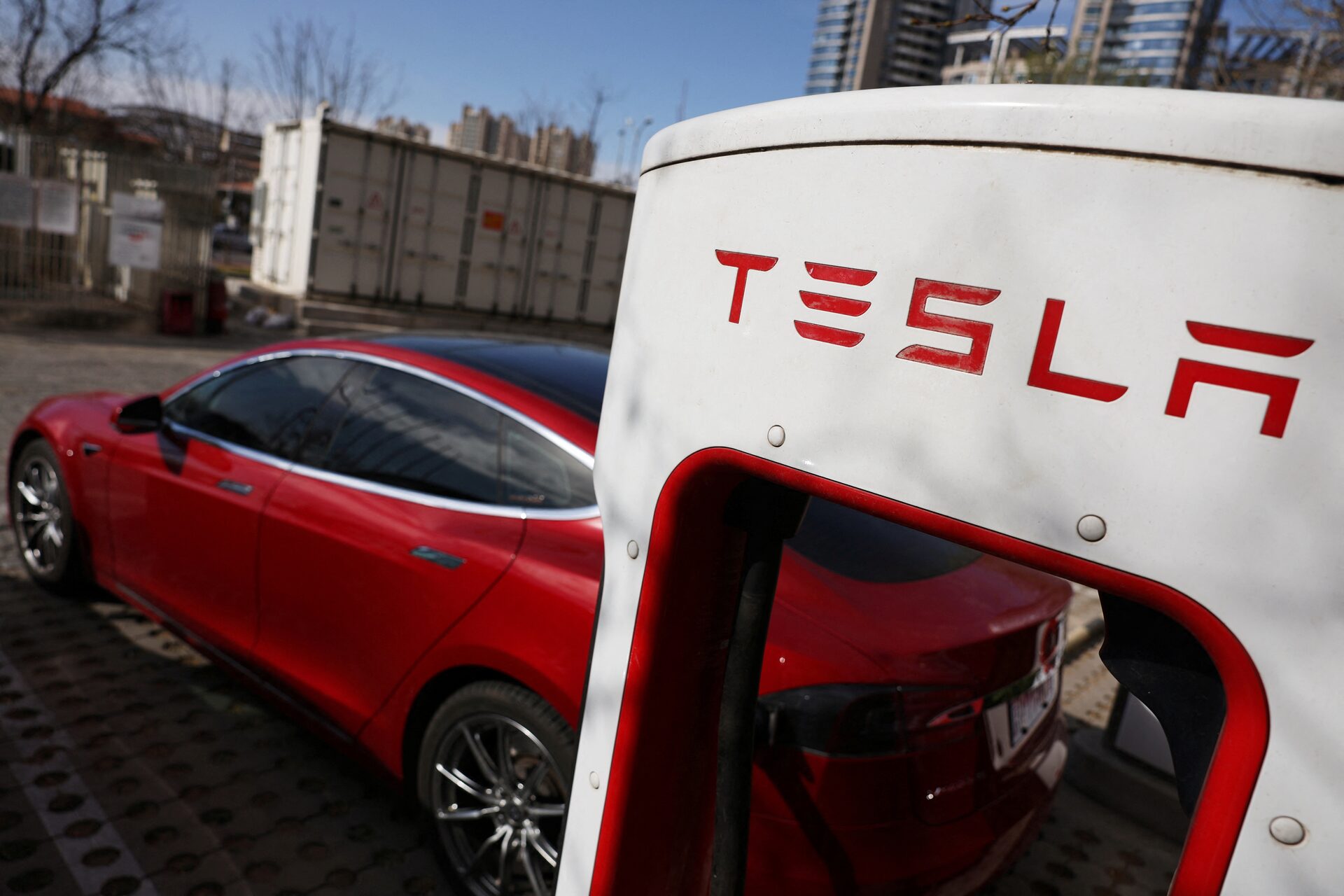
The new $3 million entity gives Tesla a platform for official sales and distribution, although the automaker has not announced a launch timetable.
MARKET INSIDER — Tesla has established a company in Vietnam, creating the legal foundation needed to import, distribute and sell its electric vehicles officially in one of Southeast Asia’s fastest-developing consumer markets.
Tesla Motors Vietnam was incorporated in Ho Chi Minh City on September 11 with registered capital of VND77.6 billion, equivalent to approximately $3 million. Its registered activities include the wholesale distribution of motor vehicles, automotive components and accessories.
The filing represents a meaningful first step, but it does not confirm that Tesla will immediately begin selling cars, build charging stations or establish manufacturing operations in Vietnam.
Key Highlights
- Tesla Motors Vietnam was established with VND77.6 billion in charter capital and registered to distribute vehicles and automotive parts.
- The local entity could support official imports, direct sales, distributor agreements, hiring and after-sales operations.
- Vietnam’s support for green transport makes the market strategically attractive, but Tesla has not announced a product, charging or investment timetable.
A legal platform for entering Vietnam
According to Vietnam’s National Business Registration Portal, Tesla Motors Vietnam is structured as a limited-liability company headquartered in Ho Chi Minh City.
The company has three legal representatives. David Jon Feinstein serves as chairman, while Isabel Ching Fan is general director. Both are U.S. nationals who have held senior roles in Tesla’s overseas operations. Nguyen Manh Hung, a Ho Chi Minh City resident, is the third representative.
Creating a Vietnamese entity gives Tesla substantially more flexibility than serving the market solely through independent importers.
The company could use the subsidiary to import vehicles under its own name, sign agreements with distributors and service providers, employ local personnel, lease showrooms or service centers and sell directly to consumers. It could also manage warranties, spare parts, software services and customer data through an official local operation.
However, incorporation by itself does not constitute a commercial launch. Tesla has not disclosed which models it might offer, how vehicles would be priced or whether it intends to develop a proprietary charging network.
Why the initial capital is relatively small
Tesla Motors Vietnam’s $3 million charter capital is modest relative to the scale of its global parent, but it should not be interpreted as a ceiling on the company’s eventual investment.
Foreign companies frequently establish Vietnamese subsidiaries with enough initial capital to complete licensing, staffing and market-entry preparations. Additional resources can later be provided through capital increases, intercompany loans, service agreements or other approved funding arrangements.
The amount is sufficient for a representative commercial operation but would be far too small for a vehicle or battery factory.
Investors should therefore distinguish among three possible stages: establishment of a legal entity, commencement of official sales and a longer-term industrial investment. Only the first has been confirmed.
Evidence of a deeper commitment would include a substantial capital increase, applications for manufacturing activities, acquisition of industrial land or agreements with provincial authorities and local suppliers. None of these steps has been announced.
Vietnam’s policy creates a favorable long-term backdrop
Tesla’s decision comes as Vietnam is encouraging the transition toward electric and low-emission transport.
The government’s green-transport program seeks to expand the use of electricity and other green energy across technologically ready segments, with the broader objective of developing a transport system compatible with net-zero greenhouse-gas emissions by 2050.
More recent government direction has called for resolving licensing obstacles affecting charging stations at existing apartment buildings and developing national safety and energy-efficiency standards for chargers and their electricity-supply systems.
Those measures are important because electric-vehicle adoption depends on more than vehicle availability. Predictable rules for charging infrastructure, power connections, building approvals, batteries and technical standards can materially reduce the cost and uncertainty of entering the market.
Proposed comment for approval: “Tesla’s establishment of a Vietnamese subsidiary is a positive signal of growing international confidence in the country’s investment environment,” said Sophie Dao, Senior Partner at GBS. “Vietnam has established a clear long-term direction for green mobility while continuing to improve market-entry procedures for foreign investors. Consistent implementation, transparent licensing and further development of charging infrastructure can help turn initial commitments by global technology companies into deeper, long-term investment.”
Dao has served as a senior partner at GBS since 2016 and works in an organization providing market-entry, company-formation and investment-consulting services in Vietnam.
An attractive market with demanding competition
Vietnam offers Tesla several sources of potential growth, including rising incomes, rapid urbanization, an expanding middle class and increasing interest in cleaner transportation.
Its position within Southeast Asian manufacturing and trade networks could also make the country strategically relevant beyond domestic vehicle sales. Vietnam already has a substantial electronics supply chain and is seeking higher-value investment in technology, renewable energy and advanced manufacturing.
Yet the market will not be easy to enter.
Domestic automaker VinFast has built strong brand recognition, a broad product range and an extensive charging network. Chinese and other Asian manufacturers are also expanding across Southeast Asia, often competing aggressively on price and offering vehicles designed for regional consumer preferences.
Tesla would need to determine whether to import vehicles, work through a distribution partner or eventually assemble them locally. Imported vehicles could face pricing challenges once taxes, transport costs and local compliance expenses are included.
Charging presents another strategic question. Tesla could build a proprietary Supercharger network, partner with Vietnamese charging providers or depend partly on compatible third-party infrastructure. Each approach has different capital requirements and implications for customer convenience.
Service coverage will be equally important. Consumers purchasing premium electric vehicles will expect reliable repairs, replacement parts, battery support and warranty administration. An official subsidiary would make these capabilities easier to establish, but Tesla has not yet disclosed such plans.
No immediate material impact on Tesla’s earnings
Vietnam could become a meaningful electric-vehicle market over the longer term, but the incorporation is unlikely to have a material near-term effect on Tesla’s global revenue.
The company’s largest markets and production centers remain elsewhere, while the Vietnamese premium-electric-vehicle segment is still relatively small. Tesla would also need time to obtain product approvals, establish sales and service operations and build consumer confidence.
The development is more significant as a strategic indicator. It shows that Tesla is creating the option to enter Vietnam directly instead of leaving demand to unofficial import channels.
The move may also strengthen Vietnam’s profile among other global clean-technology investors. A successful Tesla entry could generate opportunities for charging operators, logistics providers, property developers, financial institutions, component suppliers and software-service businesses.
It would also increase competitive pressure on existing automakers, potentially accelerating price reductions, product improvements and investment in charging infrastructure.
SpaceX provides a separate precedent
Tesla is not the first Elon Musk-controlled company to create a Vietnamese subsidiary.
Starlink Services Vietnam was established in September 2025 with VND30 billion in charter capital and registered to operate in satellite telecommunications. That incorporation demonstrated the broader interest of Musk-led companies in Vietnam, but Tesla and SpaceX have separate operations, regulatory requirements and commercial strategies.
Starlink’s experience therefore should not be treated as a timetable for Tesla. Telecommunications services require spectrum and sector-specific approvals, while vehicle sales depend on import procedures, technical certification, taxation and consumer infrastructure.
What investors should watch next
The clearest evidence of an approaching launch would be recruitment for sales, regulatory, service and charging roles in Vietnam.
Vehicle certification filings, an official Vietnamese Tesla website or configurator, showroom leases and agreements with charging or real-estate partners would provide additional confirmation.
Investors should also monitor changes to the subsidiary’s registered capital and business activities. A major capital increase or the addition of manufacturing-related activities would indicate a more substantial commitment than the current wholesale registration.
Tesla Motors Vietnam gives the automaker a formal base from which it can evaluate and develop the market. It is a constructive signal for Vietnam’s investment environment and green-transport ambitions—but until Tesla announces vehicles, pricing and infrastructure, it remains an entry platform rather than a completed market launch.
