
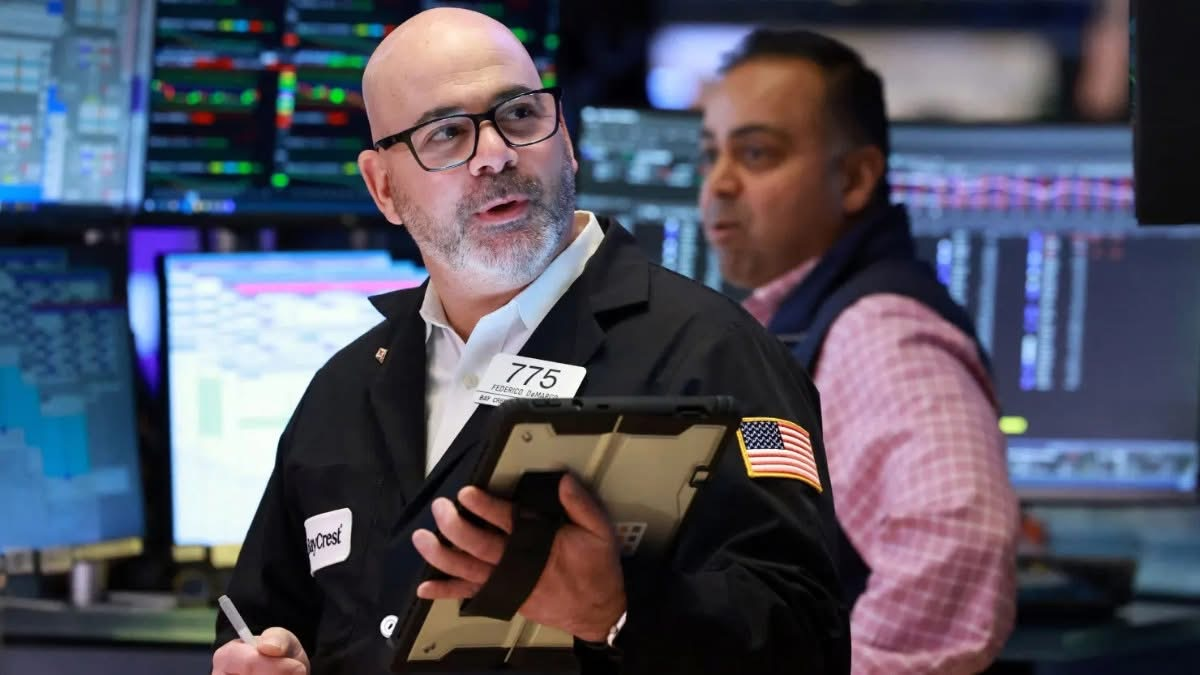
Stocks climb as Trump signals possible end to conflict, but oil markets warn risks remain
MARKET INSIDER – Global markets opened April with a sharp shift in sentiment as investors bet on a potential de-escalation in the U.S.-Iran conflict—an outcome that could stabilize energy flows and ease inflation pressures worldwide. Equities surged while oil prices pulled back, reflecting rising optimism that one of the most critical geopolitical flashpoints may be nearing resolution.
The S&P 500 rose 0.6%, the Nasdaq Composite gained 0.7%, and the Dow Jones Industrial Average climbed 363 points, or 0.8%, as investors rotated back into risk assets. The rally followed comments from Donald Trump indicating that Iran had signaled interest in a ceasefire—conditional on restoring stability in the strategically vital Strait of Hormuz, through which roughly 20% of global oil supply flows.
Energy markets reacted swiftly. West Texas Intermediate crude slipped about 1% to hover just above $100 per barrel, while Brent crude fell 2% to near $101. The pullback signals a partial unwinding of the geopolitical risk premium that had driven prices sharply higher in recent weeks, though oil remains elevated relative to historical norms—highlighting lingering uncertainty over supply disruptions.
The market rebound builds on a late-March rally fueled by unconfirmed reports that Iranian President Masoud Pezeshkian is open to negotiations, provided Tehran’s demands—including reparations and security guarantees—are addressed. Such developments have injected cautious optimism into global markets already strained by inflation, tightening monetary policy, and fragile supply chains.
Yet not all investors are convinced the rally is sustainable. Karen Finerman, CEO of Metropolitan Capital Advisors, warned that oil prices may be a more reliable indicator of underlying risk than equities. Brent crude recently closed above $118 per barrel—its highest level since mid-2022—suggesting that energy traders remain skeptical of a swift resolution. “Oil is telling the truth,” she noted, hinting that equity gains may reflect short-term positioning rather than a durable shift in fundamentals.
Attention now turns to Trump’s scheduled national address, where markets expect greater clarity on the timeline and conditions for a potential U.S. military withdrawal. For global investors, the stakes extend far beyond the Middle East: a sustained easing of tensions could lower energy costs, stabilize inflation trajectories, and reshape central bank policy expectations from Washington to Frankfurt and beyond.
If diplomacy prevails, this could mark a turning point not just for geopolitics, but for global markets searching for their next catalyst. But if oil’s caution proves prescient, the current rally may be less a new beginning—and more a temporary reprieve in an increasingly volatile world.
