
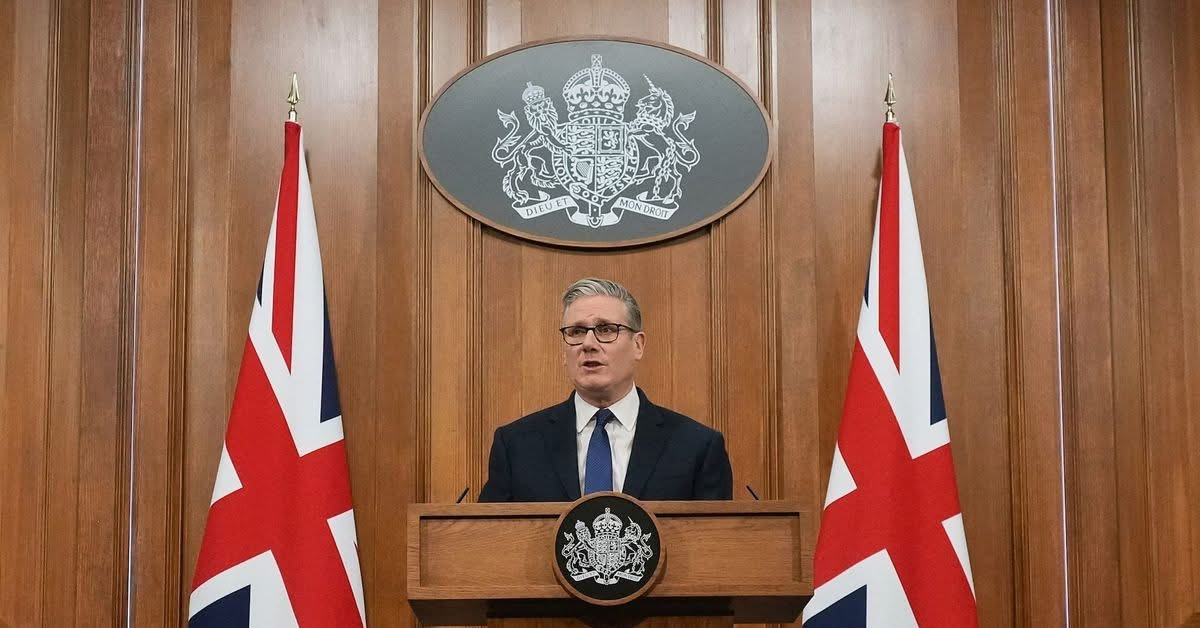
Starmer signals strategic pivot amid Trump tensions and global energy risks tied to Strait of Hormuz crisis
MARKET INSIDER – As war in the Middle East rattles global markets and threatens energy flows, the United Kingdom is quietly redrawing its geopolitical map. Prime Minister Keir Starmer has signaled a decisive shift toward deeper economic and defense ties with Europe—marking a potential turning point in Britain’s post-Brexit identity as tensions with the United States escalate.
The catalyst is the widening rift with Donald Trump over the Iran conflict, a dispute that underscores broader fractures within the Western alliance. With oil supply routes at risk and global security architecture under strain, London’s recalibration is not just political—it is economic, strategic, and deeply consequential for investors worldwide.
Speaking from Downing Street, Starmer warned that the fallout from the Iran war could shape global stability “for a generation,” framing closer European cooperation as essential to safeguarding Britain’s long-term interests. The move comes ahead of a planned UK-EU summit this summer, where resetting ties with Brussels will take center stage—an effort to repair what he described as the “deep damage” of Brexit without formally rejoining the bloc’s single market or customs union.
The shift reflects a growing divergence between London and Washington. Once positioned as a bridge between Europe and the U.S., Starmer has resisted pressure from Trump to deepen military involvement in Iran, rejecting requests to launch attacks from British bases. While the UK has agreed to defensive operations to protect regional stability and its citizens, the public clash—amplified by Trump’s personal criticism—signals a breakdown in what has long been considered the West’s most reliable bilateral alliance.
At the same time, the crisis has exposed the fragility of global energy infrastructure. The potential closure of the Strait of Hormuz—a chokepoint responsible for roughly 20% of the world’s oil supply—has triggered urgent multilateral coordination. Britain is convening talks with key economies including France, Germany, Japan, and the UAE, exploring phased operations ranging from mine-clearing to tanker protection. For markets, the stakes are immediate: prolonged disruption could drive oil price volatility, inflation shocks, and renewed pressure on central banks already navigating fragile recoveries.
Domestically, Starmer faces political headwinds. Critics argue that pivoting toward Europe risks reopening Brexit-era divisions, while others fault the government for failing to address rising energy costs at home. Yet the broader signal is unmistakable: in a world of escalating geopolitical fragmentation, Britain is prioritizing regional alliances over transatlantic loyalty.
For global investors and policymakers, the implications extend far beyond London. If the UK’s realignment accelerates, it could reshape capital flows, defense cooperation, and regulatory alignment across Europe—while further weakening the cohesion of the Western bloc. The deeper question now is whether this is a temporary tactical adjustment, or the beginning of a structural shift in the post-war global order—one where alliances are no longer fixed, but fluid and transactional.
