
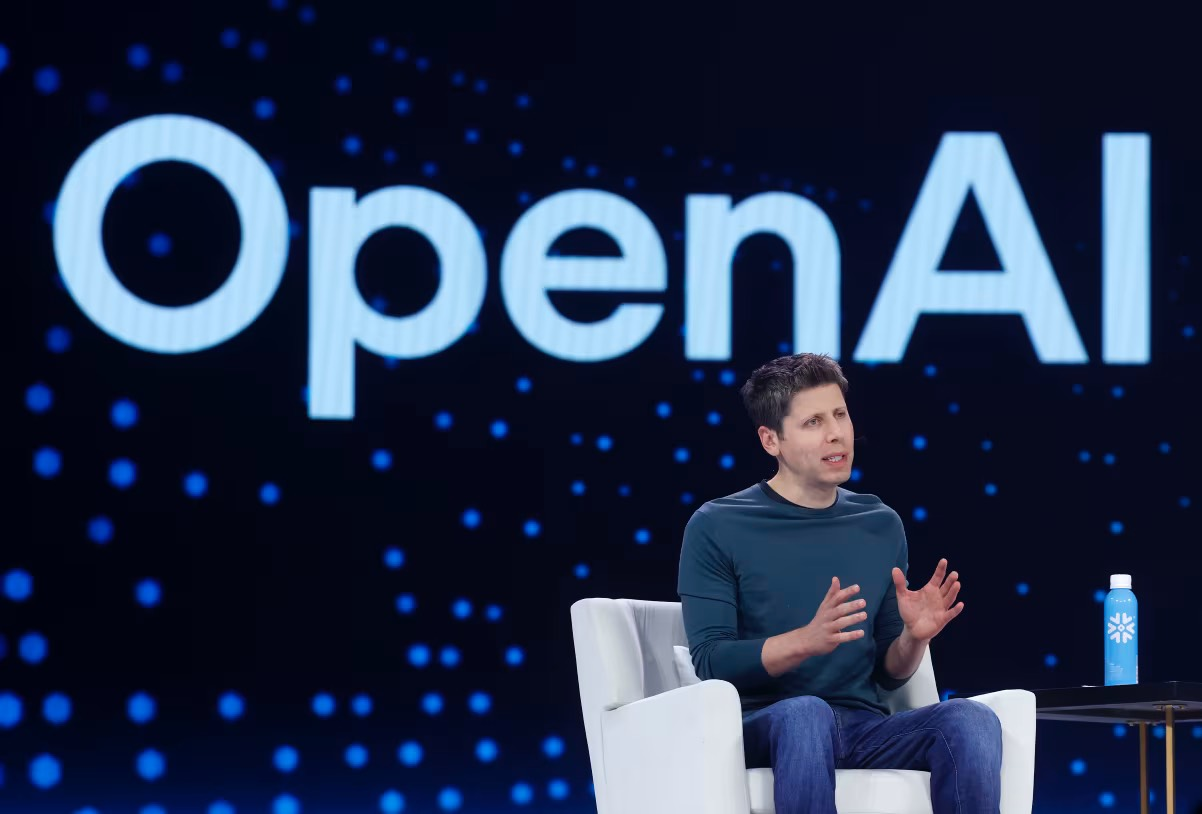
OpenAI’s meteoric rise has created a dynamic unlike any seen before in Silicon Valley, positioning the private artificial intelligence lab not just as a market leader, but as an apex predator whose dominance is reshaping the calculus for international investors, established tech incumbents, and nascent startups alike. The company, driven by CEO Sam Altman, is demonstrating an unrivaled capacity and willingness to deploy massive capital, vertically integrating across the entire AI stack, from data center infrastructure to consumer applications.
This reality is creating both a “gold rush mentality” and a profound sense of unpredictability in the market, making traditional investment theses challenging to apply.
The New Rules of Engagement
Historically, the threat of being “swallowed up or run over” by a large, publicly-traded incumbent was a daily reality for successful tech startups. What makes OpenAI a different kind of beast is a confluence of factors:
- Secretive and Cash-Rich: As a privately held entity, OpenAI is shielded from Wall Street’s constant scrutiny, allowing it to spend “other people’s money” on an unrivaled scale. This “exuberance of capital raising, capital spending and vertical integration” is unprecedented in past market cycles, according to Index Ventures partner Nina Achadjian.
- Full-Stack Vertical Integration: In a dizzying array of recent mammoth deals and product rollouts, OpenAI is investing “up and down the stack.” This ranges from securing massive infrastructure partnerships with giants like Nvidia, Broadcom, Oracle, and AMD for its White House-endorsed data center buildout, to launching consumer applications like the Sora AI video app, which hit a million downloads in under five days.
- Massive User Reach: Its flagship ChatGPT chatbot has already reached 800 million weekly users, giving it an unparalleled distribution channel that dwarfs the initial reach of past category-defining companies like Amazon, Google, Facebook, and Apple in their early market booms.
This aggressive, vertically integrated strategy is leading to what Chemistry Ventures managing partner Ethan Kurzweil calls the “fastest-moving time in startup creation and disruption” in his 17 years of investing.
Navigating the “Opaque” Investment Terrain
For investors and entrepreneurs, the challenge is clear: “Where is the white space?”
Past market cycles saw large platform companies—Google, Apple, Facebook, and Amazon—release tools that often competed directly with, and sometimes wiped out, their customers. OpenAI is accelerating this phenomenon, rapidly launching services that compete with AI coding tools, agent kits, and other apps running inside ChatGPT.
However, a prevailing view among venture capitalists is that the sheer size of the AI opportunity means a “gold rush mentality where a lot of companies will do well.” Investors are advising startups to target niches that feature:
Regulated Industries: Companies targeting heavily regulated sectors like finance and healthcare are seeing significant capital inflows, as buyers in these areas often demand specialized solutions that “speak their language.” Examples include Heidi Health and DUOS in healthcare, and EvenUp and Spellbook for legal services.
Specialized Domain Knowledge: Focusing on highly niche, technical areas where general-purpose AI models are unlikely to compete directly. For example, Index Ventures led a $25 million round in Quilter, which uses AI to develop software for printed circuit boards (PCBs)—a space historically dominated by design firms like Cadence and Synopsys.
Momentum is the New Moat
The concept of a “technical moat” is proving difficult to sustain at the foundational model level, where OpenAI faces intense competition from Anthropic, Google, and Meta. Instead, the advantage companies possess is momentum.
OpenAI’s strategy of forging hundreds of billions of dollars worth of high-profile deals while simultaneously providing its expanding user base with more features is a clear demonstration of this principle. As Exa Labs co-founder Jeff Wang noted, while his search-built-for-AI company may compete with a user-base that is turning to ChatGPT instead of Google, “the pie is really big and OpenAI is just one company.”
The record levels of venture growth-stage investment, particularly the outsized billion-dollar-plus AI deals, underscore the market’s belief that AI will continue to dominate the deal spectrum, even with the presence of a goliath like OpenAI.
The defining characteristic of this new AI era, however, remains the speed and lack of transparency with which the market leader operates, making agility and specialization the key tenets for any investor or entrepreneur looking to capitalize on the boom.
What areas of the AI stack—infrastructure, foundational models, or vertical applications—do you believe offer the highest risk-adjusted returns for international investors given OpenAI’s dominance?
