
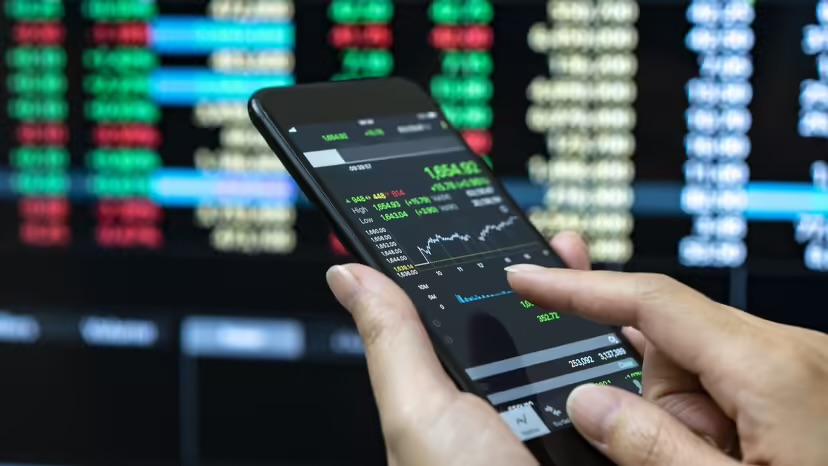
MARKET INSIDER – In a stunning reversal that shattered a month-long period of market calm, a single social media post from President Donald Trump on Friday afternoon wiped an estimated $2 trillion from the value of the U.S. stock market. The sudden, violent sell-off serves as a harsh reminder of the outsized influence the President’s one-man trade policy still holds over global markets.
The S&P 500 was on the verge of a new all-time high before the announcement.2 It ultimately closed down 2.7%, its worst single-day performance since the tariff-induced sell-off in early April. The tech-heavy Nasdaq Composite—highly sensitive to China trade—sank even further, tumbling 3.56% from its session high. The Dow Jones Industrial Average dropped 879 points, a 1.9% loss.
Historical Precedent and the Spark
The catalyst for the market’s unraveling was an escalation in the US-China trade dispute, triggered by China’s move overnight into Thursday to tighten its grip on the rare earth metals market.6 China, which controls about 70% of the global supply of these critical resources (essential for semiconductors, EVs, and advanced missiles), announced new export licensing requirements.
In response, President Trump took to Truth Social, accusing China of holding the world “captive” and announcing that “One of the policies that we are calculating at this moment is a massive increase of tariffson Chinese products coming into the United States of America.”
Historically, markets have struggled with the unpredictability of the President’s trade maneuvers. The sharp drop is reminiscent of the “Liberation Day” tariff announcement in April, which also triggered a cascading global sell-off. While investors had recently become comfortable with the existing ~40% tariff rate on China, the threat of a “massive increase”—followed up after the bell with a promise of 100% tariffs “over and above any tariff that they are currently paying”—sent a clear signal: the consensus of an eventual, peaceful resolution between the two economic giants is now shattered.
The broad nature of the sell-off underscores the fear. While chipmakers like Nvidia (down 5%) and AMD(down nearly 8%), and giants like Apple (down 3%) and Tesla (down 5%) led the decline, 424 members of the S&P 500 closed in the red. This suggests a forced de-risking by professional investors, liquidating holdings across the board—including financials like Bank of America and Wells Fargo—to raise cash against sudden market uncertainty.
What Happens Next Week: Two Scenarios
The market’s immediate path will be determined by whether investors view this as a genuine threat of an all-out trade war or a mere negotiating tactic. Stock futures resume trading Sunday evening at 6 p.m. ET (the bond market is closed Monday for Columbus Day).
Scenario 1: Escalation and Extended Correction
The greatest risk for the coming week is that the initial shock gives way to panic, potentially driven by the liquidation of overleveraged hedge funds or contagion fears related to issues like the First Brands bankruptcy. The market is also digesting the President’s follow-up threat of export controls on “any and all critical software,” a move that could significantly hurt AI leaders and amplify the current tech rout.
If the market believes the 100% tariffs will take effect next month, the selling pressure is likely to continue on Monday. Investors will price in the severe impact of higher inflation, supply chain disruption, and China’s almost-certain retaliation, which would likely hit the U.S. economy’s ability to manufacture automobiles, solar panels, and other imported-parts-reliant goods. A break below the S&P 500’s September lows (around the 6,370 level) could signal a much deeper correction, though the index remains up over 11% for the year-to-date.
Scenario 2: The “Buy the Dip” Bluff
A significant contingent of traders and strategists, referencing historical precedent, are calling this a buy-the-dip opportunity. As Freedom Capital Markets’ Jay Woods noted, previous severe tariff threats—including those in April—were often subsequently pared back through negotiation and exemptions. Calling the President’s bluff proved profitable then, fueling a monster comeback rally.
From this perspective, the current sell-off merely resets the S&P 500 to its lowest level in a month, unwinding the recent “complacent” calm that saw the longest streak without a 1% move since January 2020. The underlying fundamentals—such as the seemingly unstoppable AI trade and corporate earnings—remain strong, and investors may anticipate that the tariffs will be used as leverage for a later, more favorable deal at the now-questionable APEC summit.
The Week Ahead: Investors must brace for a volatile start to the week. The market will be closely watching any further comments from the White House or Beijing, as well as the opening of stock futures on Sunday night. The key battleground will be the debate between those fearful of a trade war’s economic damage and those willing to bet that this is merely a negotiating tactic—a new high-stakes game of chicken with the global economy.
