
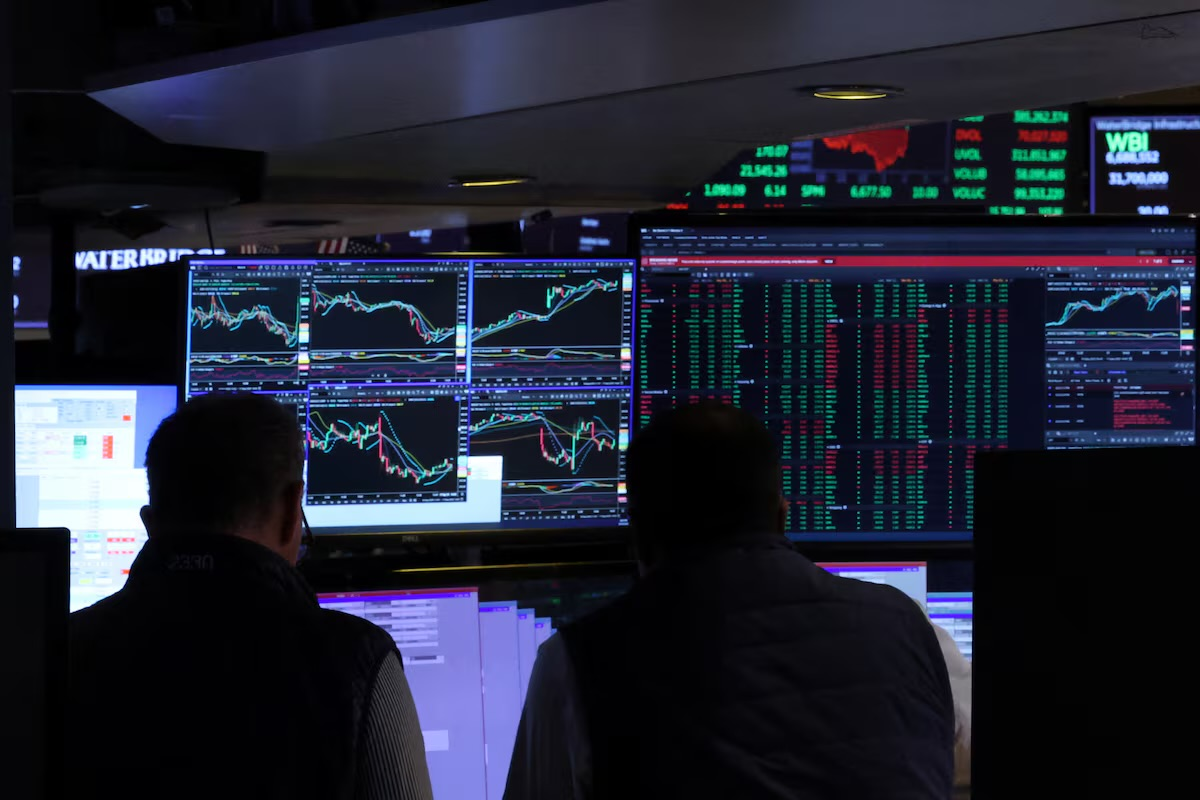
For international investors and readers of Market Insider, the recent market action in the U.S. signals a complex interplay of domestic financial risk, political uncertainty, and underlying speculative dynamics.
U.S. stock futures edged lower on Thursday night, extending a market sell-off from the previous session driven by renewed fears over the health of regional banks and their lending practices. This dip in futures—with the Dow slipping 0.2%, and S&P and Nasdaq 100 futures both falling over 0.3%—underscores the fragility of investor sentiment despite a generally strong week for U.S. indices.
The major U.S. indexes closed Wednesday in the red, with the Dow losing 0.7%, the S&P 500 down 0.6%, and the Nasdaq Composite declining 0.5%. This slump was triggered by a notable decline in financial stocks after regional banking names like Zions and Western Alliance disclosed issues with bad loans. These disclosures have amplified concerns about potentially loose lending standards across the sector, a worry underscored by the recent bankruptcies of two auto industry-related companies. The SPDR S&P Regional Banking ETF (KRE), a key barometer for the sector, plummeted over 6% in the session, marking its fourth consecutive week of losses.
Sectoral Impacts: Pharmaceuticals and Tech in Focus
Beyond the banking sector, after-hours trading saw notable moves in individual stocks:
- Interactive Brokers Group fell more than 2% despite strong quarterly results.
- Oracle also slipped over 2% after the cloud computing giant provided its long-term financial outlook.
- Drugmakers Eli Lilly and Novo Nordisk moved lower following a briefing where President Donald Trump suggested his administration was negotiating significantly lower prices for their blockbuster obesity drugs. This political intervention on drug pricing has traditionally been a source of volatility for pharmaceutical giants with significant U.S. exposure.
The Return of Volatility and “Speculative Froth”
The heightened anxiety on Wednesday was clearly visible in the markets. The Cboe Volatility Index (VIX)—often called Wall Street’s “fear gauge”—jumped, while Treasury yields and the U.S. dollar moved lower.6Simultaneously, gold prices climbed to fresh records, reaffirming its status as a safe-haven asset amid widespread global uncertainty.
Commenting on the banking concerns, Liz Ann Sonders, chief investment strategist at Charles Schwab, highlighted a concurrent issue: the growth of “speculative froth” in the public market. Sonders noted that investors have been chasing riskier profiles, including quantum computing, drones, and unprofitable tech stocks.
“When you have that speculative froth and then you have sort of a bigger picture potential issue, those two can sometimes collide and cause an increase in volatility,” Sonders said. Interestingly, she suggested much of this froth is now concentrated not in the mega-cap names, but in smaller pockets of the market, such as the Russell 2000 index, which paradoxically hit a fresh high on Wednesday.
A Confluence of Headwinds
For international investors tracking the world’s largest equity market, these financial concerns arrive amidst a backdrop of persistent macroeconomic and political headwinds:
- U.S. Government Shutdown: The ongoing, multi-week U.S. government stoppage has resulted in an indefinite halt of crucial economic data releases from federal agencies. This data blackout clouds the visibility of the U.S. economy’s true health, complicating the decision-making process for the Federal Reserve and international central banks.
- Trade Tensions and Tariffs: Tensions over global trade and tariff policies continue unabated, adding a layer of uncertainty to corporate supply chains and profitability.
- Elevated Valuations: Concerns over elevated market valuations, particularly those fueled by the artificial intelligence boom, remain a prominent feature in market discourse.
Despite the turbulence, the S&P 500 is up nearly 1.2% this week, with the Dow adding 1% and the Nasdaq Composite gaining 1.6%, largely propped up by a seemingly strong start to the third-quarter earnings season. However, the sell-off fueled by regional bank worries serves as a stark reminder that while earnings support a bullish narrative, underlying financial stability issues and political dynamics remain critical drivers of volatility. International investors will need to closely monitor the regional banking sector and the trajectory of U.S. political risks as core indicators for near-term market direction.
