
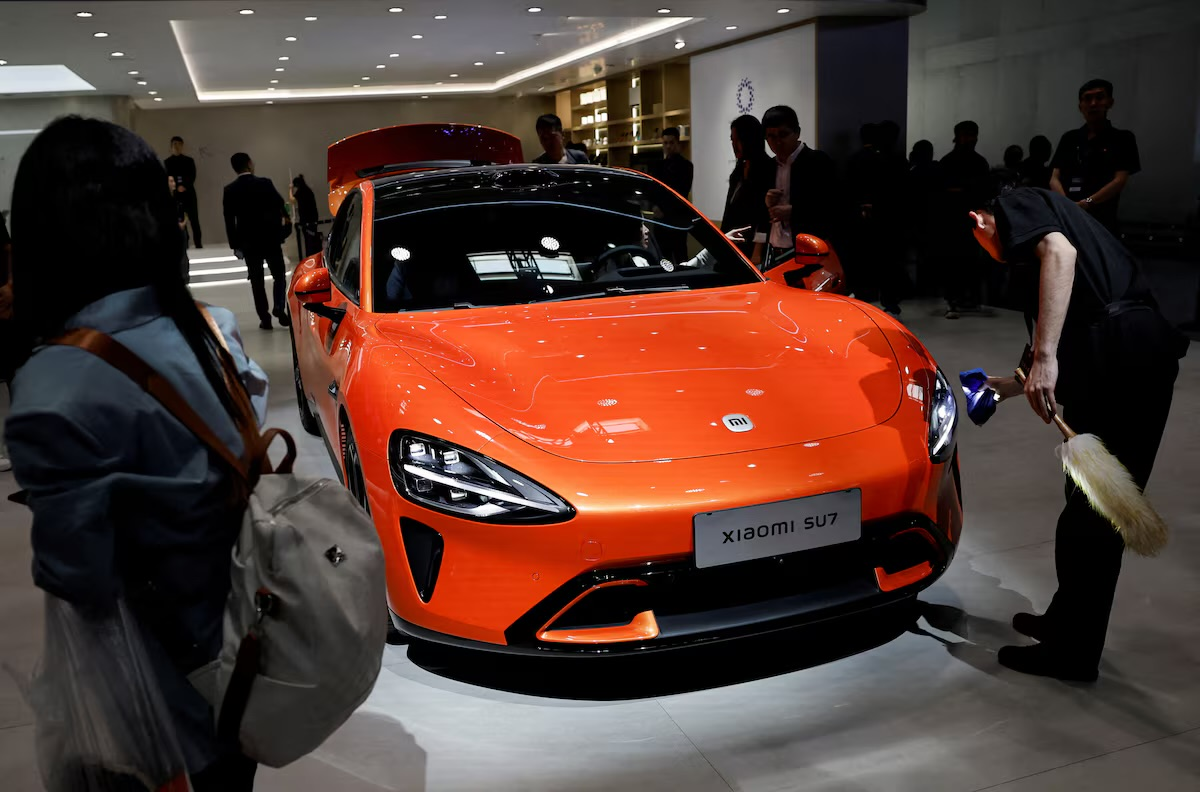
BEIJING – Shares of Chinese tech giant and burgeoning electric vehicle (EV) maker Xiaomi (1810.HK) posted their steepest weekly loss in over three-and-a-half years, tumbling 11.7% amid escalating safety concerns surrounding its best-selling SU7 sedan. The sharp decline was triggered by media reports detailing two separate, high-profile accidents involving the model this week.
On Friday, the stock closed 3.7% lower at HK$45.96 ($5.92), its lowest close since late April 2024. The 11.7% weekly tumble marks the worst such decline since late January 2022, serving as a harsh reminder of the risks inherent in the hyper-competitive EV sector, despite the shares still being up by a third year-to-date.
Two Accidents Fuel Investor Concern
The recent market sell-off was directly linked to two widely reported incidents involving the SU7 model:
- Wuhan Incident (Friday): Local government-backed newspaper, Sanxiang Metropolitan Daily, reported that an SU7 sedan lost control in the central city of Wuhan. The vehicle reportedly knocked down guard rails, drove into the opposite lane, and collided with a van. Video footage circulated by the newspaper showed the car with a broken left front wheel axle.
- Chengdu Incident (Monday): This incident involved a fatal collision in Chengdu. Chinese media reported that a 31-year-old man, suspected of drunk driving, was killed after his SU7 Ultra caught fire. Crucially, passersby were reportedly unable to open the car doors to pull him out of the burning vehicle.
Corporate Silence and CEO’s Safety Plea
The incidents have put an immediate spotlight on Xiaomi’s crisis management. The company has not publicly acknowledged that the accidents involved its electric vehicles and did not respond to a request for comment. While Chinese police issued a statement detailing the Chengdu crash, the Xiaomi brand was not named.
In his first public appearance after the Chengdu accident, Xiaomi CEO Lei Jun delivered a speech at an industry event in Beijing on Thursday. Lei Jun made no mention of the recent crashes but called on the industry to focus resources and energy on technology R&D with “safety as the basis” under the government’s guidance. He also urged a joint industry boycott of “online trolls and malicious negative campaigns,” suggesting an effort to curb the negative commentary circulating online.
Market Background and Prior Safety Issues
Xiaomi, traditionally a dominant smartphone maker, launched its SU7 EV in March 2024, quickly making waves in the Chinese market. The electric sedan had successfully begun outselling Tesla’s (TSLA.O) Model 3 on a monthly basis since December before handing the lead back in September.
However, the brand is already grappling with persistent safety narratives. Last month, the market regulator oversaw a software update recall for over 115,000 SU7 sedans to fix potential safety issues when its assisted driving features were engaged. The latest incidents also echo an earlier deadly crash involving an SU7 in assisted driving mode at the end of March, though the company saw bumper orders for its electric SUV YU7 in late June despite that earlier event.
For international investors, the recent stock performance suggests that the immediate-term focus has shifted from the company’s impressive market entry and initial sales success to the critical long-term concerns surrounding vehicle safety and corporate transparency.
