
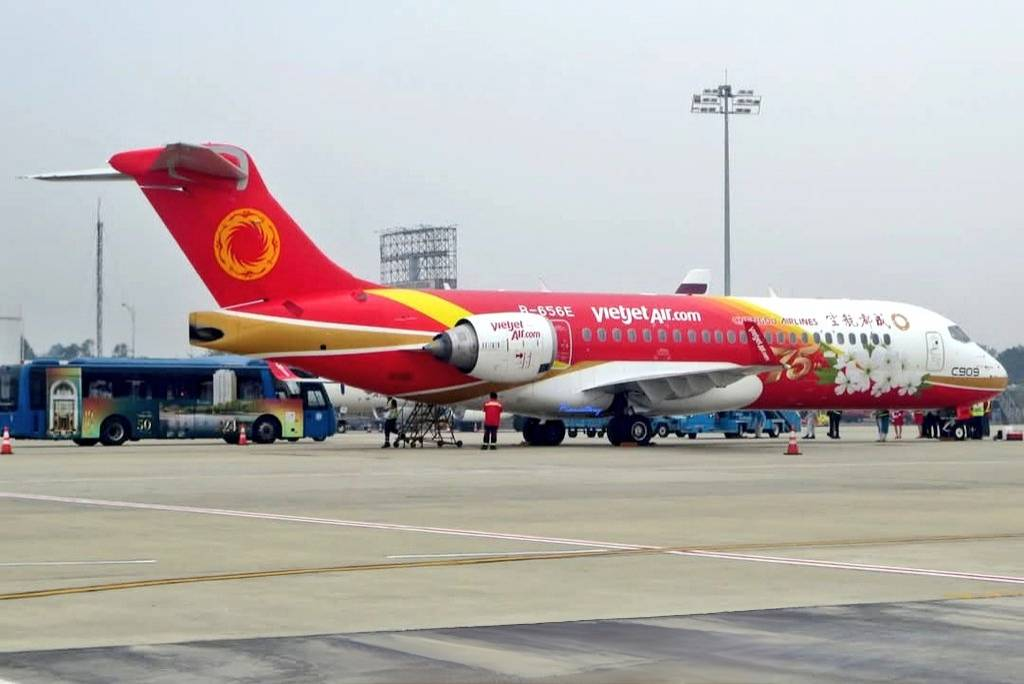
HANOI, Oct 20 (Market Insider) – Vietnamese low-cost carrier (LCC) Vietjet Aviation Joint Stock Company (HOSE: VJC) has ended the operation of two Chinese-made COMAC C909 aircraft, allowing their six-month lease contract to expire on October 18, according to sources familiar with the matter. This decision, though minor in fleet size, carries significant commercial and geopolitical weight for both the Vietnamese carrier and China’s state-owned aircraft manufacturer, Commercial Aircraft Corporation of China (COMAC).
The introduction of the C909s—the regional jet previously branded as the ARJ21—to Vietjet’s fleet in April shortly followed a high-profile visit by Chinese President Xi Jinping to Hanoi. The timing was widely viewed as a symbolic gesture to deepen strategic and economic ties between the two nations, marking the first use of Chinese commercial aircraft on Vietnam’s domestic routes, including key services like Hanoi–Con Dao.
Cost and Regulatory Hurdles Cited
Vietjet has reportedly opted not to extend the lease and has no immediate plans for outright purchase from COMAC, sources confirmed. While both Vietjet and COMAC declined to comment, one source indicated the termination was primarily driven by high operational costs related to the “wet lease” agreement, which included foreign crew and maintenance services, as well as regulatory constraints under Vietnam’s aviation laws. Vietjet had an agreement for the jets to be operated by crew from China’s Chengdu Airlines.
Crucially, sources emphasized that the decision was not a reflection of the aircraft’s performance, noting no operational issues during their tenure in Vietnam. The two jets completed their final flights last Friday, according to flight tracking data.
Investor Takeaways: Implications for Vietjet (VJC) and COMAC
For Vietjet Investors:
- Fleet Strategy Confirmation: The decision reinforces Vietjet’s established fleet strategy, which is overwhelmingly centered on Western-made aircraft, primarily Airbus A320/A321 models, alongside large-scale orders for the Boeing 737 MAX. This pivot back to its core fleet is unlikely to have a material financial impact on the $1.35 billion revenue-generating airline, whose fleet exceeds 100 aircraft.
- Cost Control Focus: The stated reason of “high operational costs” highlights a laser focus on efficiency, a critical metric for any LCC. Future regional capacity may be sourced under a different, more cost-effective leasing or acquisition model.
- De-risking Regulatory Complexity: By ending the wet lease and avoiding the complexity of foreign-crewed operations and unique regulatory acknowledgments, Vietjet is streamlining its operational model, which could be viewed positively by investors valuing operational simplicity.
For COMAC and Global Aviation Sector Observers:
- A Setback for Foreign Penetration: The expired lease represents a significant missed opportunity for COMAC. The Vietnam contract was seen as a major breakthrough, as the Chinese planemaker continues to struggle to secure long-term usage of its aircraft outside of domestic and closely allied markets (TransNusa in Indonesia, Laos, Air Cambodia, and Brunei).
- The ARJ21/C909 Challenge: The C909, China’s first commercially produced jet-powered plane, is crucial to COMAC’s global positioning. Its international sales strategy in Southeast Asia—a cost-sensitive and rapidly growing market—is vital for building a track record before COMAC targets wider adoption for its flagship C919 narrow-body jet.
- Operational Ecosystem Gap: The high cost associated with foreign crew and maintenance underscores a critical challenge for COMAC: the lack of a mature, global support ecosystem (maintenance, repair, and overhaul – MRO, and certified pilot pools) compared to the decades-established networks of Airbus and Boeing. Overcoming this will be key to international competitiveness.
The termination marks a cooling of a symbolic commercial partnership that was heavily influenced by diplomatic overtures. For Vietjet, it appears to be a practical, cost-driven decision to maintain its well-established fleet path. For COMAC, it serves as a fresh reminder that securing the initial sale or lease is only the first step; building a globally competitive, cost-effective operational support system remains the highest hurdle to true international success.
