
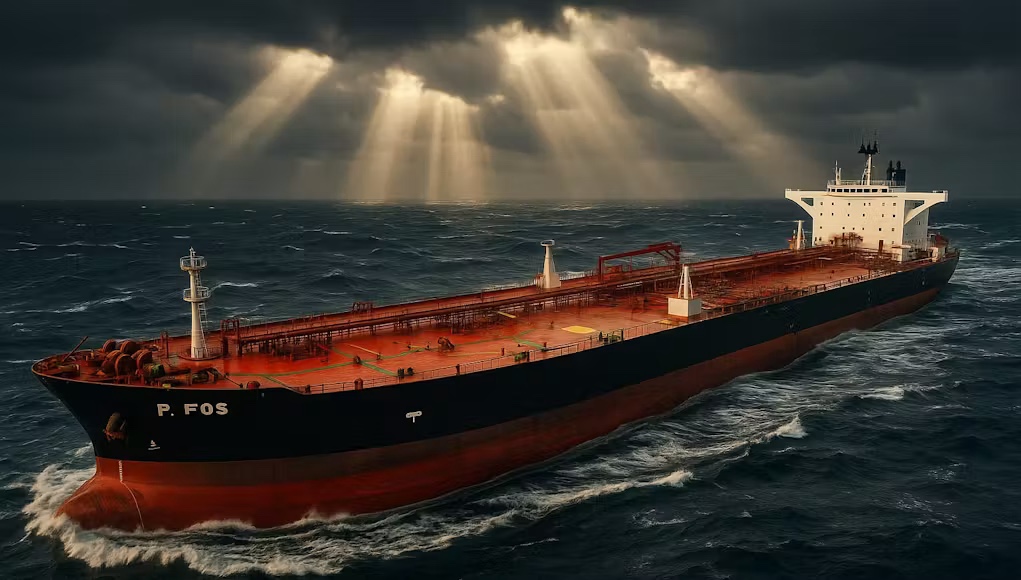
U.S. sanctions on Rosneft and Lukoil trigger record price cuts and rising pressure on Moscow’s energy revenues.
November 7 (Market Insider) — Russia is facing one of its toughest moments yet in the global oil market. Nearly 400 million barrels of Russian crude are now “adrift” at sea with no buyers, as its top customers — India, China, and Turkey — sharply cut purchases following new U.S. sanctions on the country’s two largest energy giants, Rosneft and Lukoil.
Deep Discounts Signal Mounting Pressure
According to industry sources, Urals crude, Russia’s main export blend, is now trading at a $4 per barrel discount to Brent for December shipments — a further $2 drop from last month. While not as steep as the $8 discount seen after the first wave of Western sanctions in 2022, the decline underscores the growing strain on Moscow’s oil revenue, still the lifeblood of its economy.
The selloff follows Washington’s decision last week to impose sweeping restrictions on Rosneft and Lukoil, giving global firms until November 21 to cease all transactions with the two sanctioned entities.
The impact was immediate: India’s major refiners — Hindustan Petroleum, Bharat Petroleum, Mangalore Refinery, HPCL-Mittal Energy, and Reliance Industries — suspended December purchases of Russian crude. These five firms account for about 65% of India’s total imports of Russian oil.
Asian Giants Retreat
In China, state-owned oil majors PetroChina and Sinopec have also halted seaborne purchases, pushing down prices of ESPO Blend, Russia’s premium crude exported from Kozmino port.
With India and China — Moscow’s top two buyers — stepping back simultaneously, traders warn of a glut that could force exporters to dump barrels at record-low prices.
Turkey, Russia’s third-largest oil buyer, has also begun cutting imports and diversifying toward Iraq, Libya, Saudi Arabia, and Kazakhstan, where supplies carry fewer sanctions-related risks.
Together, the pullback from these three countries has left an estimated 380–400 million barrels of Russian oil floating at sea, unsold. Traders say the Asian market is now “split in two”: Cargoes from non-sanctioned suppliers fetch higher prices, While shipments tied to Rosneft, Lukoil, or Russia’s “shadow fleet” are being offloaded at deep discounts to find buyers.
Collateral Damage: Financing and Shipping
The sanctions have also rattled financial and logistics partners. Banks and shipping companies are increasingly reluctant to process or insure Russian oil cargoes due to heightened compliance and payment risks, further constraining the trade.
As demand collapses, analysts say Moscow’s export volumes and revenues are both under threat. The price cuts may help move unsold barrels, but they also erode fiscal income at a time when the Kremlin is already facing ballooning war expenses.
Diplomatic Fallout and Strategic Risks
The timing is particularly sensitive. President Vladimir Putin is expected to visit India later this month, even as Washington steps up pressure on New Delhi and Beijing to curb Russian energy imports.
Energy analysts warn that if the current decline persists, Russia could suffer severe budgetary shortfalls, given that oil remains its largest source of foreign currency earnings.
“The deeper the discount, the clearer it becomes that Moscow is losing its ability to defend revenues against the latest sanctions,” said one Asia-based energy strategist.
Bottom Line
With Western sanctions biting and Asian buyers retreating, Russia’s oil market is approaching a breaking point. Nearly 400 million barrels are stuck at sea with no destination. Prices are at their deepest discounts in a year. And key refiners in India and China — once Moscow’s lifeline — are walking away.
Unless Moscow can swiftly redirect its oil flows or ease sanctions pressure, analysts warn, the world’s second-largest crude exporter may face its most significant revenue crisis since 2022.
