
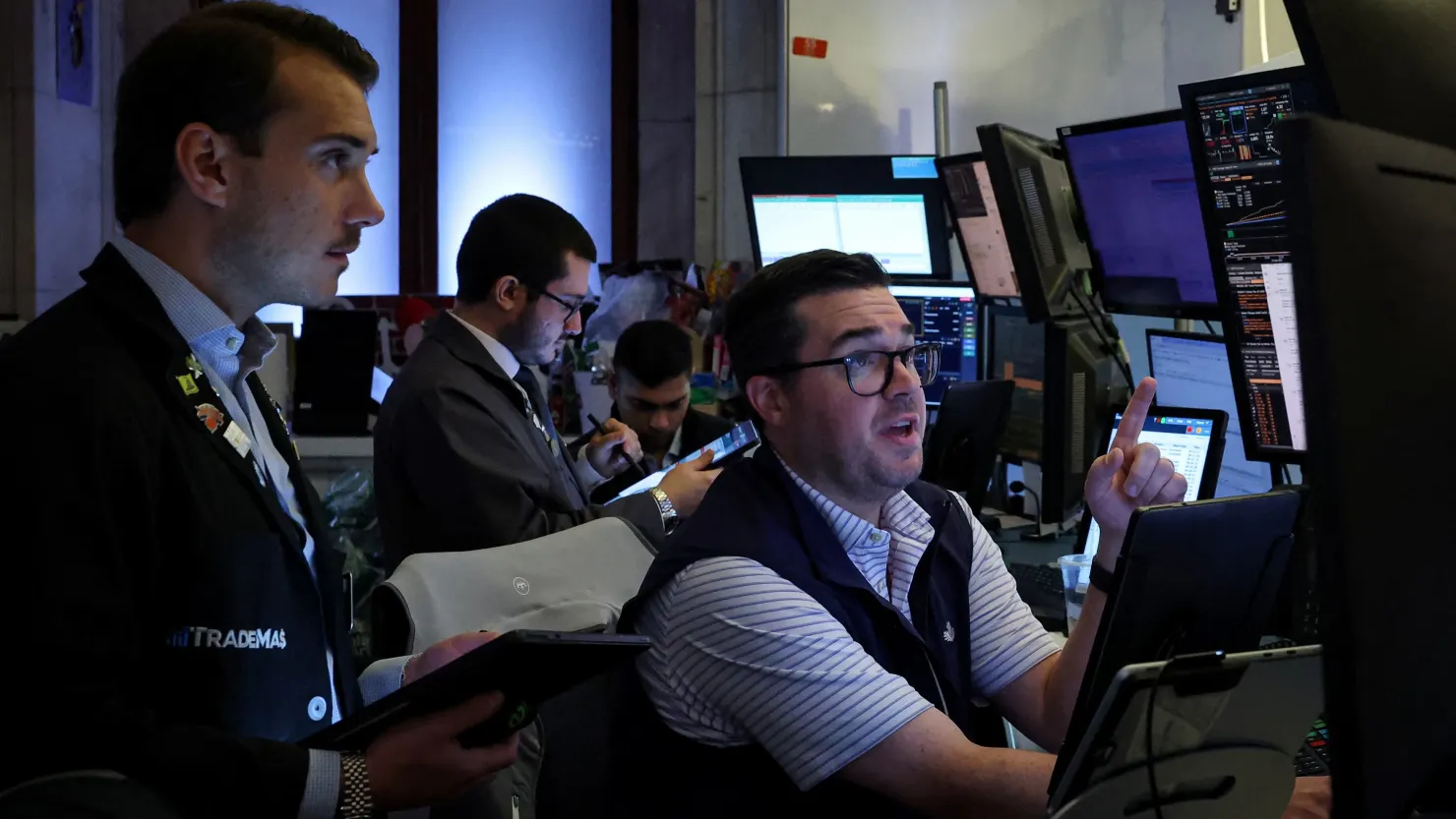
The S&P 500 slips 2.4% amid valuation worries, but strategists say strong fundamentals and Fed easing still support the rally.
NEW YORK (November 9, Market Insider) — The U.S. stock market’s recent dip has rattled some investors after months of record-breaking gains, but most market strategists say the pullback looks more like a healthy pause than the start of a downturn.
The S&P 500 has dropped 2.4% over the past eight sessions, weighed down by renewed concerns over lofty tech valuations and the state of the U.S. economy. Still, many analysts argue that the bull market’s foundations remain strong, supported by Federal Reserve policy, solid corporate spending, and resilient growth.
“It’s a speed bump — not a wall,” said Raheel Siddiqui, senior investment strategist at Neuberger Berman. “I don’t believe we have the preconditions for a recession or bear market right now.”
A Pause in an Overheated Market
The selloff comes after an extended stretch of calm: the S&P 500 hadn’t fallen more than 3% from a recent high since April’s tariff-driven correction. For many, this week’s decline serves as a reminder that volatility is part of a normal market cycle.
“The drop is just a reminder that volatility exists and is normal,” said Mike Reynolds of Glenmede Wealth Management.
Even with the recent slide, the S&P 500 remains up 14% year-to-date, while the Nasdaq has gained 19% — evidence, investors say, of a market still driven by optimism around AI, infrastructure, and capital investment.
Investors Urge Caution — but Not Panic
Many portfolio managers warn that the bigger risk is overreaction, not decline.
“One of the biggest mistakes investors could make right now is taking money off the table,” said David Wagner, head of equities at Aptus Capital Advisors.
Others see the pullback as a buying opportunity, especially if volatility picks up through year-end.
“Could there be a little chop and turbulence? Absolutely,” said Phil Orlando, chief market strategist at Federated Hermes. “But we’d view that as a buying opportunity, not a warning sign.”
Macro Strength Still Intact
Despite headline worries, the U.S. economy continues to outperform expectations. Growth in the second quarter was revised higher on strong consumer spending, while business investment remains robust enough to offset weakness in trade and consumption.
“When you look at fundamentals globally, growth is still strong,” said Victor Zhang, CIO at American Century Investments, which manages around $300 billion. “There is some weakness, but it’s healthy.”
Even so, some analysts warn the rally’s intensity leaves little margin for error. With the S&P 500 up double digits, any disappointing economic data — especially amid a U.S. government data blackout from the ongoing shutdown — could spark sharper reactions.
“Bull markets don’t die of old age; they die of fright,” said Sam Stovall, chief investment strategist at CFRA Research. “And what they’re most afraid of right now is a recession.”
Wall Street’s latest wobble looks less like the end of a bull run and more like a breather after a record stretch. The fundamentals — Fed support, corporate investment, and steady growth — remain intact.
Unless macro data sharply deteriorates, investors appear content to ride out the volatility, seeing it as part of the market’s natural rhythm rather than the start of something darker.
