
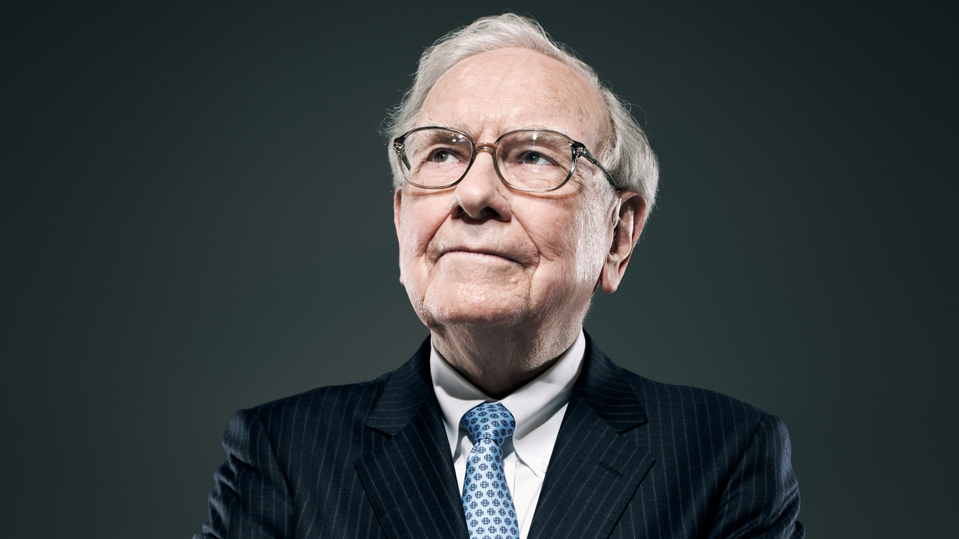
The ‘Oracle of Omaha’ Steps Down, Halting Annual Letters, as Investors Question the $950 Billion ‘Buffett Halo’ Effect.
MARKET INSIDER – The global financial world is bracing for a profound shift as Warren Buffett, the most influential investor of the modern era, announces his complete step back from public commentary at the end of the year, culminating his 60-year tenure leading Berkshire Hathaway.
In a final letter to shareholders, the 95-year-old “Oracle of Omaha” confirmed he will cease writing his highly anticipated annual letters and will no longer lead the legendary shareholder meetings, effectively retiring his public financial “brand.” This departure, following his sudden resignation as CEO in May, immediately fuels intense investor scrutiny over the fate of the “Buffett halo”—the premium valuation investors have long paid for Berkshire Hathaway stock based purely on his presence and leadership.
The transition is more than symbolic; it marks a significant structural change for the nearly $950 billion conglomerate. Greg Abel, Buffett’s handpicked successor, will take over the crucial duty of writing the annual shareholder letter—a document that has shaped investment philosophy for decades—and will lead the annual meeting from 2026 onward. Buffett’s final letter served as a clear message of reassurance to a nervous market, stating his absolute faith in Abel as “an outstanding manager, tireless worker, and candid communicator.” This public endorsement is meant to quell concerns that intensified after the May CEO transition, which saw Berkshire’s stock significantly underperform the S&P 500 (a 9% rise for Berkshire versus 16% for the S&P 500 year-to-date).
The financial stakes of this succession are immense, especially following the passing of Buffett’s long-time investment partner, Charlie Munger, in 2023. Analysts are keenly focused on two immediate data points: First, Berkshire’s cash pile has ballooned to a new record of $358 billion, up from $344 billion in Q2. Some interpret this as Buffett consciously leaving the biggest merger-and-acquisition opportunities on the table for Abel to execute, providing his successor with a massive, ready war chest. Second, despite the executive change, Berkshire’s core business remains strong, evidenced by an impressive 17% growth in overall Q3 profit, driven largely by a doubling of earnings in its key insurance operations.
In his emotional farewell, Buffett also revealed a personal side, converting 1,800 Class A shares into 2.7 million Class B shares—a move valued at approximately $1.3 billion—to donate to four family foundations, continuing his commitment to philanthropy. Buffett acknowledged the personal reasons for his transition, citing the inevitable slowing down that comes with age, including issues with balance and memory. While he steps back from his official market roles, his commitment to communication remains, as he vows to continue writing his annual “Thanksgiving message” for the unique base of individual shareholders he cherishes.
The end of the “Buffett Letter” is the moment global investors must realize that Berkshire Hathaway is transitioning from a personality-driven investment vehicle into a purely institutional asset manager. The focus should no longer be on the “Oracle’s wisdom” but on the $358 billion cash mountain that Greg Abel now commands.
The contrarian move is to buy the post-Buffett dip, betting that Abel’s mandate is to deploy that cash into an epoch-making acquisition that finally unleashes the next chapter of Berkshire’s growth, proving that the value of the company’s disciplined process is greater than the halo of its founder.
