
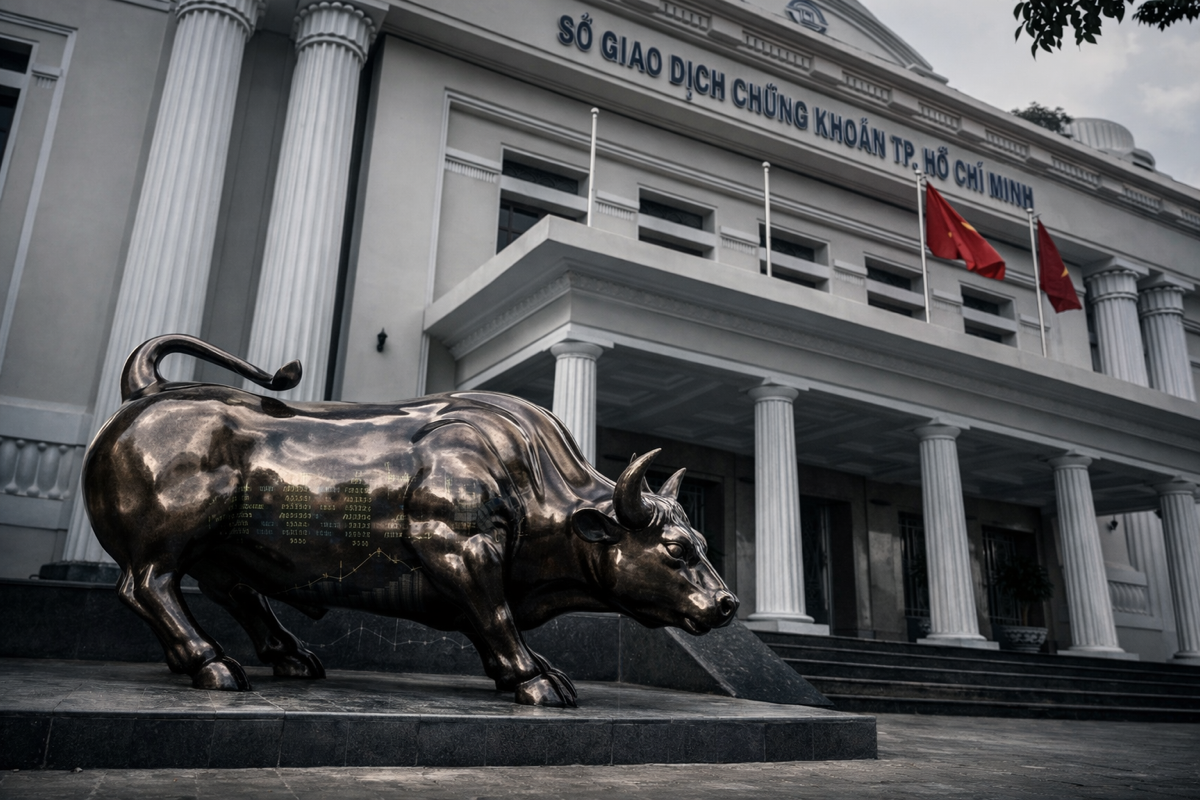
Historic reclassification confirms Vietnam’s structural reforms, positioning the market alongside Asia’s largest investment destinations.
MARKET INSIDER – Vietnam has officially crossed a long-awaited threshold in global capital markets. Index provider FTSE Russell confirmed the country’s upgrade from frontier to secondary emerging market status, with implementation set to begin on September 21 and phased through 2027. The decision marks a structural inflection point for Vietnam’s equity market, effectively opening the door to billions of dollars in passive and institutional capital.
At the core of the upgrade is Vietnam’s progress in dismantling longstanding barriers to foreign participation. The rollout of the “global broker” model—allowing international investors to route trades via offshore intermediaries without requiring local accounts—was identified as a critical reform. FTSE Russell’s Index Governance Board explicitly cited satisfaction with the implementation progress, emphasizing its importance for enabling index replication by global funds.
The reclassification places Vietnam in the same category as major emerging markets such as India and China, significantly elevating its visibility within global asset allocation frameworks. For institutional investors, this shift is not merely symbolic—it triggers automatic inclusion in benchmark-tracking portfolios, particularly among passive funds that replicate FTSE indices.
From a market dynamics perspective, the timing is notable. Vietnam’s benchmark VN-Index has retreated roughly 6% year-to-date amid geopolitical tensions in the Middle East, following a strong 41% rally in 2025—its best performance in nearly a decade—driven by robust economic growth of approximately 8%. The upgrade could act as a counterbalance to near-term volatility, reinforcing long-term capital inflows and valuation re-rating potential.
Regionally, the contrast is stark. While Vietnam advances, Indonesia remains unchanged in FTSE’s classification, with concerns lingering over transparency in ownership structures and trading practices. Meanwhile, MSCI has already flagged downgrade risks for Indonesia, underscoring diverging reform trajectories within Southeast Asia.
Elsewhere, FTSE Russell maintained Egypt on its downgrade watchlist and reclassified Nigeria back to frontier status, reflecting ongoing challenges in market accessibility and liquidity.
For Vietnam, however, the narrative is decisively forward-looking. The upgrade validates years of regulatory reform and signals a transition toward deeper integration with global financial markets. More importantly, it reshapes the country’s investment profile—from a high-growth frontier story to a core allocation within emerging market portfolios.
