
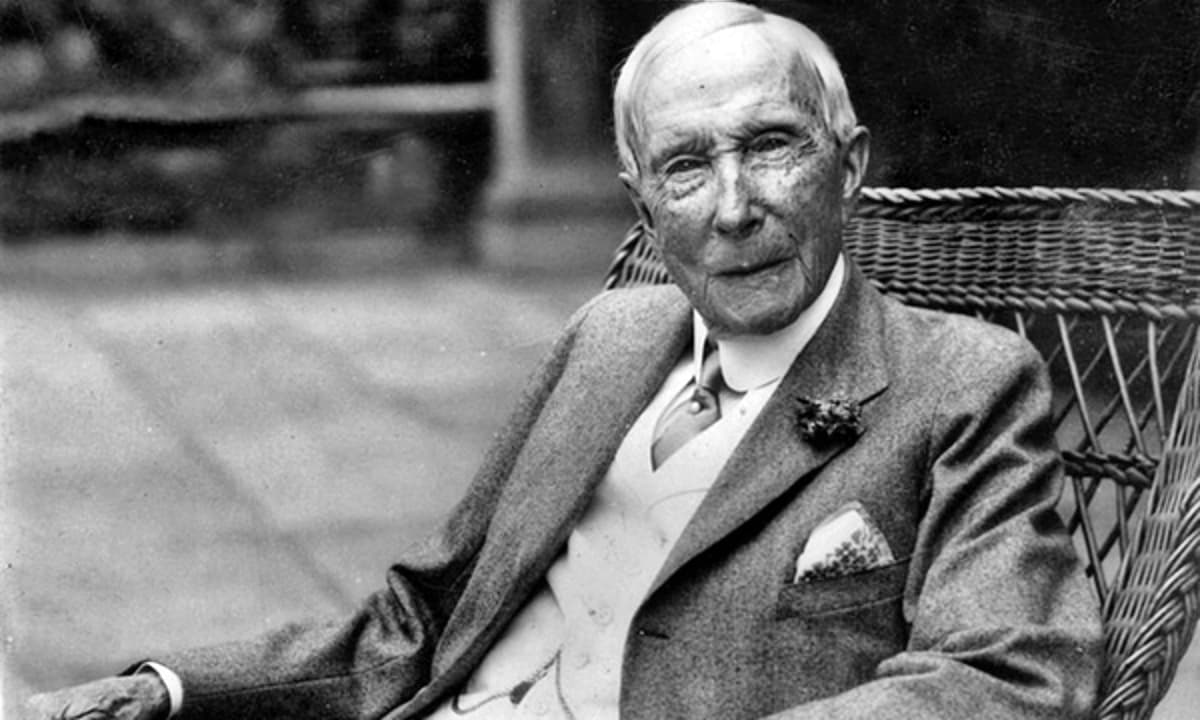
The original “trillionaire” built his empire by controlling distribution, not just oil. His ruthless strategy is being weaponized today by tech giants.
MARKET INSIDER – While the world fixates on the next move by Elon Musk and Jeff Bezos, the real blueprint for their global dominance was authored over a century ago by a figure few truly understand: John D. Rockefeller. The founder of Standard Oil didn’t just become America’s first billionaire—he established a modern monopoly playbook so effective that his inflation-adjusted fortune, estimated near $400 billion, remains unmatched in history. His story isn’t a quaint historical footnote; it is a critical lesson in how control over logistics, supply chains, and market architecture—not just innovation—creates unparalleled, generational wealth and wields geopolitical power, a dynamic now playing out across global tech, e-commerce, and renewable energy sectors.
Rockefeller’s strategy was starkly simple: “If you want to be truly rich, don’t compete—own the system.”He started as a frugal bookkeeper, yet his vision transcended mere profit. Recognizing that the real leverage in the burgeoning oil industry lay not in the wells, but in the infrastructure needed to move the product, he ruthlessly targeted distribution. By buying up the pipelines, refineries, and even the barrels used for shipping, Standard Oil achieved total vertical integration. This allowed him to optimize every marginal cost—creating millions in savings—while simultaneously dictating prices to both producers and consumers, eliminating rivals through acquisition or deliberate underpricing. By 1880, he commanded 90% of the U.S. oil supply, turning a competitive industry into a consolidated powerhouse.
This principle of controlling the value chain, rather than just the end product, is the precise operational model that defines today’s most valuable companies. Amazon perfected it by dominating logistics and cloud computing (AWS). Tesla is attempting it by controlling battery production and charging networks. Applemaintains its premium margins by tightly controlling its hardware, software, and retail distribution ecosystem. The ultimate lesson from Rockefeller is that efficiency is leverage, and that building a moat around your business is fundamentally more valuable than being the most aggressive competitor within the moat.
The break-up of the Standard Oil trust in 1911 by the U.S. Supreme Court created many of today’s major energy companies, underscoring the immense power Rockefeller amassed. While modern antitrust regulators grapple with the scale of today’s tech behemoths, they are essentially fighting the same battle—trying to curb the inherent gravitational pull toward monopoly that Rockefeller mastered. The core mechanism remains unchanged: a focused, patient strategy to redesign the market structure itself.
The question for investors, business leaders, and policymakers is whether the extreme efficiency and consumer benefits generated by these new vertically integrated giants—from Google’s search dominance to Amazon’s e-commerce logistics—will eventually trigger a regulatory backlash as monumental as the one that ended Standard Oil’s reign. Rockefeller’s enduring legacy is a powerful, contrarian insight: wealth is not built on hype or fleeting innovation, but on the strategic, often quiet, acquisition of control over the essential plumbing of global commerce.
