
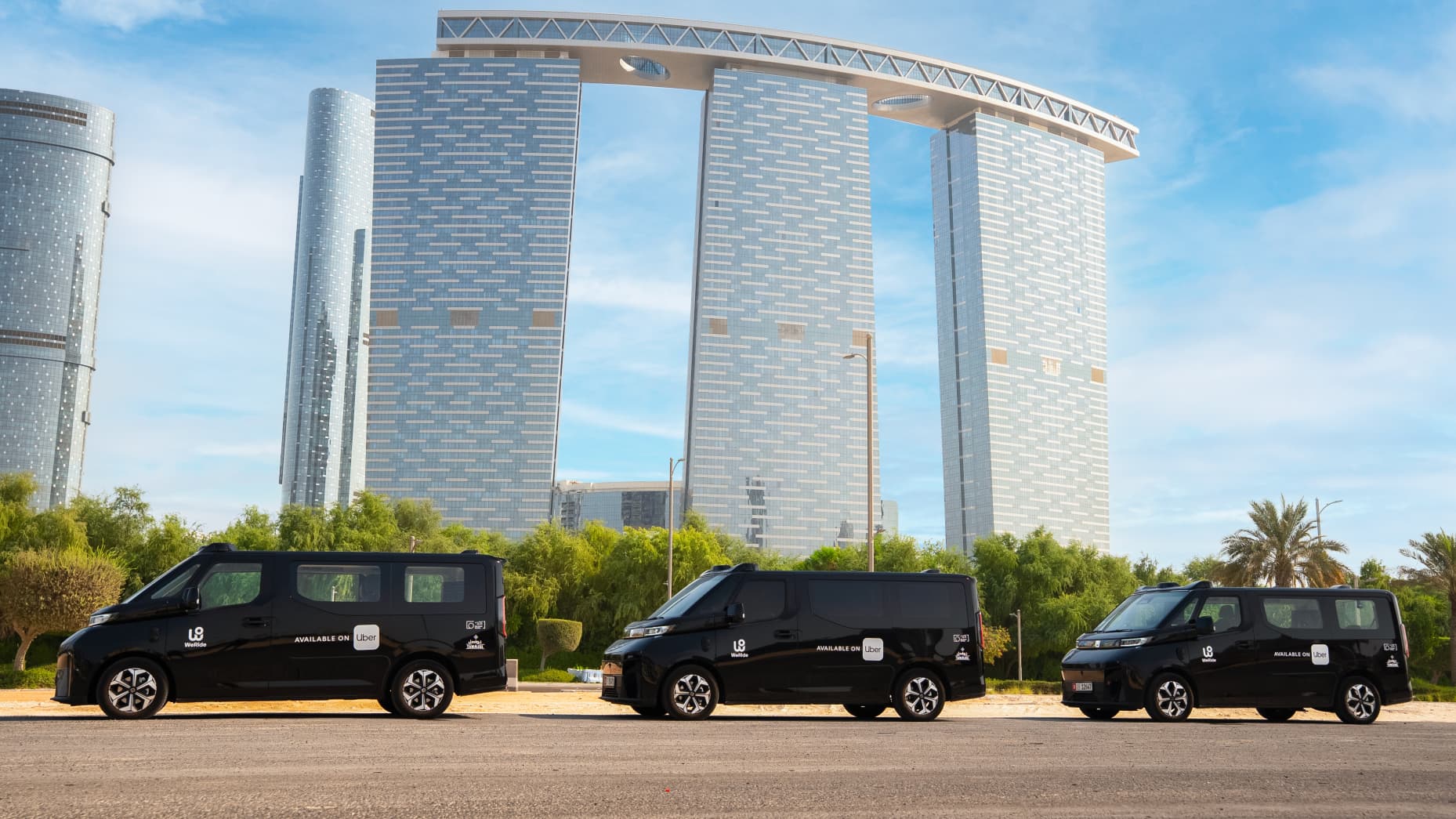
Abu Dhabi becomes Uber’s newest autonomous frontier as the company accelerates a global AV rollout from the U.S. to the Gulf and beyond.
MARKET INSIDER – Uber has taken a decisive step in the global race toward autonomous mobility, launching fully driverless robotaxi rides in Abu Dhabi—its first such deployment in the Middle East and its fourth worldwide. The milestone deepens Uber’s bet on autonomous vehicles and positions the United Arab Emirates as an early proving ground for a technology expected to reshape urban mobility, labor markets and transport economics across continents.
The launch, done in partnership with Chinese autonomous-driving company WeRide, allows riders in Abu Dhabi to request a driverless vehicle through UberX or Uber Comfort. For Uber, which already offers robotaxi services in Phoenix, Austin and Atlanta via Alphabet’s Waymo, Abu Dhabi represents a strategic expansion into a region that has aggressively embraced smart-city infrastructure and AI-powered transport systems.
WeRide, listed on the Nasdaq, has been building toward this moment since forming its partnership with Uber in September 2024. The company began offering autonomous rides with an operator onboard in Abu Dhabi last year, alongside pilot operations in Riyadh. Uber said earlier that it plans to expand WeRide-powered services to 15 more cities globally—including in Europe—over the next five years, underscoring how quickly robotaxis are moving from experimental pilot to commercial product.
For the broader AV ecosystem, the move signals intensifying competition. Uber recently signed a six-year robotaxi supply deal with electric-vehicle maker Lucid and autonomous-driving firm Nuro, while rival Lyft locked in a partnership with Waymo to launch robotaxis in Nashville next year. Meanwhile, WeRide has already rolled out full driverless fleets in Beijing and Guangzhou, proving its capability across dense, complex traffic environments.
In Abu Dhabi, the new robotaxis will initially operate around Yas Island, with riders able to increase their chance of securing an autonomous vehicle by selecting the dedicated option in the app. Support will be available through both the Uber app and an onboard tablet, though Uber has not disclosed how revenue from robotaxi rides is shared with its AV partners.
As global cities rethink transportation through the lens of AI, Uber’s expansion raises a pivotal question for policymakers, investors and commuters alike: will autonomous mobility accelerate faster in tech-forward emerging markets than in long-established Western hubs?
