
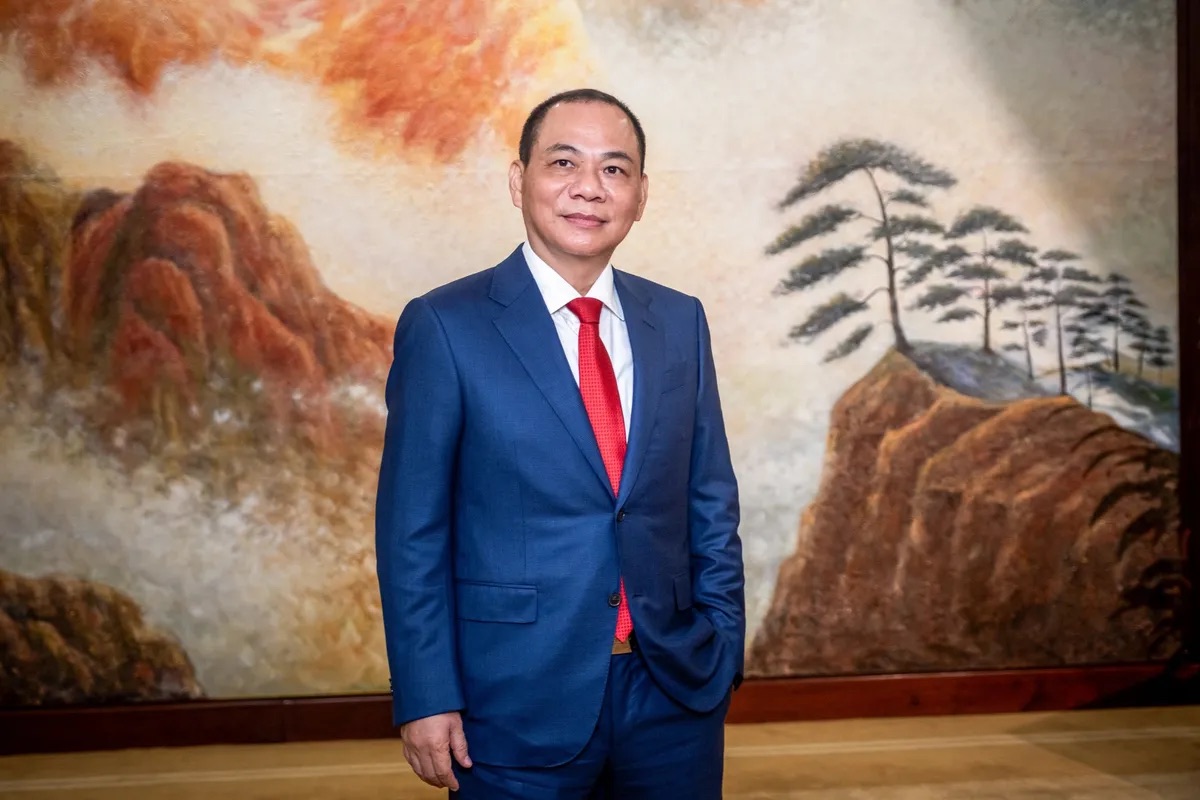
Vietnamese billionaire Pham Nhat Vuong, chairman of Vingroup, has seen his personal fortune surge to approximately $30 billion, propelling him past high-profile global figures such as Jack Ma and Donald Trump on the global wealth rankings.
According to Forbes, Vuong’s net worth jumped by about $3.4 billion in a single trading session on December 23, driven by a sharp rally in Vingroup shares. VIC stock closed at roughly 169,900 VND on the Ho Chi Minh City Stock Exchange, marking an almost eightfold increase from the beginning of the year and cementing Vingroup as one of Asia’s most closely watched corporate stories.
The rally lifted Vuong to 71st place on Forbes’ real-time list of the world’s richest people, placing him ahead of several well-known business leaders including Samsung heir Lee Jae-yong and a number of legacy Western billionaires. Forbes calculates net worth based primarily on publicly disclosed shareholdings, while also factoring in private company stakes, real estate, and other significant assets.
Vuong and his family currently control roughly 65% of Vingroup, with Vuong himself owning nearly 390 million VIC shares, equivalent to just over 10% of the group’s equity. His ascent has been particularly striking in historical context. When Forbes first recognized him in 2013 as Vietnam’s first billionaire, his wealth stood at around $1.5 billion, ranking him outside the global top 900. Over the past 12 years, his fortune has expanded roughly twentyfold, reflecting both Vietnam’s economic rise and Vingroup’s aggressive expansion strategy.
In 2025, Vuong has doubled down on diversification, committing vast capital to new ventures across energy, metals, aerospace, and entertainment under brands such as VinEnergo, VinMetal, VinSpace, and V-Film. He has also publicly floated ambitions to participate in Vietnam’s North–South high-speed railway project, a proposal estimated at $61 billion, underscoring his willingness to pursue projects on a scale rarely seen in emerging markets.
Vuong’s rise is increasingly viewed as emblematic of Vietnam’s broader transformation—from a frontier market to a regional economic heavyweight—and his growing global ranking highlights the expanding influence of Vietnamese capital on the world stage.
