
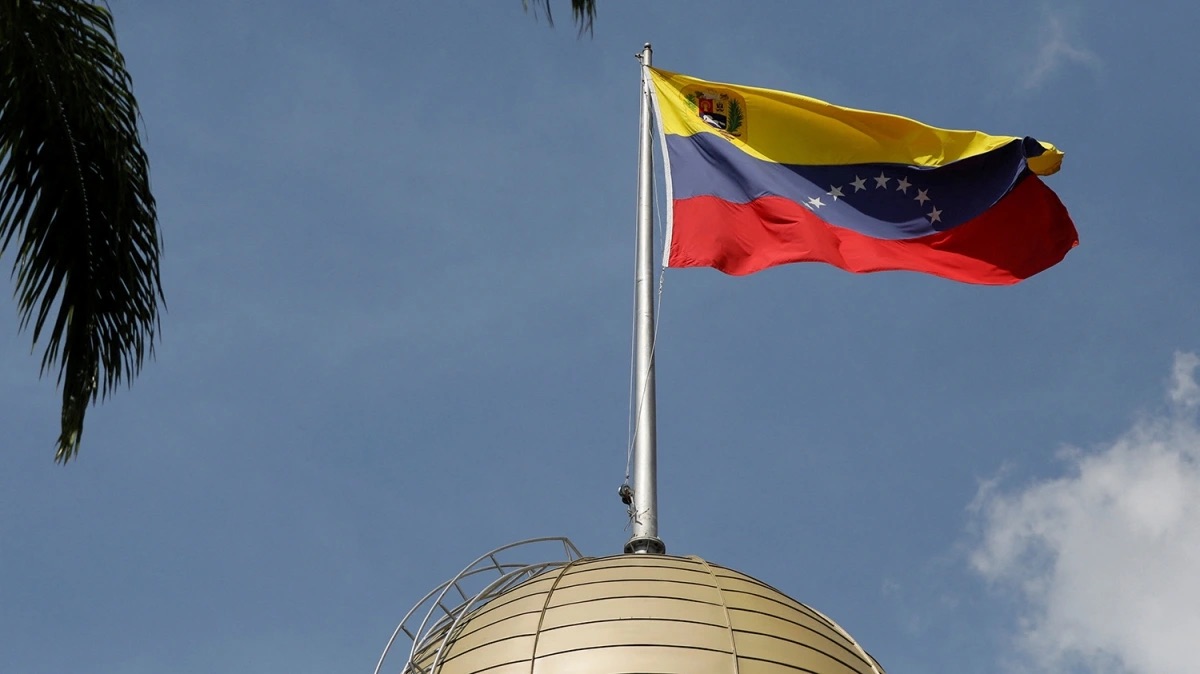
As Washington signals a transition, China and Russia still dominate capital flows into the world’s richest oil state
Venezuela is once again on the radar of global investors—but the capital shaping its future today looks very different from the past. While Western firms once led foreign investment into the oil-rich nation, the balance has shifted decisively toward China and Russia, a reality that complicates President Donald Trump’s recent pledge that Washington will oversee Venezuela’s administration during a transition period.
The renewed interest is rooted in geology as much as geopolitics. Venezuela holds an estimated 300 billion barrels of proven crude oil—more than any country on Earth, including Saudi Arabia. Francisco Monaldi of Rice University notes that few places globally offer comparable upside for production growth if political and regulatory barriers are lifted. That potential is now colliding with a moment of political flux, prompting investors to reassess long-frozen opportunities.
Historically, Venezuela attracted significant Western capital. According to World Bank data, foreign direct investment peaked at $6.2 billion in 1997. Since then, inflows have steadily eroded—falling to about $1.4 billion by 2024—as nationalization policies, operational bottlenecks at ports, and volatile oil prices discouraged long-term commitments. Many Western firms exited or scaled back, leaving a narrower—but more geopolitically aligned—investor base.
Today, a handful of US and European companies still operate on the ground, including Chevron, Nestlé, Procter & Gamble, Mondelez International, Kraft, and Coca-Cola’s regional bottler FEMSA. Their continued presence reflects selective bets on consumer demand and energy assets, rather than broad-based confidence in the investment climate.
The heavyweights, however, are no longer Western. China is Venezuela’s largest creditor, with roughly $12 billion outstanding through oil-backed loans from the China Development Bank as of late 2025—its largest commodity-backed lending program to date, according to reporting by The Straits Times. Chinese capital is deeply embedded in infrastructure, energy, and metallurgy, while Russia and India have also expanded their footprint as Western capital retreated.
That landscape may be poised for another shift. Venezuela has begun signaling a renewed openness to foreign investment, and analysts at Signum Global Advisors estimate that $500 billion to $750 billion in investment opportunities could open over the next five years. Oil and gas dominate the narrative, but construction and tourism are emerging as secondary pillars of a potential reconstruction cycle.
For global investors, the key question is not whether Venezuela is rich—it always was—but who will capture the upside if normalization takes hold. With China and Russia already entrenched, and Washington hinting at a transitional role, Venezuela may become a proving ground for a new phase of geopolitical investing: one where capital follows not just resources, but power.
