
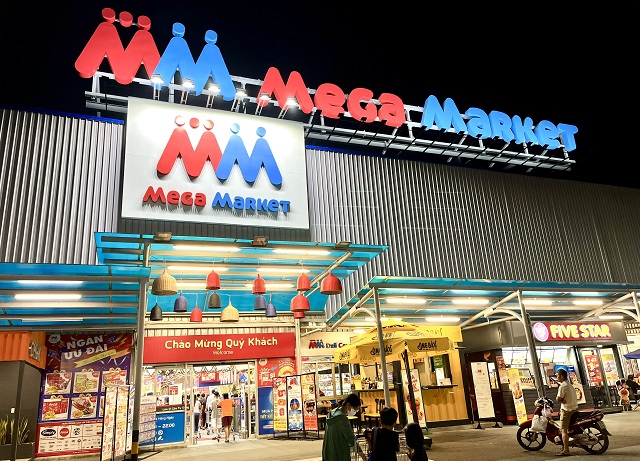
Berli Jucker’s acquisition underscores Vietnam’s rise as Southeast Asia’s next retail battleground
MARKET INSIDER – Vietnam’s consumer economy just received another powerful vote of confidence. Thai conglomerate Berli Jucker (BJC) has unveiled plans to spend $723 million to acquire MM Mega Market Vietnam, signaling that global and regional capital is still aggressively chasing scale in one of Asia’s fastest-growing markets—even as retail margins tighten worldwide.
The transaction, disclosed in a filing to the Stock Exchange of Thailand, will be executed indirectly via BJC’s subsidiary C-Distribution Asia. The unit will purchase all 921.8 million shares of TTC Land International (Singapore) from Golden Land International, valuing each share at THB24.41 (about $0.78). TTC Land International is tied to TCC Group and fully owns MM Mega Market Vietnam, which operates 30 wholesale outlets nationwide.
For BJC, the deal is about far more than store count. Vietnam represents a rare combination of population scale, rising incomes, and underpenetrated modern trade—conditions that global retailers are struggling to find elsewhere. By bringing MM Mega Market Vietnam under its control, BJC aims to build an integrated retail and wholesale distribution platform, enhance operational efficiency, and strengthen its bargaining power with suppliers across the region.
The strategic logic also reflects how retail competition is evolving. MM Mega Market Vietnam already derives roughly 55% of its revenue from business-to-business customers such as hotels, restaurants, and small traders, with the remainder coming from consumers. Management plans to lift the B2B share to 60% by 2030, while expanding the network to 54 outlets through a mix of large-format stores and smaller models. For BJC, this creates a data-rich ecosystem—combining physical distribution, private-label expansion, and digital platforms—to capture both demand signals and margin upside.
The asset itself has undergone a notable turnaround. MM Mega Market Vietnam was previously known as Metro Vietnam, acquired in 2014 from Metro AG after years of losses. Since the rebrand and operational overhaul, performance has improved steadily. In fiscal 2024, the company reported $600 million in revenue and $15.4 million in net profit, validating the long-term bet on Vietnam’s modern trade growth.
BJC’s board is set to seek shareholder approval at an extraordinary general meeting on February 13, with completion targeted for the second quarter. If finalized, the acquisition will further cement Vietnam’s position as a strategic hub in Southeast Asia’s retail supply chains—and raise the competitive bar for both local players and multinational rivals.
The bigger question for investors and operators alike is whether Vietnam will become the region’s most contested retail market of the next decade. As Thai, Japanese, Korean, and domestic groups race to build scale, the winners are likely to be those who control not just storefronts, but data, logistics, and B2B relationships—making this deal less about buying a retailer, and more about securing a long-term platform for regional dominance.
