
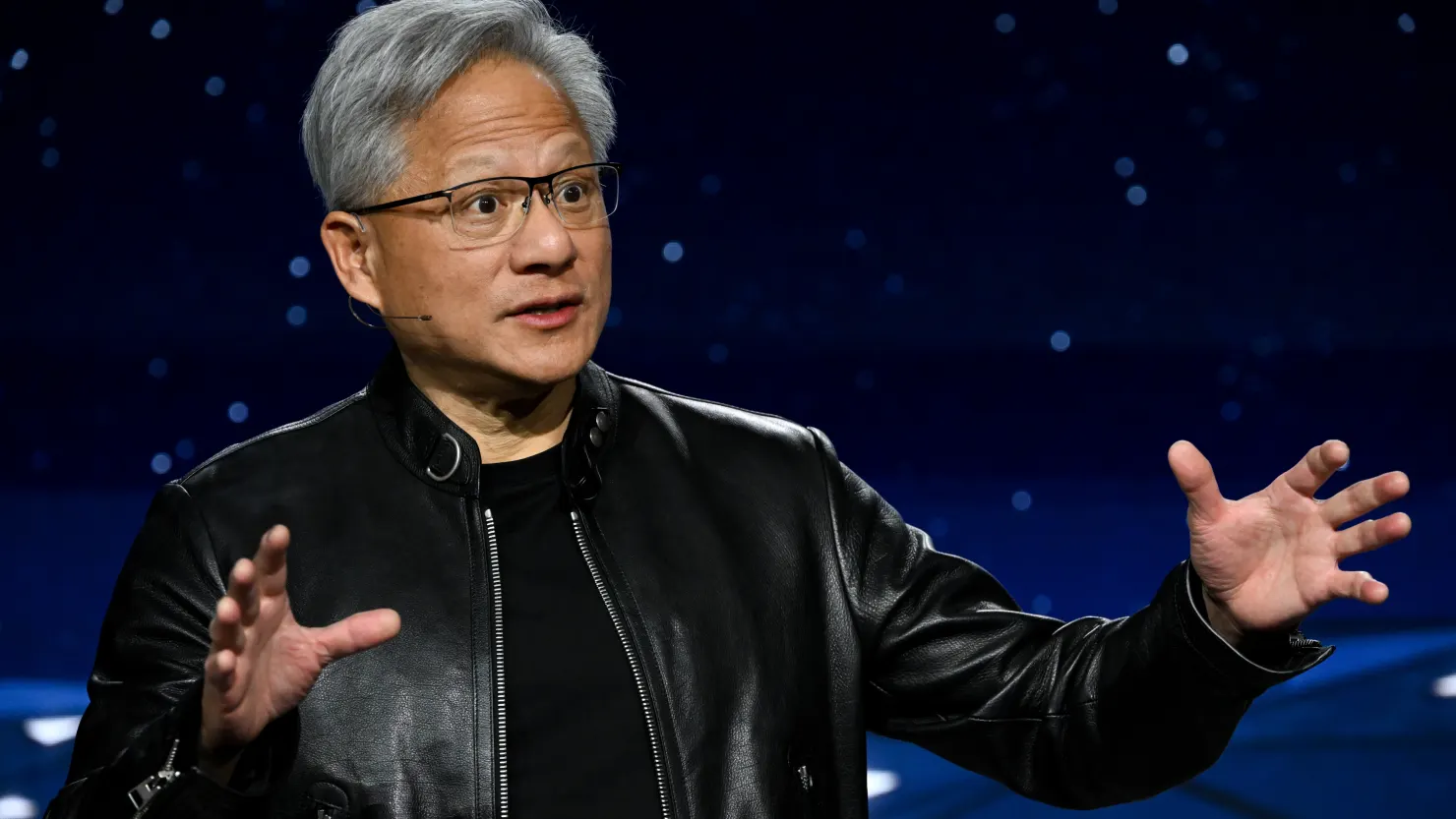
Jensen Huang unveils LPUs, Vera CPU racks, and Kyber architecture amid record hype at ‘Super Bowl of AI’
MARKET INSIDER – Nvidia’s GTC 2026 conference—often called the “Super Bowl of AI”—kicked off this week in San Jose to massive crowds and celebrity-level attention for CEO Jensen Huang, cementing the company’s central role in the global AI boom. The event delivered a clear strategic pivot: as agentic AI—task-oriented systems that spawn sub-agents and require heavy orchestration—reaches an “inflection point,” Nvidia is expanding beyond its dominant GPUs to address emerging bottlenecks in inference, data transfer, and general-purpose compute.
The headline hardware announcements underscored this shift. Nvidia introduced the Language Processing Unit (LPU), its first chip leveraging technology from the $20 billion Groq acquisition in December 2025. Unlike traditional GPUs with thousands of parallel cores, the Groq-derived LPU features a single, highly optimized core designed to accelerate GPU workloads—particularly inference speed for agentic systems. The company also showcased a full rack of its newest Vera CPUs, positioning the CPU renaissance as critical for handling the increased data movement agentic AI demands.
Software highlights included NemoClaw, an enterprise-grade evolution of the OpenClaw autonomous AI agent platform, layered with Nvidia’s full software stack to support complex, multi-agent workflows. Looking further ahead, Huang previewed the Kyber rack-scale architecture—integrating 144 GPUs in vertically stacked compute trays for higher density and lower latency—set to debut in the Vera Rubin Ultra system shipping in 2027.
Huang projected at least $1 trillion in cumulative purchases of Blackwell and Rubin chips through 2027, yet Nvidia’s stock has remained soft in recent sessions. Analysts attribute the muted reaction to sky-high Wall Street expectations: the Vera Rubin reveal occurred earlier at CES, the LPU is an unproven new category, and China-related revenue (via resumed H200 sales) awaits confirmation in upcoming earnings amid shifting export controls. Even blockbuster announcements struggle to move the needle when anticipation is this elevated.
The broader message from GTC: Nvidia is evolving from GPU powerhouse to a full-stack AI infrastructure provider—“soup-to-nuts,” as analyst Ben Bajarin described—positioning itself to capture value across the agentic era’s compute spectrum.
For global investors, the conference reinforces Nvidia’s unmatched moat in AI hardware while highlighting execution risks in a rapidly evolving landscape. Agentic AI’s rise could supercharge demand for diverse compute configurations, sustaining Nvidia’s growth trajectory well into the late 2020s. Yet with shares trading in a narrow range despite trillion-dollar forecasts, the market appears to be waiting for tangible proof—whether in earnings beats, China sales, or real-world agentic deployments—before bidding higher. If Kyber and LPU deliver on latency and efficiency promises, Nvidia could extend its lead; if agentic hype outpaces practical adoption, the stock faces near-term digestion. Either way, GTC 2026 made one thing clear: the future of computing is agentic, and Nvidia intends to own every layer of it.
