
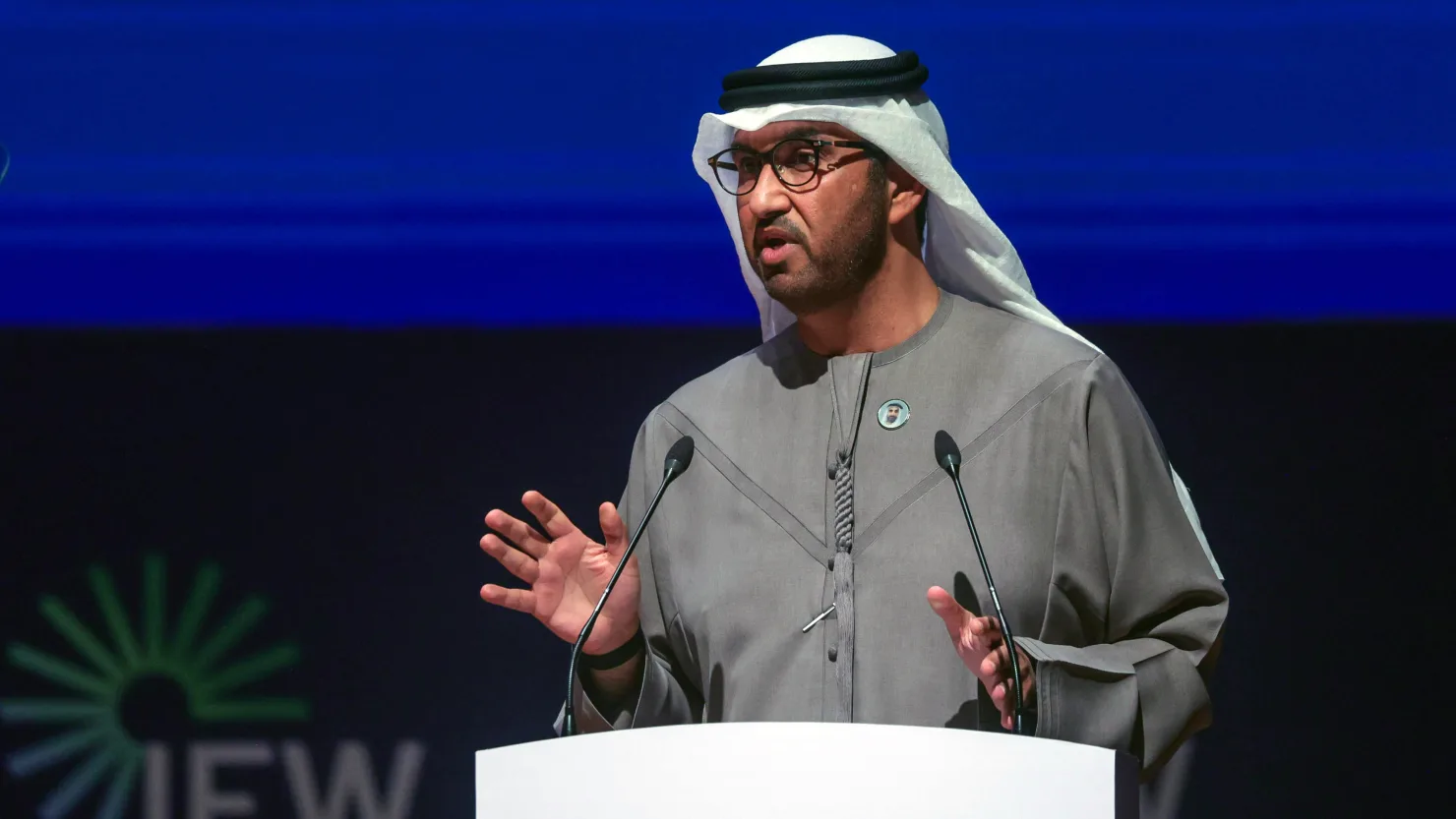
ADNOC chief warns global energy security at risk as tanker traffic halts through key oil chokepoint.
MARKET INSIDER – The escalating conflict in the Middle East is now being framed in stark economic terms. The head of the UAE’s state oil giant has condemned Iran’s attacks on shipping in the Strait of Hormuz as “economic terrorism,” warning that the disruption threatens not just regional stability—but the entire global economy.
Speaking at the CERAWeek energy conference, Sultan Ahmed Al Jaber, chief executive of Abu Dhabi National Oil Company, said weaponizing the strait amounts to holding the world hostage. Before the conflict, roughly 20% of global oil and liquefied natural gas flows passed through the narrow waterway, making it the single most important artery in the global energy system.
That flow has now been severely disrupted. Tanker traffic through the strait has effectively stalled following a series of Iranian attacks on vessels in the Gulf, creating a supply shock that has sent oil prices surging more than 30% since the conflict began. While prices briefly dipped after Donald Trump announced a temporary pause in planned strikes on Iran, markets remain highly volatile as the underlying security risks persist.
Al Jaber stressed that the crisis is not rooted in supply constraints but in security breakdowns. Even with sufficient production capacity, oil cannot reach global markets if shipping lanes remain unsafe. The message reflects a growing consensus among energy leaders that restoring safe passage through Hormuz is the only durable solution to stabilizing prices.
The conflict has also begun to reshape the global energy dialogue. Several top executives, including leaders from Saudi Aramco and Kuwait Petroleum Corporation, have withdrawn from major industry events, underscoring the severity of the situation and the operational risks facing the sector.
Meanwhile, the UAE has reported a significant escalation in attacks, with hundreds of missiles and drones targeting its territory since the conflict began, causing casualties and damage to infrastructure. Officials have described the strikes as unprovoked, further intensifying regional tensions.
For global markets, the implications are profound. The disruption of Hormuz is not just a regional crisis—it is a systemic risk that affects energy prices, inflation, and economic stability worldwide. As long as the strait remains contested, the global economy will remain exposed to sudden shocks.
The broader takeaway is clear: in today’s interconnected world, energy security is no longer just about production capacity—it is about control of critical transit routes. And right now, one of the most vital corridors in the global economy has become the front line of geopolitical conflict.
