
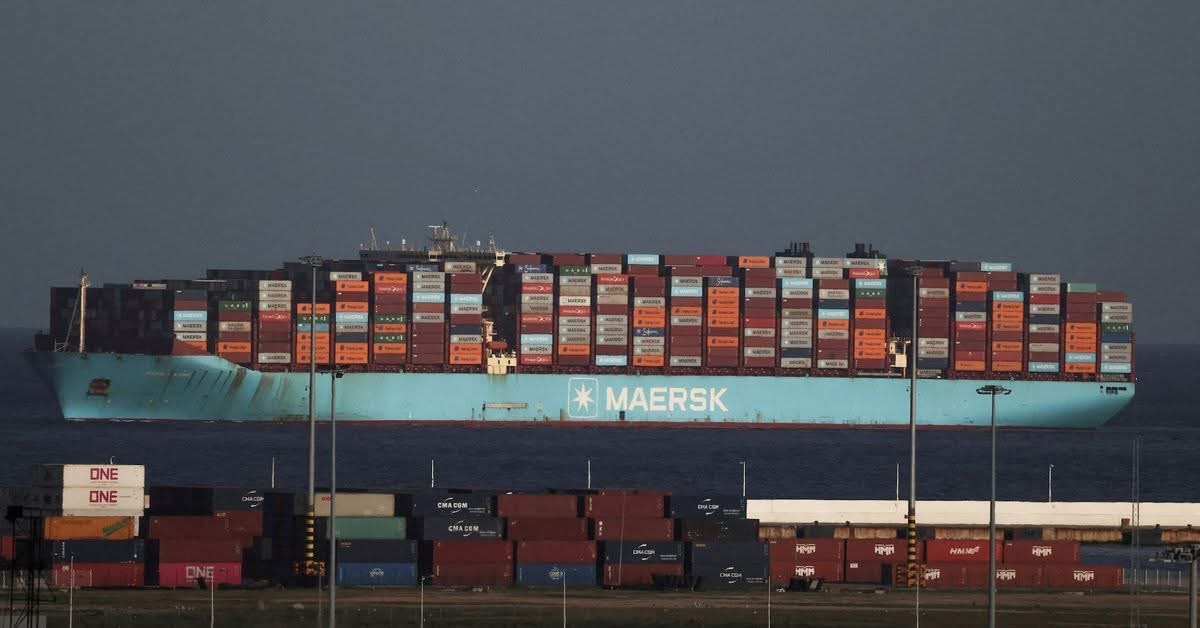
Global shipping giant warns Strait of Hormuz still too risky, keeping supply chains on edge
MARKET INSIDER – The fragile ceasefire between the United States and Iran may have eased immediate geopolitical tensions—but for global trade, the world’s most critical oil and shipping chokepoint remains far from safe. Danish shipping leader Maersk is signaling that the Strait of Hormuz, through which roughly a fifth of global oil flows, is still operating under a cloud of uncertainty.
Despite a temporary two-week truce, the company has refused to resume normal shipping operations, underscoring a deeper concern among global logistics players: the ceasefire may calm headlines, but it has not restored confidence.
Maersk confirmed it is maintaining a cautious stance, declining to adjust its current services or routing decisions. The company emphasized that while the ceasefire could create limited transit opportunities, it does not yet offer “full maritime certainty”—a critical threshold for an industry where risk is measured in billions of dollars and global supply disruptions.
The conflict, which escalated after U.S.-Israeli strikes on Iran earlier this year and triggered retaliatory attacks across the region, effectively froze shipping activity in the Gulf. The closure of the Strait of Hormuz sent shockwaves through energy markets and supply chains, forcing shipping companies to halt cargo bookings and introduce emergency fuel surcharges worldwide. For multinational corporations dependent on just-in-time logistics, the disruption has translated into rising costs, delayed deliveries, and heightened volatility.
In response, Maersk has leaned on a workaround strategy increasingly adopted by global logistics firms: rerouting cargo through alternative hubs such as Jeddah in Saudi Arabia, Salalah and Sohar in Oman, and Khor Fakkan in the UAE. From there, goods are transported overland into Gulf markets—a costly and less efficient “land-bridge” solution that highlights how deeply geopolitical risk is now embedded in supply chain design.
Yet even this workaround underscores a broader structural shift. The Strait of Hormuz is no longer just a transit route—it has become a geopolitical risk premium baked into global trade flows. Shipping decisions are now contingent on real-time intelligence, military developments, and diplomatic signals, rather than purely economic considerations.
For investors and policymakers, the message is clear: a ceasefire does not equal stability. Until sustained security guarantees emerge, shipping giants like Maersk will continue to price in risk, keeping freight rates volatile and energy markets sensitive to even minor escalations.
The bigger question now is whether this marks a temporary disruption—or the beginning of a long-term rewiring of global trade routes, where resilience matters more than efficiency, and geopolitics becomes the ultimate supply chain variable.
