
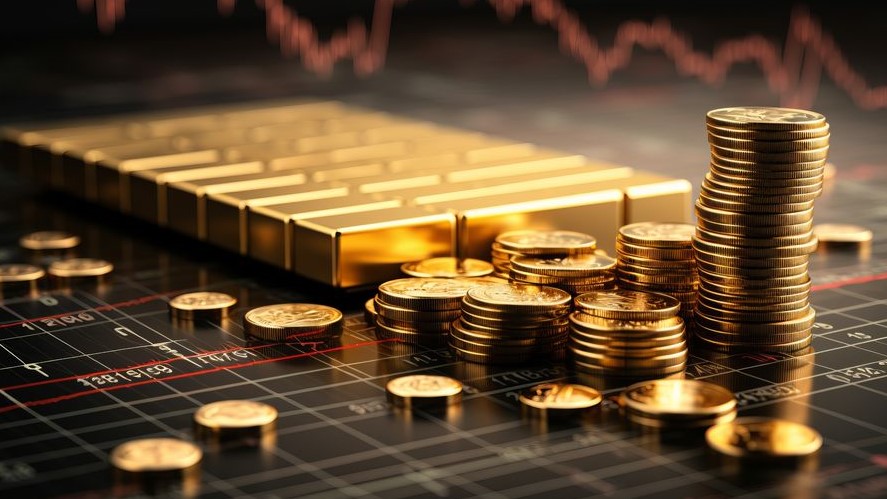
Bargain-hunting lifts bullion, but U.S.-Iran risks keep investors on edge
MARKET INSIDER – Gold prices bounced back after a sharp sell-off, but the real story isn’t the recovery—it’s the fragile balance between geopolitics and global monetary policy now shaping investor behavior. As tensions flare again in the Middle East and uncertainty clouds potential U.S.-Iran negotiations, markets are recalibrating what “safe haven” truly means in 2026.
Spot gold climbed 0.5% to $4,735.65 per ounce after hitting a one-week low, with U.S. futures settling 0.7% higher at $4,753. The rebound follows its steepest daily drop since late March, driven largely by bargain-hunting as investors stepped in after the pullback. Analysts say the move reflects short-term positioning rather than a fundamental shift in sentiment.
Behind the price action lies a more complex global narrative. Iran’s seizure of vessels in the Strait of Hormuz—one of the world’s most critical النفط chokepoints—has reignited fears over energy supply disruptions, while Washington’s continued pressure campaign under Donald Trump signals no immediate path to de-escalation. At the same time, renewed violence along the Israel-Lebanon border underscores how quickly regional instability can spill into broader market risk.
Yet, paradoxically, gold has struggled to maintain its traditional role as a crisis hedge. Prices remain down roughly 11% since the onset of the U.S.-Israel conflict with Iran earlier this year. The reason lies in a competing force: rising interest rate expectations. Comments from Federal Reserve nominee Kevin Warsh reaffirming policy independence and resisting pressure for rate cuts have reinforced a higher-rate outlook, which typically weighs on non-yielding assets like gold.
This tug-of-war between inflation fears and monetary tightening is also visible across the broader metals complex. Silver jumped 1.4%, platinum surged 2.1%, and palladium gained 1.3%, suggesting that investors are selectively rotating within commodities rather than making a full-scale defensive shift.
For global investors, the key takeaway is clear: gold is no longer reacting to headlines alone. It is increasingly driven by the intersection of geopolitical risk, energy prices, and central bank credibility. If tensions in the Strait of Hormuz escalate further, inflation could spike again—forcing central banks to stay hawkish and limiting gold’s upside.
And that paradox may define the next phase of the market: the very crises that once fueled gold rallies could now cap them—leaving investors to rethink where true “safe haven” value lies.
