
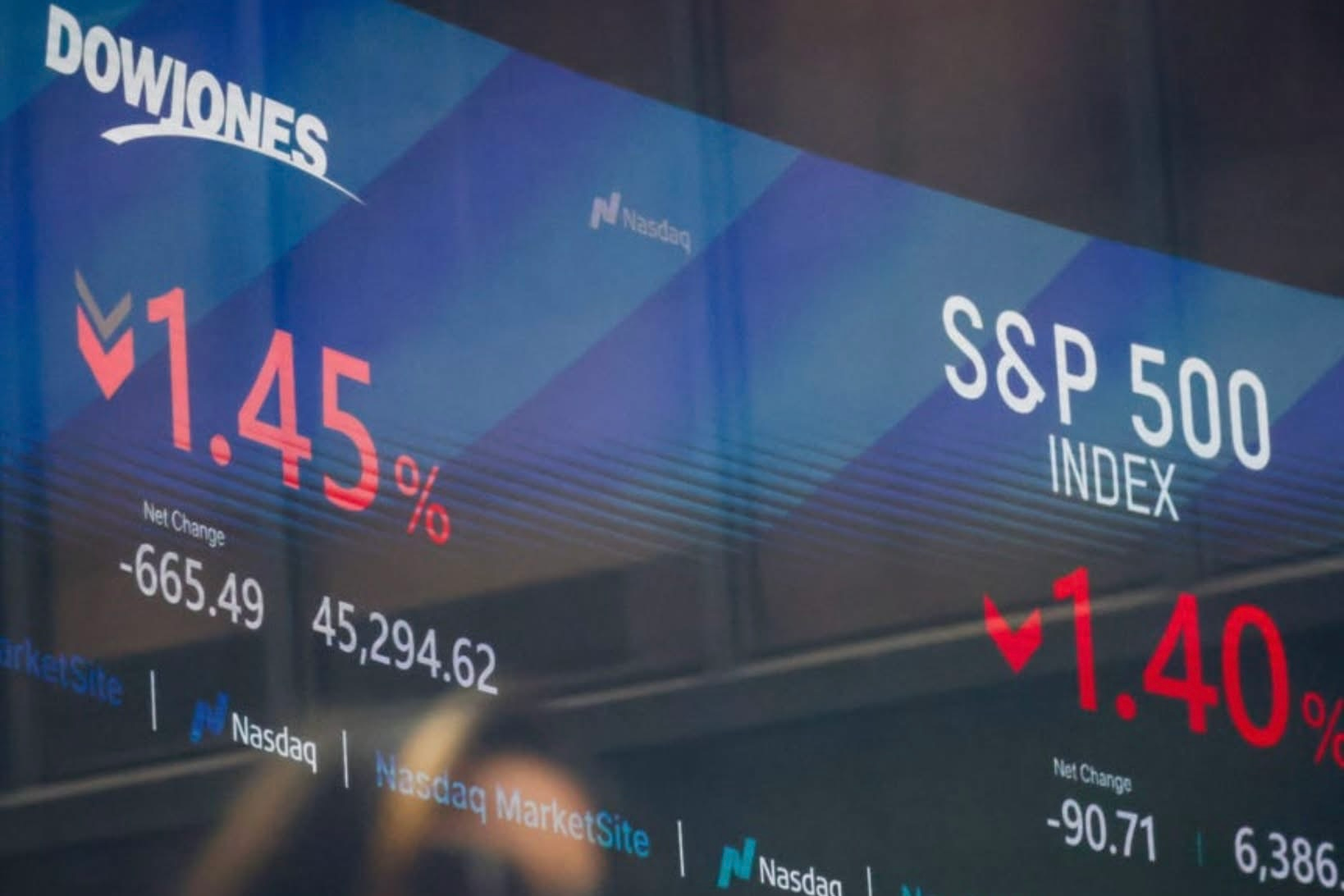
Oil surges, stock futures fall, and earnings season faces a geopolitical stress test as Middle East tensions intensify.
MARKET INSIDER – Global markets entered the new trading week under pressure as renewed military exchanges between the United States and Iran reignited fears over energy security, inflation, and the resilience of the global economy. With oil prices climbing, U.S. stock futures retreating, and Asian equities sliding sharply, investors are once again confronting the possibility that geopolitics—not corporate fundamentals—could dictate market direction.
The latest escalation comes at a critical moment. Wall Street is preparing for one of the most closely watched earnings weeks of the year, while investors also await fresh U.S. inflation data that could shape the Federal Reserve’s next policy moves. Together, the developments are creating a volatile backdrop for global financial markets, from New York to Seoul.
Dow Jones Industrial Average futures fell around 0.3% on Sunday evening, with S&P 500 futures also down 0.3% and Nasdaq-100 futures losing 0.5%. The decline followed another exchange of airstrikes between Washington and Tehran over the weekend. Iran claimed it had targeted U.S. facilities across multiple Gulf countries and declared the strategically vital Strait of Hormuz closed, although President Donald Trump rejected that assertion, insisting commercial shipping remained open. Trump had earlier ordered strikes on Iranian targets following an attack on a commercial vessel transiting the waterway.
Energy markets reacted immediately. Brent crude climbed nearly 4% to around $78.86 per barrel, while U.S. West Texas Intermediate crude rose above $74. Higher oil prices threaten to complicate the global inflation outlook just as central banks had been gaining confidence that price pressures were easing. Any prolonged disruption to shipping through the Strait of Hormuz—which carries roughly one-fifth of global oil consumption—would have far-reaching consequences for energy importers across Europe and Asia, while also influencing transportation, manufacturing, and consumer prices worldwide.
Asian markets reflected the growing uncertainty. South Korea’s Kospi tumbled more than 7%, marking one of its sharpest single-session declines in recent months, while Japan’s Nikkei 225 and Topix both closed lower. Mainland China’s CSI 300 also slipped, although Hong Kong’s Hang Seng Index managed modest gains. Market participants increasingly shifted toward defensive positioning as investors assessed whether the latest conflict represents a temporary flare-up or the beginning of a broader regional crisis.
Analysts caution that while the geopolitical headlines dominate short-term trading, the week will ultimately hinge on corporate earnings and economic data. Ben Emons, founder of Fed Watch Advisors, noted that uncertainty surrounding the Strait of Hormuz is likely to maintain a “risk-off” tone unless markets become convinced that global energy supplies face prolonged disruption. At the same time, investors will closely monitor June’s U.S. Consumer Price Index alongside earnings from financial heavyweights including JPMorgan Chase, Goldman Sachs, Morgan Stanley, Bank of America, Citigroup, and Wells Fargo. Reports from Netflix, Johnson & Johnson, and UnitedHealth Group are also expected to provide valuable insight into consumer demand and corporate resilience.
Despite the geopolitical turbulence, Wall Street enters earnings season with unusually high expectations. According to FactSet, analysts forecast S&P 500 companies to deliver more than 23% year-over-year profit growth for the second quarter. Technology remains a key focus, with investors watching whether artificial intelligence continues to fuel capital spending and earnings momentum. Raymond James Chief Investment Officer Larry Adam expects major cloud providers to reaffirm AI investment plans through 2028, citing accelerating enterprise adoption and a sharp increase in AI-related discussions across virtually every sector of the economy.
For global investors, the coming days may reveal whether geopolitical shocks can overpower one of the strongest corporate earnings seasons in years—or whether resilient profits and sustained AI-driven growth will once again prove strong enough to absorb another global crisis. That balance between conflict and corporate performance could determine not only this week’s market direction, but also the trajectory of risk assets through the remainder of 2026.
