
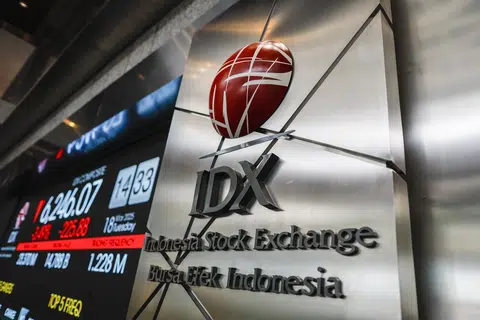
Despite solid economic growth, Indonesia’s 30% market plunge shows why investor trust matters more than GDP.
MARKET INSIDER – One of Southeast Asia’s strongest economies is sending a stark message to investors and policymakers worldwide: economic growth alone is no guarantee of stock market success. Indonesia’s benchmark Jakarta Composite Index (JKSE) has fallen more than 30% from its recent peak in less than a year, pushing the market close to its 52-week low despite the country avoiding recession and maintaining steady economic expansion.
The selloff highlights a reality often overlooked in emerging markets. Investors do not allocate capital based solely on GDP growth, population size, or natural resources. They invest where they believe corporate governance, transparency, and shareholder protections can safeguard their capital over the long term.
Indonesia remains the largest economy in Southeast Asia, with a population exceeding 280 million people, abundant natural resources, and resilient economic growth. Yet these strengths have not been enough to prevent a sharp market correction. The underlying issue is not economic performance but confidence in the investment environment.
Global index provider MSCI has repeatedly raised concerns about the Indonesian market’s structure, including transparency standards, low free-float ratios, concentrated ownership, and barriers affecting foreign investor accessibility. When international investors begin questioning the quality and openness of a market, capital can leave far more quickly than it arrived.
Currency weakness has further amplified the pressure. As the Indonesian rupiah depreciates against major global currencies, foreign investors face a double loss: declining equity valuations and a weaker local currency. For international funds managing global portfolios, this combination often accelerates capital outflows regardless of the broader economic outlook.
The Indonesian experience carries important lessons for emerging markets seeking higher international recognition and increased foreign investment. Market upgrades, deeper liquidity, and sustainable valuation growth require more than strong economic fundamentals. They depend on transparent governance, high-quality listed companies, meaningful free-float levels, and regulatory frameworks that foster long-term investor confidence.
Ultimately, stock markets are not merely mechanisms for pricing economic growth—they are mechanisms for pricing trust. Indonesia’s recent decline serves as a reminder that in global capital markets, confidence can be more valuable than any headline GDP figure. For countries pursuing emerging-market upgrades over the coming decade, that may be the most important lesson of all.
