
Middle East tensions jolt energy markets as Europe’s largest economy accelerates a historic shift from legacy industries to semiconductors.
MARKET INSIDER – Two of the world’s most critical economic storylines are unfolding simultaneously: escalating military tensions in the Middle East are once again threatening global energy security, while Germany is rapidly reshaping its industrial future by channeling capital away from traditional manufacturing and into strategic semiconductor production. Together, these developments underscore how geopolitics and industrial policy are redefining investment opportunities and economic resilience worldwide.
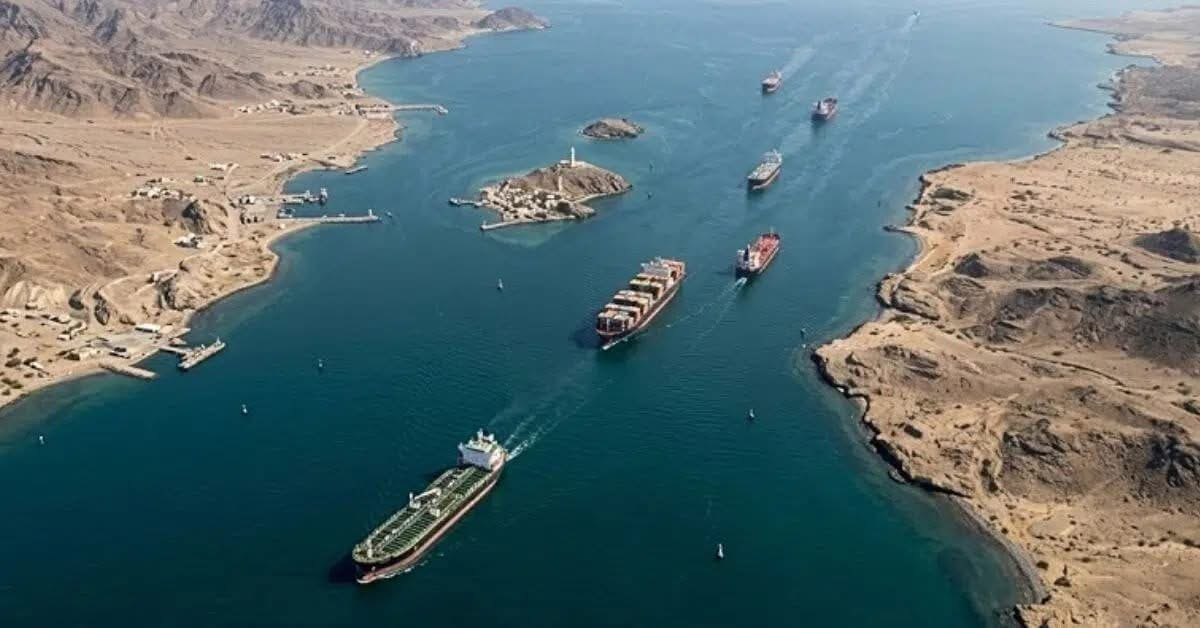
Oil prices jumped more than 4% on Sunday after Iran declared it had closed the Strait of Hormuz following a fresh wave of military exchanges with the United States. Although Washington immediately rejected Tehran’s claim and insisted commercial shipping remains open, the renewed confrontation has reignited concerns over one of the world’s most strategically important maritime chokepoints, through which roughly 20% of global oil supplies normally transit.
U.S. benchmark WTI crude climbed 4.37% to $74.53 per barrel, while international benchmark Brent crude gained 4.29% to $79.27 per barrel. The price rally followed new U.S. airstrikes targeting Iran after attacks on commercial vessels in the Strait of Hormuz, while Iranian media reported retaliatory strikes against U.S. military facilities in Jordan, Kuwait, Bahrain, and Oman. The U.S. Central Command (CENTCOM) maintained that the waterway remains open for lawful navigation, stating that U.S. forces continue to safeguard freedom of navigation despite what it described as Iran’s “unfounded” claims. President Donald Trump also reiterated that the Strait remains open during an interview with NBC’s Meet the Press. Even so, regional maritime authorities continue to classify security conditions as severe, urging vessels to maintain maximum vigilance as shipping companies reassess operational risks.
Beyond the immediate military confrontation, investors are watching for broader consequences. Any sustained disruption in the Strait of Hormuz could ripple through global inflation, transportation costs, manufacturing supply chains, and central bank policy, particularly as economies remain sensitive to energy price shocks after years of geopolitical volatility. Even if shipping continues uninterrupted, elevated geopolitical risk alone is enough to push insurance premiums, freight costs, and oil price volatility significantly higher.
Meanwhile, a very different transformation is taking place in Europe. Germany is undergoing one of its most significant industrial reallocations in decades as capital exits mature sectors and flows aggressively into semiconductor manufacturing. Biotechnology giant BioNTech reported a €532 million net loss in the first quarter of 2026, triggering a sweeping restructuring that will close production facilities in Marburg, Idar-Oberstein, and CureVac’s Tübingen site by the end of 2027. The restructuring will eliminate approximately 1,860 jobs across Germany and Singapore while transferring commercial vaccine manufacturing to Pfizer in the United States.
At the same time, semiconductor champion Infineon Technologies completed its €5 billion Smart Power Fab in Dresden three months ahead of schedule, supported by €1 billion in funding under the European Union’s European Chips Act. The facility will manufacture advanced power management chips for artificial intelligence data centers and electric vehicles, marking the company’s largest single investment to date and reinforcing Europe’s ambition to strengthen technological sovereignty amid intensifying global competition with the United States and China.
The contrasting fortunes of BioNTech and Infineon reflect a broader structural shift across Germany’s economy. According to projections from the Kiel Institute for the World Economy, total employment is expected to decline from 45.98 million in 2024 to 45.74 million by 2027, with higher-paying manufacturing jobs gradually disappearing while employment expands primarily in healthcare and public services to support an aging population. Germany’s Federal Employment Agency has also reported record-low reemployment prospects for unemployed workers, highlighting the growing social challenges accompanying this economic transition.
The parallel stories of rising oil prices and Germany’s industrial overhaul point to a larger global reality: capital is increasingly flowing toward sectors and regions viewed as strategically indispensable. Whether it is energy security in the Persian Gulf or semiconductor manufacturing in Europe, governments and investors are no longer optimizing solely for efficiency—they are prioritizing resilience. For global markets, that shift may prove to be one of the defining investment themes of the decade.
