
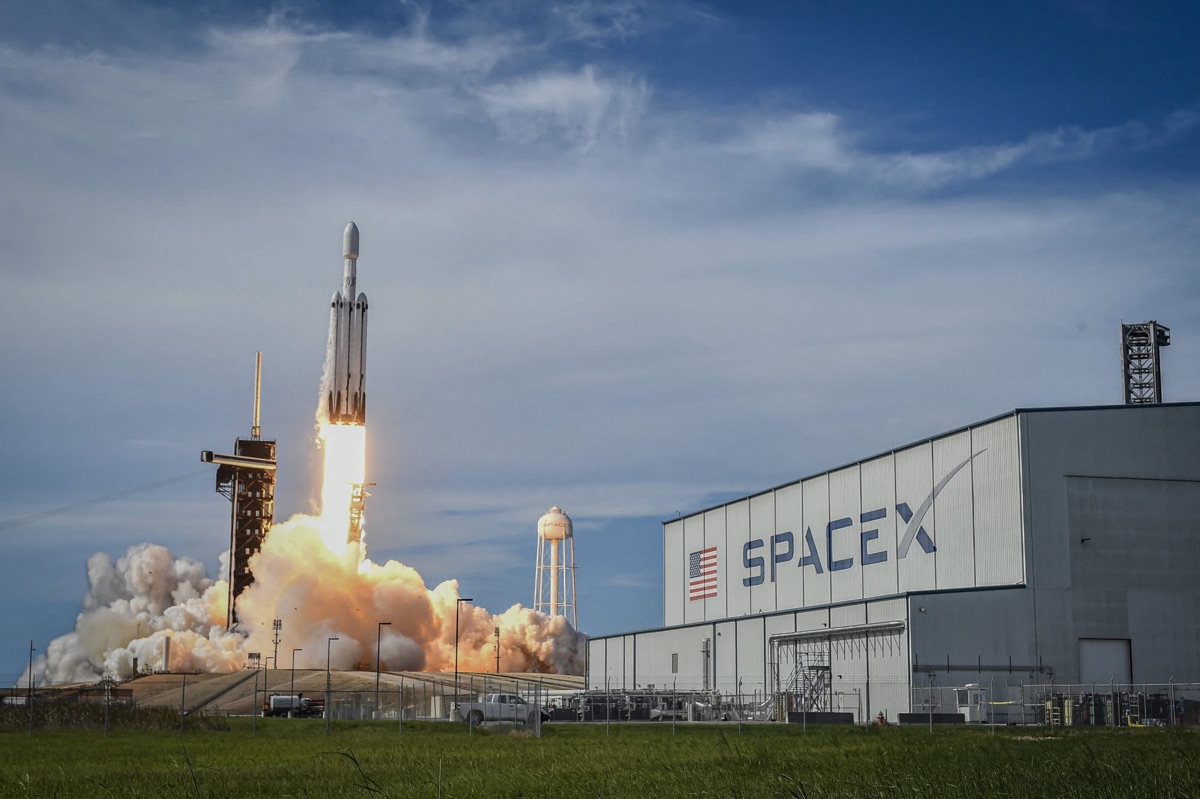
Strong second-quarter revenue and a surprisingly orderly insider-share unlock lifted SpaceX above $135, but heavy AI spending and another release of restricted shares could keep the stock volatile.
MARKET INSIDER — SpaceX shares have recovered above their $135 initial public offering price as investors weigh stronger-than-expected revenue, rapid Starlink and artificial-intelligence growth, and a new agreement to launch satellites for Vietnam’s VinSpace in 2027.
The stock closed 4.2% higher at $138.74 on August 10 after surging 16% in the previous session. The recovery suggests the market absorbed SpaceX’s first major post-IPO share unlock better than feared. However, another group of restricted shares is due to become tradable on August 20, while extraordinary capital expenditure and ambitious revenue targets remain significant valuation risks.
Key Highlights
- SpaceX closed at $138.74, moving above its $135 IPO price for the first time since July 16.
- Second-quarter revenue rose 92% to $7.81 billion, exceeding the approximately $6.9 billion analyst consensus.
- About 911 million restricted shares became eligible for trading without triggering the expected selloff.
- VinSpace will place its first domestically developed satellites on a SpaceX Transporter rideshare mission in the second quarter of 2027.
SpaceX shares recover after a volatile post-IPO decline
SpaceX’s rebound represents a sharp reversal from its early-August low.
After pricing its June IPO at $135, the stock climbed as much as 67% above the offer price amid intense retail and institutional demand. It subsequently surrendered those gains as investors questioned the company’s valuation, aggressive AI investments and approaching insider-share unlocks.
Shares fell as low as $104.83 intraday on August 3, more than 22% below the IPO price. The August 10 close at $138.74 therefore represented a recovery of approximately 32% from that low, although the stock remained well below its June peak.
SpaceX shares had not closed above the IPO price since July 16. The latest advance also lifted the stock above the $135 level that had become an important reference point for investors who participated in the offering.
The rebound does not mean post-IPO volatility has ended. It shows that buyers were willing to absorb greater liquidity and that the immediate fear of widespread insider selling was more severe than the selling that actually materialized.
Revenue beat expectations, but SpaceX still reported a loss
The recovery followed SpaceX’s first financial report as a publicly traded company.
Second-quarter revenue increased 92% from a year earlier to $7.81 billion, compared with approximately $4.1 billion in the same period of 2025. Analysts had expected about $6.9 billion.
SpaceX reported a loss of nine cents per share, considerably narrower than the 26-cent loss anticipated by analysts. Its net loss declined to approximately $541 million from about $1 billion a year earlier, according to Reuters
The results demonstrated that SpaceX is no longer solely a launch-services company. Its reported operations now extend across three principal areas of Space launches and related government contracts; Starlink satellite connectivity, and Artificial intelligence and computing infrastructure following its absorption of xAI.
Starlink remained the group’s most established commercial engine. Its subscriber base doubled from a year earlier to approximately 12 million, while the AI business delivered substantially faster revenue growth from a smaller base.
The launch division remains strategically important but continues to require significant investment. Its longer-term economics depend heavily on SpaceX increasing the reliability and flight frequency of Starship.
The $100 billion target requires careful interpretation
SpaceX Chief Financial Officer Bret Johnsen said the company was on a trajectory toward a $100 billion annualized revenue run rate by the end of 2026, supported by AI computing agreements and its planned transaction involving Cursor.
That statement should not be interpreted as a forecast that SpaceX will record $100 billion of revenue during 2026.
A company generating $7.81 billion in one quarter currently has a simple annualized revenue rate of approximately $31.2 billion. Reaching a $100 billion year-end run rate would require revenue to accelerate toward roughly $25 billion per quarter by December.
The target appears to depend substantially on contracted AI-computing capacity becoming operational, rather than organic growth in SpaceX’s established launch and Starlink businesses alone.
SpaceX has signed computing agreements with customers including Google, Anthropic and Reflection AI. Management also expects the proposed Cursor transaction to contribute to its expansion in AI software and services.
The distinction matters because an annualized run rate is a snapshot based on revenue generated or expected near a particular point in time. It is not the same as audited annual revenue, recurring revenue already collected or guaranteed future sales.
SpaceX’s reported 2025 revenue was $18.67 billion. Chief Executive Elon Musk has said the company could reach $1 trillion of annual revenue by 2030, while external analysts have generally published substantially lower projections, the Reuters reported.
Heavy capital expenditure remains the central financial risk
Revenue was not the only figure investors examined.
SpaceX recorded approximately $18.4 billion of capital expenditure in the second quarter, including nearly $16 billion associated with AI infrastructure. The quarterly investment was more than twice the company’s revenue during the period.
That spending contributed to the initial negative reaction following the earnings release. Shares fell sharply on August 5 as investors questioned how quickly the AI business could generate sufficient returns to justify the capital committed to data centers, computing hardware and supporting infrastructure.
SpaceX’s investment case therefore contains an unusual combination of mature and highly speculative businesses.
Starlink already has millions of customers and produces meaningful cash flow. Launch services benefit from SpaceX’s leading position in reusable rockets and its relationships with NASA, the US military and commercial satellite operators.
By contrast, large-scale AI computing, space-based data centers, chip manufacturing and the Cursor transaction require substantial additional execution. Their eventual profitability is difficult to estimate because both demand and infrastructure costs are changing rapidly.
The company’s ability to fund those projects without repeatedly raising capital or weakening the economics of its established businesses will remain an important test.
First 911 million-share unlock did not produce a selloff
Another major source of concern was the expiration of restrictions on approximately 911 million insider shares on August 6.
The newly eligible shares exceeded the roughly 639 million sold through the IPO. Before the unlock, only about 5% of SpaceX’s equity was freely tradable. The release increased the transferable share pool to more than 1.5 billion shares.
Investors had feared that employees and early shareholders would use the opportunity to realize gains accumulated while SpaceX was privately held. Such selling could have overwhelmed the relatively limited public float.
Instead, shares surged 16% on August 7.
The reaction indicates that actual insider selling was limited relative to expectations. Improving liquidity may also have attracted institutional investors that were previously unable to build meaningful positions without moving the market.
Short covering probably contributed as well. Investors who had sold SpaceX shares in anticipation of a lockup-driven decline would have needed to buy them back when the expected selling failed to appear.
This does not mean the unlock had no effect. Retail investors became net sellers of SpaceX for the first time since the IPO, disposing of a net $4.5 million of shares on August 7, according to Vanda Research.
The amount was modest compared with the $144.6 million of retail net purchases recorded on June 16. It nevertheless suggests some individual investors used the rebound to reduce losses or take profits, Reuters citied.
Another share release is due on August 20
SpaceX faces a second near-term supply test before trading begins on August 20.
Approximately 7% of the company’s remaining restricted shares—principally held by employees and pre-IPO common shareholders—are expected to become eligible for sale.
The market impact will depend less on the headline number than on how many holders actually decide to sell.
Employees may diversify because a substantial share of their personal wealth is tied to SpaceX. Early investors may realize returns after holding the stock for years. Other shareholders may retain their positions because they believe SpaceX’s long-term potential outweighs short-term valuation concerns.
The first unlock may have reduced the probability of a disorderly selloff, but it cannot establish how investors will respond to every subsequent release.
Greater free float has two opposing effects. It can create temporary selling pressure, but it also improves liquidity, makes institutional participation easier and reduces the price distortions associated with a very small number of tradable shares.
Investors should consequently watch trading volume and insider disclosures, rather than treating the scheduled release as an automatic bearish event.
VinSpace agreement expands SpaceX’s Asian launch relationships
The share-price recovery coincided with a strategically notable development in Vietnam.
VinSpace, part of the Vingroup ecosystem, has signed a contract to place its first satellites into orbit through SpaceX’s Transporter rideshare program in the second quarter of 2027.
The program allows several customers to share the same launch, reducing the cost of sending small satellites into orbit compared with purchasing an entire rocket mission.
VinSpace said it will research, develop, manufacture and operate the satellites. The initial mission is expected to support orbital technology testing, capability development and future commercial applications, Reuters reported.
Established in November 2025 with initial capital of VND300 billion—approximately $11.4 million—VinSpace aims to develop capabilities spanning satellite design, assembly, integration, testing, launch management, operations and data services.
The agreement represents a significant milestone for VinSpace and Vietnam’s developing commercial-space industry. It does not, by itself, materially change SpaceX’s near-term financial outlook.
Transporter missions already carry multiple customers, and neither company disclosed the contract’s value or the number and specifications of the satellites involved. The deal should therefore be viewed as evidence of SpaceX’s global launch reach, rather than a major new revenue catalyst for the stock.
Why the agreement matters for Vietnam
Vietnam has historically depended on foreign partners to manufacture or launch most of its satellites. Developing domestically designed spacecraft would allow Vietnamese engineers to gain practical experience in orbital operations, satellite integration and space-derived data services.
Potential commercial applications include telecommunications, environmental monitoring, agriculture, maritime surveillance, urban planning and disaster management. However, VinSpace has not yet provided sufficient technical or financial detail to determine which services will become commercially viable.
The 2027 mission will be an early test rather than proof of a completed business model.
For Vingroup, the project extends its diversification into high-technology industries. The group already has interests in electric vehicles, digital services, education, healthcare and real estate.
Investors in Vingroup should avoid assuming that the SpaceX agreement will immediately contribute meaningful earnings. Satellite development is capital-intensive, development timelines can change and commercial revenue usually depends on building data-processing, distribution and customer-service capabilities in addition to successfully placing hardware in orbit.
The more immediate value is technological positioning and access to a reliable international launch provider.
Starship remains crucial to SpaceX’s valuation
Wall Street analysts generally remain constructive on SpaceX, but many view Starship execution as essential to supporting the company’s valuation.
Citigroup has maintained a $200 price target and raised some of its 2026 and 2027 forecasts. Even optimistic analysts, however, recognize that SpaceX must demonstrate progress in both technical performance and commercial deployment.
Starship is designed to carry substantially heavier payloads than the Falcon 9 system currently used for many launches. If SpaceX achieves reliable, frequent and economical Starship operations, it could lower the cost of deploying larger Starlink satellites, government payloads and eventually computing infrastructure in orbit.
Delays or failures would have consequences across several parts of the investment thesis.
Starship supports not only future launch revenue but also Starlink capacity expansion, lunar missions, potential Mars operations and Musk’s plans for space-based AI infrastructure. The more businesses SpaceX builds around that vehicle, the greater the financial effect of schedule slippage.
What investors should watch next
The August 20 share unlock is the nearest market catalyst. Trading volume, insider sales and the stock’s behavior around the $135 IPO price will show whether the recent rally reflects durable institutional demand or mainly short covering.
Investors should also track the quality of revenue growth. Starlink subscriber numbers are important, but average revenue per user, government contracts and enterprise connectivity will determine whether subscriber expansion translates into sustainable cash flow.
AI revenue requires even closer examination. Management must show that computing contracts are becoming operational revenue—and eventually cash flow—fast enough to justify quarterly capital expenditure that already exceeds total company sales.
Starship testing and deployment milestones remain central to the long-term valuation. Commercial promises across satellites, AI and orbital infrastructure become more credible only if SpaceX can expand launch capacity at a manageable cost.
For VinSpace, the important milestones will include satellite specifications, manufacturing progress, regulatory approvals, mission readiness and confirmation of the final launch schedule.
SpaceX’s return above $135 is encouraging for shareholders, particularly after the market absorbed 911 million newly eligible shares without a broad selloff. But it does not resolve the fundamental debate surrounding the company.
The stock combines fast-growing operating businesses with extremely ambitious projects, exceptional capital requirements and a valuation that assumes successful execution across several industries at once. The next share unlock may determine short-term price direction; revenue conversion and Starship performance will determine whether the recovery can last.
