
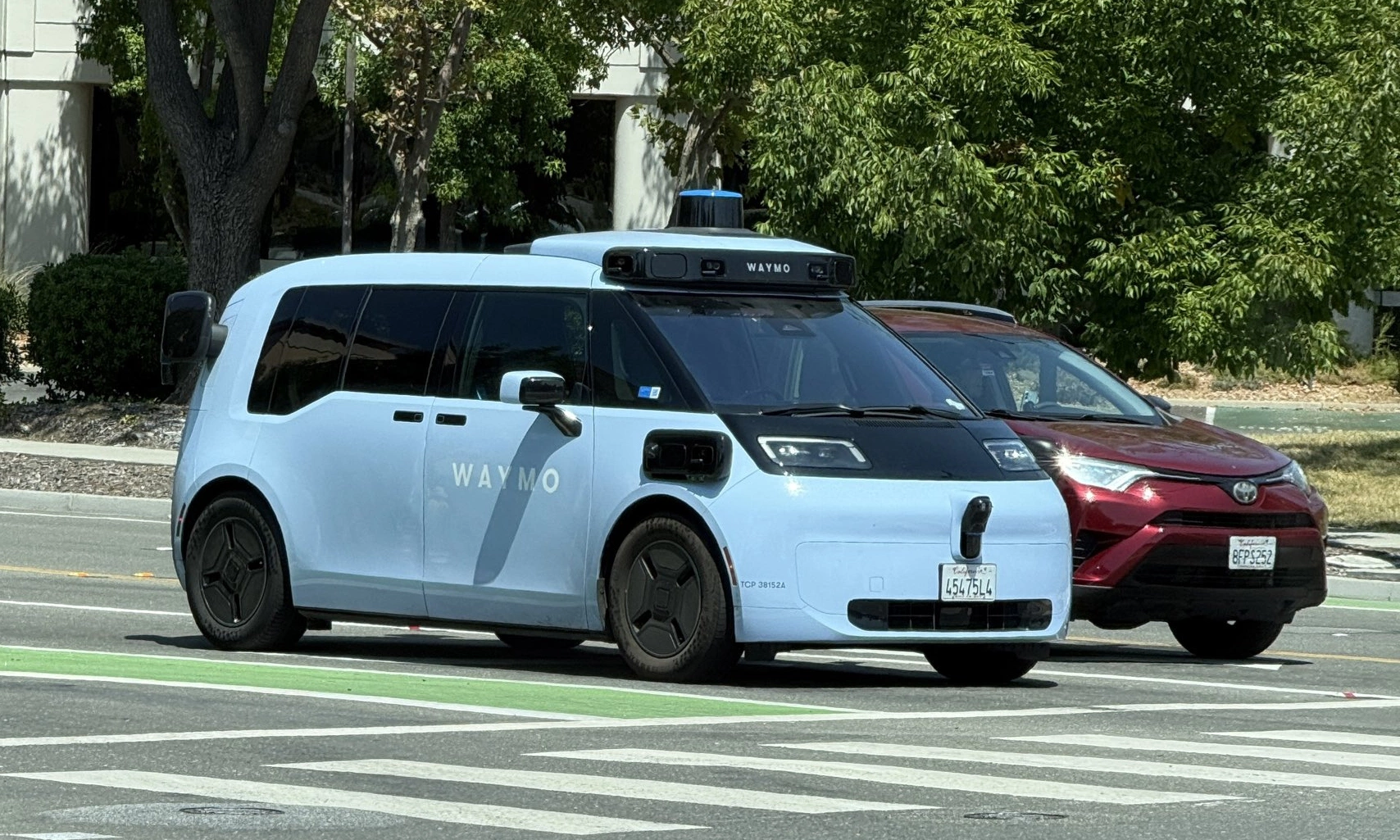
Zeekr robotaxis remain far cheaper than Waymo’s Jaguar fleet, exposing the extraordinary cost advantage of Chinese EV manufacturing.
America has effectively shut Chinese electric cars out of its consumer market with tariffs and increasingly restrictive trade rules. Yet thousands of China-built EVs are still arriving at U.S. ports for one of Silicon Valley’s most ambitious transportation projects. The reason is striking: even after a 127.5% import tariff, Zeekr electric minivans built for Alphabet’s Waymo can reportedly cost substantially less than the Jaguar vehicles currently powering its robotaxi fleet.
The unusual economics highlight a much bigger issue confronting the global auto industry. Tariffs can dramatically raise the price of Chinese electric vehicles, but China’s manufacturing cost advantage has become large enough that, for specialized commercial applications, importing them can still make financial sense.
Waymo’s relationship with Zeekr predates the latest escalation in U.S.-China trade barriers. The autonomous-driving company selected the Geely-owned Chinese EV brand to develop a purpose-built electric minivan for its next generation of driverless taxis rather than relying on an existing U.S.-made vehicle.
Known as the CM1e in China and internally as “Ojai” at Waymo, the vehicle is based on Geely’s SEA-M electric architecture and traces its origins to the Zeekr M-Vision concept unveiled in 2022 specifically for autonomous ride-hailing.
Despite Washington’s increasingly aggressive trade barriers against Chinese EVs, the program has continued.
According to Forbes figures cited in the original report, more than 3,200 Zeekr minivans have been imported into the United States since 2024, including more than 2,600 this year.
A $38,000 Chinese EV Becomes an $86,500 Vehicle in America
U.S. import filings reportedly value each Ojai at around $38,000, close to the approximately $39,000 price of the CM1e in China.
The vehicle uses an 800-volt electrical architecture, a 93-kWh battery and a rear electric motor producing 268 horsepower. Its cabin was designed around ride-hailing rather than private ownership, featuring dual sliding doors and a pillarless opening that makes passenger entry and exit easier.
But the economics become more remarkable once tariffs are included.
At an effective tariff rate of 127.5%, a $38,000 vehicle would cost approximately $86,500 after import duties—before Waymo installs the hardware required for autonomous driving.
Waymo’s sixth-generation autonomous-driving package reportedly adds roughly another $25,000 per vehicle. The system incorporates four LiDAR sensors, six radar units and 13 cameras, alongside the computing and software required to operate the vehicle autonomously.
That pushes the finished cost of a Zeekr-based Waymo robotaxi above $100,000.
Normally, paying more in tariffs than the original manufacturing cost of a vehicle would appear commercially irrational.
In Waymo’s case, it apparently still works.
The Jaguar Comparison Explains Everything
Waymo’s existing Jaguar I-Pace robotaxis are estimated to cost more than $200,000 each once fully equipped for autonomous operation.
That means the China-built Zeekr can potentially remain dramatically cheaper even after Washington more than doubles its landed price through tariffs and Waymo adds its autonomous-driving technology.
The minivan also offers something arguably more important for a robotaxi operator: it was designed specifically to carry passengers.
Compared with the Jaguar I-Pace, the Zeekr provides a larger and more accessible cabin, potentially making it better suited to frequent passenger pickups and drop-offs.
Waymo says more than 100 Zeekr-built minivans are already carrying passengers, including in Los Angeles and San Francisco. The company has not disclosed how many of the more than 3,200 imported vehicles are undergoing testing, being stored or awaiting commercial deployment.
The Bigger Story Is China’s Manufacturing Advantage
The economics of the Waymo-Zeekr partnership offer an unusually clear illustration of the competitive challenge facing Western automakers.
Washington’s tariffs are intended in part to prevent heavily cost-competitive Chinese EV manufacturers from disrupting the U.S. automotive industry. For ordinary American consumers, those barriers have largely prevented Chinese brands from entering the market directly.
But Waymo’s calculations suggest that tariffs alone do not necessarily eliminate China’s underlying cost advantage.
A vehicle that costs around $38,000 at import valuation can absorb roughly $48,000 in duties, receive approximately $25,000 of sophisticated autonomous-driving hardware and still potentially cost far less than the vehicle it replaces.
That does not mean Chinese EVs would automatically dominate the U.S. market without tariffs. Vehicle safety certification, software restrictions, data-security concerns, dealer networks, consumer preferences and geopolitical tensions all create additional barriers.
But it demonstrates why Chinese EV manufacturing has become such an important issue for policymakers and automakers in the U.S., Europe and other major markets.
Robotaxis Change the Economics of the Auto Industry
Waymo’s decision also illustrates how autonomous mobility could reshape the traditional definition of automotive competitiveness.
For an individual consumer, branding, styling, resale value and driving experience matter enormously. For a robotaxi fleet operating continuously, the equation is different.
Vehicle acquisition cost, cabin utilization, energy efficiency, maintenance, reliability and cost per passenger mile become more important. A purpose-built platform can therefore have substantial advantages over converting a premium consumer vehicle into an autonomous taxi.
This is where Chinese EV manufacturers could possess another structural advantage. China’s enormous domestic EV market has created supply chains capable of producing batteries, electric motors, power electronics and vehicle platforms at enormous scale.
At the same time, American technology companies remain global leaders in autonomous-driving software, artificial intelligence and advanced computing.
Waymo’s Zeekr fleet is therefore an intriguing product of the U.S.-China technology rivalry: Chinese EV manufacturing economics combined with American autonomous-driving technology, operating on American streets despite some of the world’s highest trade barriers.
For global investors and automakers, the lesson goes beyond Waymo. Protectionism can change where vehicles are sold and how supply chains are structured, but it does not automatically erase differences in manufacturing productivity.
If a Chinese EV can cross the Pacific, absorb a 127.5% tariff, receive tens of thousands of dollars of autonomous-driving technology and still beat the economics of an existing Western vehicle, the industry’s most important question may not be how high governments can build their tariff walls.
It may be how quickly manufacturers outside China can close the cost gap behind them.
