
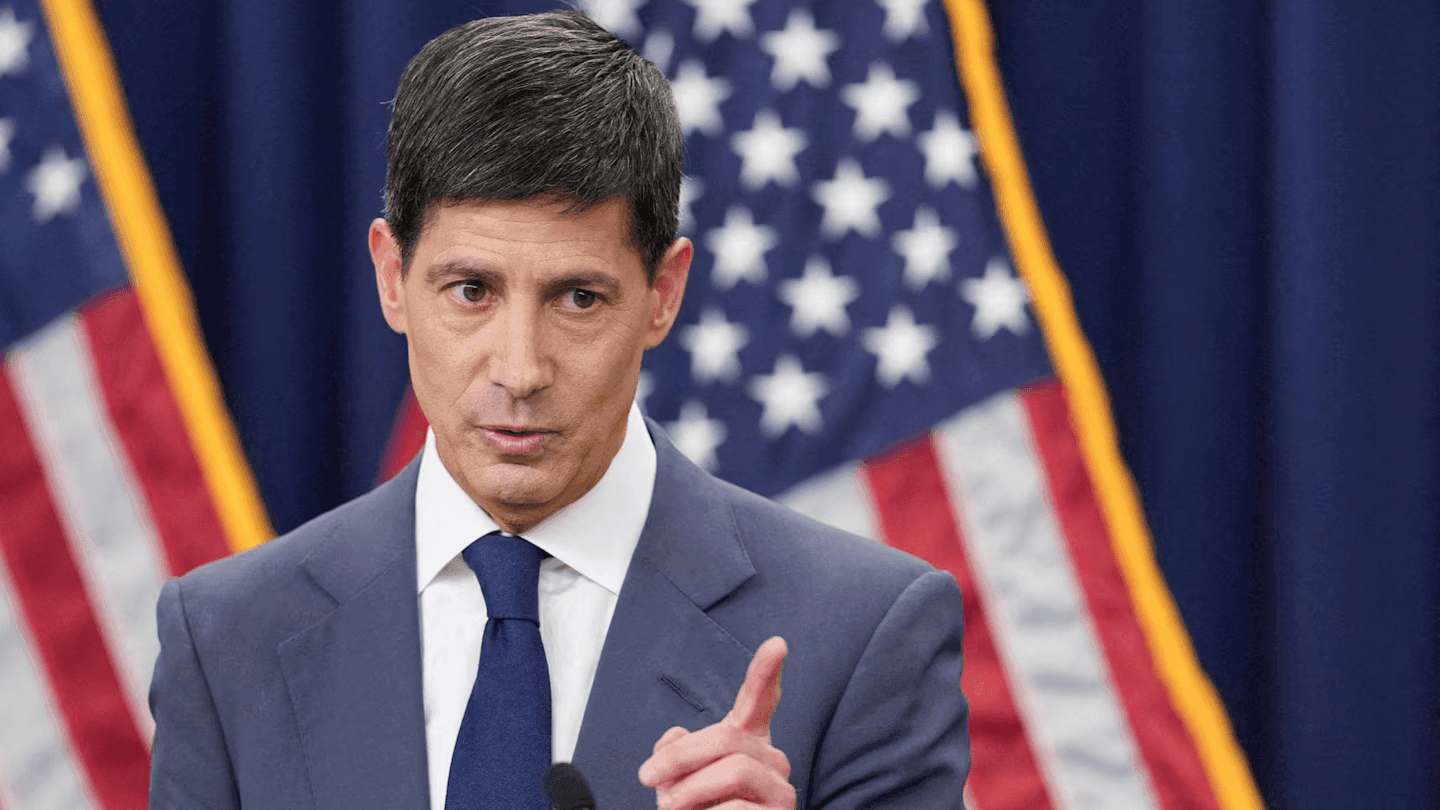
Investors expect unchanged rates on Wednesday, but persistent inflation could keep December tightening firmly in view.
MARKET INSIDER — The Federal Reserve is widely expected to leave interest rates unchanged on Wednesday, October 28, giving policymakers more time to assess September’s increase. The greater uncertainty is whether Chair Kevin Warsh will reinforce expectations of further tightening as inflation remains elevated and parts of the economy struggle with expensive credit.
A pause would leave the federal funds target range at 3.75%–4%. Investors will scrutinise Warsh’s explanation of the decision for clues about December, particularly whether officials see recent price pressures as temporary or as evidence that demand needs to slow further.
Key Highlights
- Markets expect the Fed to hold rates steady following September’s quarter-percentage-point increase.
- Futures pricing cited ahead of the meeting put the probability of an October hike near 10%, versus more than 80% for December.
- Persistent inflation supports further tightening, while weak housing activity and subdued hiring complicate the decision.
A pause could preserve the tightening bias
Holding rates steady would allow officials to observe how September’s increase is affecting borrowing, spending and financial conditions.
It would not necessarily indicate that the tightening cycle is over.
Deutsche Bank economist Brett Ryan expects Warsh to argue that recent inflation figures reinforce the case for additional increases over time, while explaining that skipping October allows more time to assess the data.
That combination could produce a hawkish hold: no immediate change in rates, accompanied by language that leaves another increase firmly on the table.
The distinction matters because financial markets respond to the expected path of policy. Even an unchanged decision can lift borrowing costs if investors conclude that future rates will be higher than previously anticipated.
Inflation and economic weakness pull in different directions
September’s consumer price index showed annual inflation of 3.7%, with energy prices contributing substantially to the increase. Core CPI, excluding food and energy, stood at 2.6%, up 0.3 percentage points from August.
The Fed’s formal 2% inflation objective applies to the personal consumption expenditures price index, rather than CPI. Nevertheless, CPI provides important evidence about price pressures and helps shape expectations for subsequent inflation releases.
The policy problem is that higher interest rates cannot directly restore disrupted energy supplies. They can restrain demand and reduce the risk that higher costs become embedded in broader pricing and inflation expectations.
Those effects come with economic costs.
Mortgage rates above 7% are weighing on housing activity. The labour market also presents a mixed picture: layoffs remain low, but limited hiring makes it difficult for unemployed workers to find new positions.
Stable unemployment can therefore coexist with growing pressure on particular households and industries.
Warsh’s communication may matter more than the vote
Warsh has expressed reluctance to provide forward guidance, preferring to let incoming data shape expectations rather than committing the Fed to a policy path.
That approach preserves flexibility. It also makes the explanation of each decision more important.
Investors need to understand why policymakers would pause despite disappointing inflation, what evidence would justify another increase and how much weight they place on weakness in interest-sensitive sectors.
Evercore ISI’s Krishna Guha has warned of significant execution risk in communicating that balance. His interpretation is that the Fed could proceed at a measured pace, potentially around one increase per quarter, while retaining the option to accelerate if inflation or growth warrants it.
That remains an analyst’s assessment, not an announced Fed schedule. References to increases at alternate meetings should likewise not be treated as a binding commitment.
December remains the next major test
The futures pricing cited in the report assigned roughly a 10% probability to an increase this week and more than an 80% probability to a December move.
Those probabilities are market snapshots rather than forecasts issued by the central bank. They can change quickly following inflation, employment or spending releases.
Further out, investors have also been pricing the possibility of additional tightening in 2027. That longer horizon is especially sensitive to assumptions about energy prices, economic growth and how effectively earlier increases restrain demand.
Economists disagree on the appropriate response. Citigroup expects a December increase but argues that softer inflation in the months ahead could eventually justify a prolonged hold or cuts next year.
The disagreement illustrates why an October pause alone would reveal relatively little about the eventual peak in rates.
Who bears the cost of further tightening?
Allianz adviser Mohamed El-Erian expects additional increases but argues that they would place disproportionate pressure on housing, vehicle finance and other consumer borrowing. He favours fiscal restraint as a response to inflation and elevated Treasury yields.
His broader concern is that economic strength is uneven. Parts of the technology industry may sustain investment while more credit-dependent sectors absorb a larger share of the slowdown.
Technology is not immune, however. Higher discount rates can weigh on valuations, and companies relying on external financing face their own funding constraints.
For investors, the relevant distinction is between businesses supported by durable cash generation and those dependent on cheap refinancing or continued access to capital.
Implications for Asia and emerging markets
A firmer U.S. rate outlook could support the dollar and increase financing pressure on emerging-market borrowers with dollar liabilities. Asian central banks would then face a more difficult balance between supporting domestic growth and managing exchange-rate pressure.
Conversely, a measured message from Warsh could reduce uncertainty without implying that inflation has been defeated.
The most consequential signals on Wednesday will be the Fed’s assessment of persistent inflation, the evidence it needs before tightening again and its tolerance for further weakness in housing and hiring. The decision to pause is widely anticipated; the explanation will determine how markets interpret it.
