
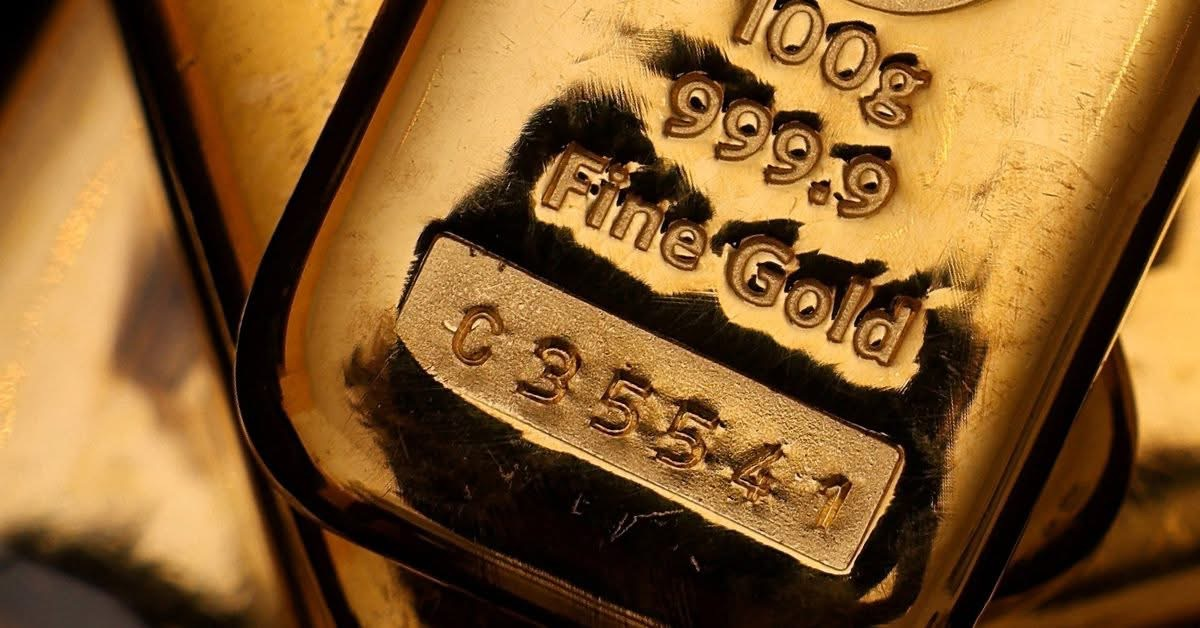
Bullion retreats after Monday’s rally as markets weigh December rate-hike expectations against easing oil prices and hopes for restraint in the Middle East.
MARKET INSIDER — Gold edged lower on Tuesday as investors took profits following a gain of more than 1% in the previous session and awaited U.S. inflation data for direction on interest rates. Spot bullion fell even as December futures edged higher, reflecting their different trading benchmarks. The immediate focus is whether October’s consumer price report changes expectations for another Federal Reserve rate increase in December. Meanwhile, falling oil prices offer a competing influence: easing geopolitical tensions could reduce demand for safety, but lower energy costs could also lessen inflation pressure and the need for further monetary tightening.
Key Highlights
- Spot gold fell 0.6% to $4,115.12 an ounce in early trading, while December futures gained 0.2%.
- Traders priced in an approximately 84% probability of a December Fed rate increase.
- Tuesday’s consumer inflation report and Friday’s producer price data will help shape the near-term outlook.
Gold pauses after Monday’s advance
Spot gold traded at $4,115.12 an ounce at 02:38 GMT on Tuesday, November 10, while U.S. gold futures for December delivery stood at $4,123.90.
The pullback followed bullion’s more than 1% advance on Monday. Kyle Rodda, senior financial market analyst at Capital.com, attributed the retreat to profit-taking after prices climbed during the U.S. session.
Gold subsequently trimmed its decline. By 06:18 GMT, spot prices were down 0.4% at $4,124.42, while December futures had risen 0.5% to $4,133, according to an updated Reuters report. The moves illustrate the sensitivity of pre-release trading to positioning rather than a settled direction.
Inflation data put December policy in focus
The October consumer price index is scheduled for release on Tuesday at 8:30 a.m. Eastern Time, or 8:30 p.m. in Vietnam. Producer price data follow on Friday, November 13.
Economists expect headline CPI to rise 0.3% month on month and core CPI, excluding food and energy, to increase 0.2%. Both would represent slower increases than September’s readings of 0.6% and 0.3%, respectively.
For gold, the significance lies in how the results affect bond yields, the dollar and expectations for monetary policy. Higher interest rates generally raise the opportunity cost of holding bullion, which pays no interest. A softer inflation reading could ease that pressure, although the response would depend on how far the figures differ from expectations.
Markets were pricing in an approximately 84% probability of a December rate hike ahead of the release, according to CME FedWatch figures cited in the report. That probability is a market estimate and can change quickly as new information arrives.
Barkin urges caution despite persistent price pressure
Richmond Fed President Tom Barkin said on Monday that resilient demand and broad-based business costs continued to create inflation risks.
In a speech published by the Richmond Fed, he noted that companies were considering passing on costs they had previously absorbed. However, he also warned that weaker investment, falling asset prices or changes in employment could undermine demand, making a careful approach to policy appropriate.
Barkin separately said he had no predetermined position on the December decision, leaving incoming inflation and employment data central to his assessment.
Why lower oil could support gold
Oil extended its decline on Tuesday after President Donald Trump indicated that he would hold off on new military strikes against Iran for now.
The implications for bullion run in two directions. Reduced escalation risk can weaken demand for defensive assets. At the same time, cheaper energy can ease inflation pressure and potentially reduce expectations for higher interest rates.
Rodda argued that continued U.S. restraint and falling oil prices could ultimately benefit gold through their effects on the dollar and monetary-policy expectations.
That outcome is conditional. Lower oil alone does not guarantee lower real yields or a weaker dollar, particularly if underlying inflation remains persistent.
Other precious metals also retreat
In the early trading snapshot, silver fell 0.6% to $53.04 an ounce, platinum declined 0.3% to $1,571.70, and palladium dropped 0.4% to $1,037.50.
The next test for bullion is whether inflation data prompt investors to revise the expected path of rates. A stronger-than-expected report could reinforce tightening expectations, while a softer reading could give gold support after Tuesday’s profit-taking.
