
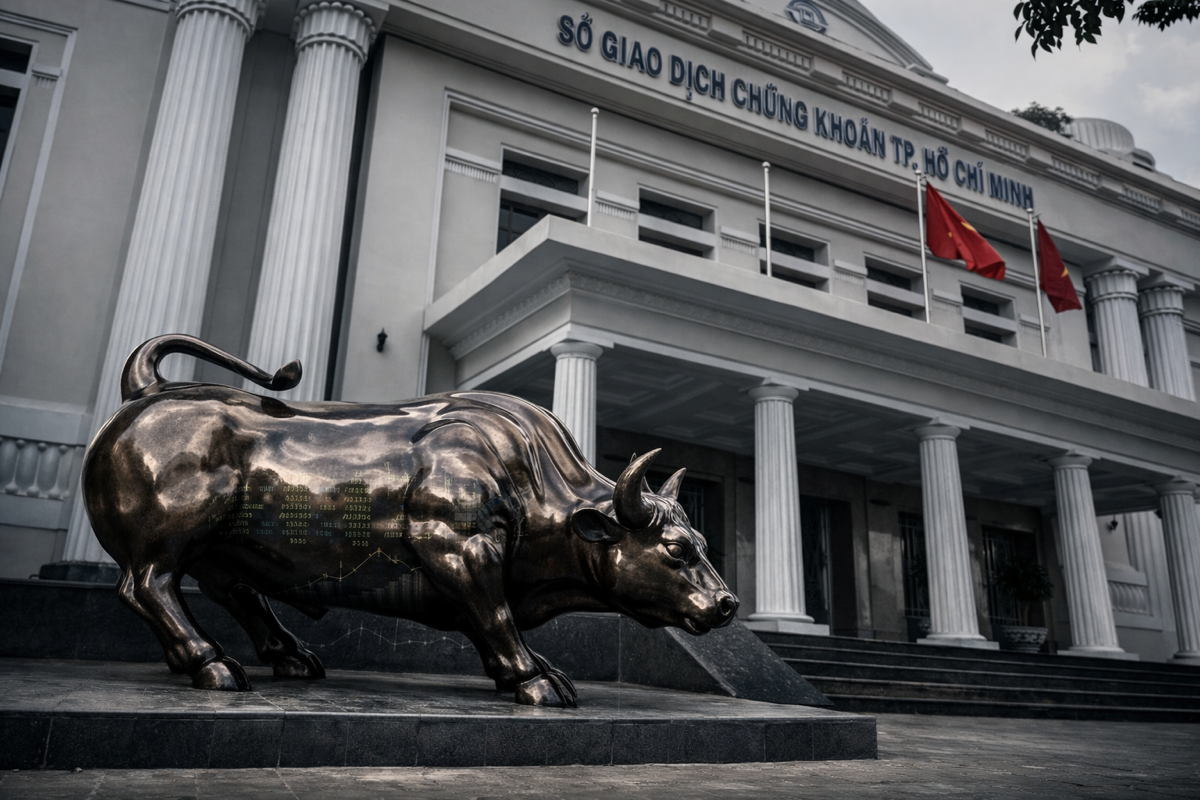
Billions in global capital hinge on April 7 review as Vietnam eyes emerging-market status
MARKET INSIDER – Vietnam’s stock market is approaching a defining moment that could reshape capital flows across Southeast Asia. On April 7, global index provider FTSE Russell will release its intermediate assessment on whether Vietnam has met the final criteria to join the FTSE Emerging Markets Index—potentially unlocking billions of dollars from international funds as early as September 2026.
For global investors, the stakes go far beyond a technical reclassification. A successful upgrade would mark Vietnam’s transition from a frontier market to a credible emerging-market destination, placing it alongside economies that command significantly larger allocations from institutional capital. The question now is not just whether Vietnam qualifies—but whether the timing, execution, and macro backdrop will amplify or dilute the opportunity.
Vietnam’s path to this milestone has been years in the making. After securing conditional upgrade status in late 2025, the country has spent months addressing one of the most persistent barriers to foreign participation: market accessibility. The latest reforms—particularly the introduction of a non-prefunding mechanism and new rules allowing foreign investors to trade via global brokers without opening local accounts—signal a structural shift toward international standards. These changes are not cosmetic; they directly target the operational friction that has historically kept large funds on the sidelines.
The prize is substantial. Passive inflows from exchange-traded funds tracking FTSE indices are estimated between $800 million and $1.5 billion, while active fund allocations could multiply that figure several times over. Institutions such as World Bank have projected that total inflows could reach $5 billion in the short term and as much as $25 billion by the end of the decade. In anticipation, portfolio managers have already begun repositioning—suggesting that part of the upgrade story may already be priced into the market.
Yet, the distribution of gains will be uneven. FTSE Russell has identified 28 Vietnamese stocks that meet preliminary inclusion criteria, spanning sectors from banking to real estate and consumer goods. Companies like Vingroup (VIC), Vietcombank (VCB), and Hoa Phat Group (HPG) are expected to anchor allocations, but the real upside may lie elsewhere. Stocks with available foreign ownership room—particularly in securities and mid-cap real estate—are likely to see stronger demand, as global funds seek scalable entry points without regulatory constraints.
Global precedent offers a more nuanced picture. When Saudi Arabia joined the FTSE Emerging Markets Index in 2019, its market saw a sustained surge in foreign inflows and index weighting, reinforcing its position in global portfolios. Kuwait’s earlier upgrade, however, delivered only modest gains before external pressures—from oil price volatility to rising U.S. interest rates—tempered investor enthusiasm. The lesson is clear: an upgrade enhances market structure and visibility, but it does not insulate equities from macroeconomic headwinds.
That risk is particularly relevant today. Vietnam’s recent reforms, while significant, have only been in effect for a short period—raising questions about whether FTSE Russell will view the implementation window as sufficient. At the same time, constraints such as limited foreign ownership caps in key blue chips and a less accommodative macro environment—marked by inflation pressures and currency volatility—could limit the immediate impact of any upgrade decision.
With the VN-Index already rebounding to reflect part of the optimism, investors face a familiar dilemma: position early and risk overpaying, or wait for confirmation and potentially miss the initial surge. The more disciplined strategy may lie in focusing on liquidity, governance, and foreign ownership capacity rather than chasing headline-driven momentum.
April 7 may decide Vietnam’s classification, but it will not define its long-term trajectory. The real opportunity lies in whether Vietnam can convert this milestone into sustained structural reform—because in global capital markets, inclusion is only the beginning, not the end of the investment story.
