
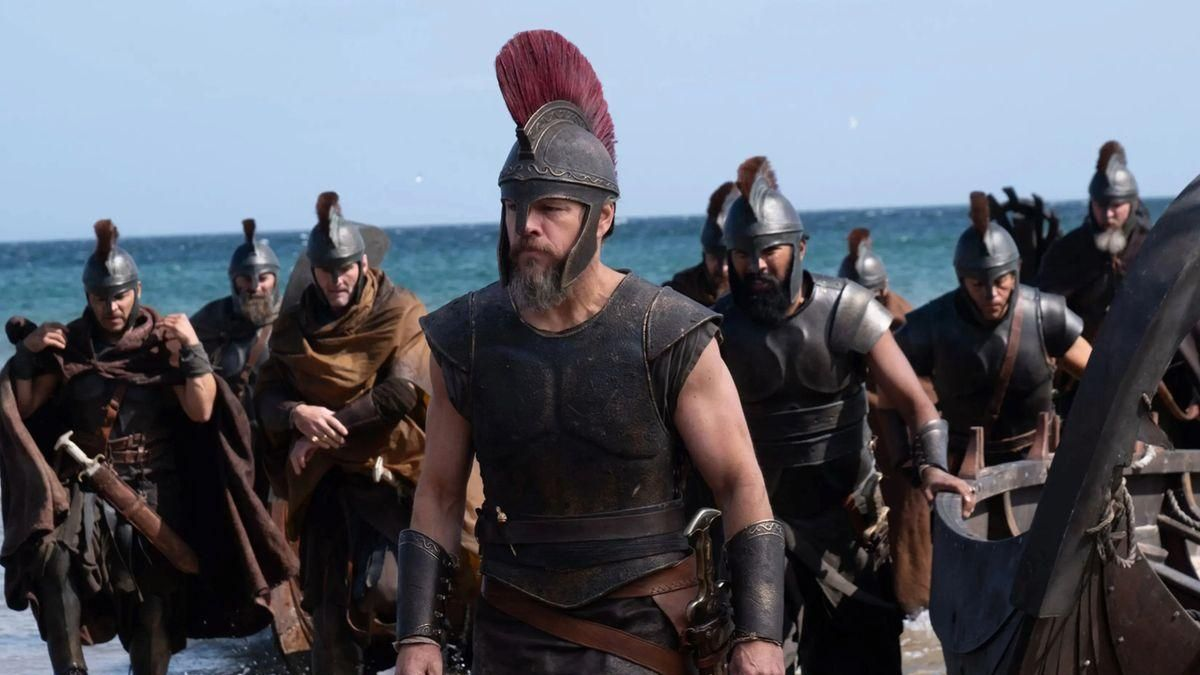
The Odyssey offers investors a timeless warning: profits mean little unless they are preserved, discipline survives success, and wealth eventually reaches a purpose beyond the market.
MARKET INSIDER — Every market cycle produces winners. Far fewer investors successfully convert those victories into lasting wealth.
That distinction lies at the heart of The Odyssey. Odysseus helps win the Trojan War after a decade of fighting, but victory does not bring him safely home. His return to Ithaca takes another 10 years—an arduous journey shaped by pride, temptation, poor decisions and the consequences of rules ignored.
The parallel with investing is striking. Buying the right stock or capturing a market rally may feel like winning the war. Yet the more difficult task begins afterward: preserving the gain, resisting overconfidence and ensuring that financial success ultimately serves life beyond the market.
Key highlights
- Making money in a rising market is different from preserving wealth across a full cycle.
- Success can increase risk by encouraging overconfidence, leverage and oversized positions.
- Fear and greed often disguise themselves as necessity or rational opportunity.
- Investment rules become most valuable precisely when circumstances make investors want to break them.
- Governance and business quality matter because the consequences of misconduct can emerge years later.
- The ultimate purpose of investing is not the largest paper gain, but durable capital that improves life outside the market.
Victory can be more dangerous than defeat
Generating an investment profit is difficult. Keeping it can be harder.
A winning period changes an investor psychologically. A successful stock pick creates confidence. Several successful trades create conviction. Continued outperformance can produce the dangerous belief that skill has eliminated risk.
Position sizes begin to expand. Valuation discipline weakens. Borrowing feels safer because recent trades have worked. Gains that once seemed exceptional become the minimum investors expect from the next opportunity.
That is often when a winning strategy becomes a losing one.
Odysseus survives the war, but his difficulties intensify after victory. His pride and misjudgments turn the journey home into a second, longer test. Investors can experience the same reversal: they win several battles but lose the campaign because they never establish a disciplined way to protect what they have earned.
Markets do not reward investors according to the number of trades they win. A portfolio that rises 100% and then falls 60% is not ahead; it is down 20% from its starting value. Recovering from that point requires a 150% gain.
This asymmetry is why capital preservation matters. Large losses do more than reduce wealth—they consume time, limit flexibility and make future decisions more emotionally difficult.
A paper profit is not yet lasting wealth
Investors naturally celebrate their highest portfolio value. But peak valuation is only a snapshot, not necessarily an enduring financial outcome.
Wealth becomes meaningful when it is preserved, diversified and connected to a purpose. That may mean funding a business, educating children, buying a home, creating retirement security or simply reducing financial anxiety.
Without such a destination, investing can become an endless pursuit of a larger number. Every target reached is replaced by another. Profits remain exposed because taking some money off the table feels like abandoning future upside.
This does not mean investors should automatically sell every successful investment. Outstanding businesses can compound for decades, and excessive trading can destroy returns. The more useful principle is that exposure should remain consistent with the investor’s objectives, liquidity needs and capacity to absorb losses.
Rebalancing a position that has become dangerously concentrated is not an admission of doubt. It is a recognition that the purpose of investing is to build wealth, not merely to display unrealized gains.
Greed rarely introduces itself as greed
The episode involving the cattle of Helios provides one of The Odyssey’s clearest investment lessons.
Odysseus’ crew has been warned not to harm the sacred cattle. The consequences are known. Yet when adverse winds trap the sailors on the island and their food runs out, discipline gradually collapses.
The prohibited act begins to feel unavoidable.
Markets create similar forms of self-justification. Few investors consciously decide to abandon their principles. Instead, they explain why the existing rule should not apply to the present situation.
A rapidly rising market makes leverage look necessary to avoid being left behind. A collapsing market makes panic selling feel essential for survival. A speculative company appears too expensive until its shares double, at which point the same valuation suddenly seems defensible. A weak investment is retained because realizing the loss would make the mistake official.
Fear and greed are most dangerous when they sound rational.
The phrase “I have no choice” should therefore trigger caution. Investors almost always have choices: reduce the position, wait, accept a smaller return, hold more cash or walk away entirely. None may feel attractive, but an unattractive option can still be preferable to permanent capital loss.
Sometimes survival is the highest available return.
Investment rules matter most under pressure
A risk-management rule that is easy to follow in calm markets has not yet been tested.
The real test comes when the rule stands between an investor and an apparently irresistible opportunity—or requires accepting a painful loss before it becomes catastrophic.
A sensible investment process should define position limits, acceptable leverage, minimum liquidity, diversification requirements and the conditions under which an original thesis must be reconsidered. These rules should be established before the investor becomes emotionally committed to an outcome.
The objective is not to eliminate judgment. Markets change, and investors must adapt. But adaptation is different from rewriting every rule to justify a decision already made.
Odysseus’ crew knew the boundary and understood the risk. Their failure was not a lack of information. It was the inability to preserve discipline when circumstances became difficult.
Investors often fail in exactly the same way.
Markets eventually expose broken governance
The consequences of bad decisions do not always appear immediately.
A company may tolerate weak governance for years while revenue continues rising. Aggressive accounting can flatter earnings. Related-party transactions can be overlooked during a bull market. Excessive borrowing may appear efficient while capital remains cheap.
Temporary success can make structural weaknesses seem unimportant. It can even reward the executives responsible for creating them.
But markets eventually reassess fragile business models. When liquidity tightens or growth slows, investors begin examining cash flow, debt, governance and management credibility more closely. Problems that were ignored at high valuations can suddenly become the central reason for a collapse.
This is why business quality matters even when speculative companies are outperforming. Ethical leadership, transparent reporting, disciplined capital allocation and respect for minority shareholders may appear unexciting during a market boom. During a downturn, they become sources of resilience.
A low valuation cannot compensate for every governance problem. Some shares look cheap because investors are correctly pricing the possibility that reported assets, earnings or shareholder rights may prove less reliable than they appear.
Protect the core of the portfolio
Odysseus survives not because he avoids every mistake, but because he retains a sense of what he is trying to return to.
Investors also need a core that remains intact through changing markets. That core includes not only capital, but also temperament, reputation and the ability to make independent decisions.
Disciplined position sizing prevents one mistake from determining the portfolio’s future. Intelligent diversification reduces dependence on a single company, sector or economic outcome. Liquidity allows an investor to respond to opportunities without being forced to sell under pressure.
Just as importantly, investors must accept that missing an opportunity is not equivalent to suffering a loss. There will always be another company, another correction and another market cycle. Capital permanently impaired by an avoidable risk may not receive the same second chance.
Temporary drawdowns can be recovered. A destroyed investment process is much harder to rebuild.
Public markets still offer meaningful advantages
The volatility of listed equities can make them appear more dangerous than assets whose prices are updated less frequently. Yet the absence of a daily quotation does not mean the absence of risk.
Public markets generally provide standardized financial reporting, regulated disclosure, transparent pricing and the ability to adjust exposure. Investors can compare valuations, study governance, assess liquidity and revise their conclusions as new information emerges.
That transparency can be uncomfortable because losses become visible immediately. But visibility is often an advantage. It allows risk to be identified and managed before an investor becomes trapped in an illiquid asset.
Periods of widespread pessimism can also create opportunities. Strong companies may fall alongside weak ones when investors reduce risk indiscriminately. Well-capitalized banks, cash-generative businesses and companies with durable competitive positions can sometimes trade below reasonable estimates of long-term value.
A falling share price alone does not create a bargain. Nor does negative sentiment prove that an investment should be avoided.
The important question is whether the deterioration in price is greater than the deterioration in business value. Answering that question requires research, patience and a willingness to remain separate from the crowd.
The objective is to complete the journey
Investing is not a contest to make the boldest forecast or achieve the highest return in a single year. It is a long journey through changing interest rates, recessions, bubbles, geopolitical shocks and technological disruption.
No investor will navigate that journey without mistakes. The goal is to ensure that no single mistake makes recovery impossible.
The strongest investors are not necessarily those who predict every market turn. They are those who distinguish confidence from overconfidence, opportunity from temptation and temporary volatility from permanent impairment.
They preserve capital when conditions are hostile, participate when valuations become attractive and give compounding enough time to work.
Winning a trade is satisfying. Building wealth that survives the full market cycle is more consequential.
The deepest lesson of The Odyssey is therefore not simply how to conquer distant shores. It is how to endure the consequences of victory, resist the temptations encountered afterward and finally arrive home with what truly matters still intact.
