
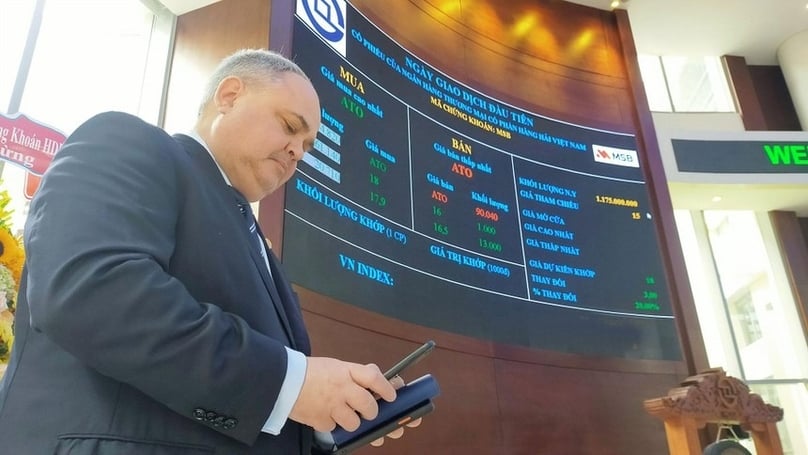
The VN-Index extended its decline to a third session as oil and Vingroup shares weakened, while PNJ plunged after acknowledging short-term liquidity pressure from a surge in diamond buybacks.
MARKET INSIDER — Vietnam’s benchmark VN-Index fell nearly 13 points to around 1,730 on July 21, its lowest close since FTSE Russell confirmed in April that the country’s emerging-market reclassification would proceed. Oil and gas stocks led the decline, Vingroup companies weighed on the index, and jeweller PNJ hit its daily downside limit after disclosing short-term liquidity pressure caused by exceptional diamond repurchase demand. Foreign investors provided one modestly positive signal, returning to net buying on the Ho Chi Minh City exchange after six consecutive sessions of selling.
Key takeaways
- The VN-Index declined for a third consecutive session, closing near 1,730.
- The benchmark has returned to levels seen before FTSE Russell’s April 8 confirmation.
- Oil and gas stocks fell more than 4%, with PV GAS reaching its daily floor.
- PNJ dropped 7% to VND38,150, its lowest level in five years, with nearly 10 million shares left offered at the floor.
- Foreign investors bought approximately VND69–70 billion net on HoSE, but only about VND25 billion across all three markets.
- FTSE Russell’s phased inclusion of Vietnam remains scheduled to begin on September 21, 2026.
What happened to the VN-Index?
Vietnamese equities attempted to rebound early on July 21 after the benchmark had fallen almost 44 points in the previous session.
The VN-Index briefly traded above 1,750, supported by expectations that oversold conditions might attract investors waiting on the sidelines. The recovery faded during the morning, however, as domestic selling intensified in several large sectors.
The index closed nearly 13 points lower at approximately 1,730, extending its losing streak to three sessions. It is now back around the level recorded before FTSE Russell confirmed Vietnam’s reclassification timetable on April 8.
Market breadth remained negative. Almost 190 stocks on HoSE closed below their reference prices, including nine at the daily downside limit. Approximately 100 stocks advanced, with gains concentrated mainly among small- and mid-cap companies.
The session nevertheless represented a moderation from the previous day’s broad sell-off. Several large banking stocks—including CTG, HDB, VPB and LPB—reversed early losses and helped prevent a steeper decline.
Why did oil and gas stocks fall so sharply?
Oil and gas was the weakest major sector, with the entire group declining by more than 4%.
PV GAS, traded under the GAS ticker, fell to its daily floor of VND68,000. GAS, BSR and PVD were among the stocks facing the heaviest pressure, while three energy companies ranked among the ten largest negative contributors to the VN-Index.
The sector had previously benefited from elevated energy prices and geopolitical risk. Its abrupt reversal suggests that investors were taking profits and reducing exposure after an extended period of volatility.
The decline also illustrates the risks of buying sectors primarily on short-term geopolitical momentum. Even when oil prices remain elevated, listed energy companies can correct sharply if valuations have moved ahead of earnings expectations or crowded positions begin to unwind.
How did Vingroup shares affect the market?
Vingroup-related companies placed additional pressure on the benchmark because of their large index weight.
VIC declined 1.2% to almost VND217,000 and was the single biggest drag on the VN-Index. Property developer Vinhomes, or VHM, lost 0.4%, while retail-property operator Vincom Retail, or VRE, fell 1%.
The impact of the group demonstrates the continuing concentration of Vietnam’s equity benchmark. Large moves in a small number of heavily weighted companies can materially affect the headline index even when the performance of the broader market is less extreme.
Investors should therefore assess both the VN-Index and market breadth. The index alone may overstate or understate conditions across individual portfolios, depending on their exposure to Vingroup, banks and other large-cap stocks.
Why did PNJ shares hit the floor?
Phu Nhuan Jewelry, or PNJ, fell to its 7% daily downside limit after management acknowledged short-term liquidity pressure arising from an exceptional increase in customer requests to sell diamond jewellery back to the company.
PNJ closed at VND38,150, its lowest price in five years. Nearly 10 million shares remained offered for sale at the floor without matching demand.
At an extraordinary media briefing on July 21, chief executive Phan Quoc Cong said customer confidence in the diamond market had suffered following a legal case involving the former director of P-Lab, a gemstone-testing subsidiary wholly owned by PNJ.
A former P-Lab executive has been prosecuted in connection with an alleged cross-border smuggling operation involving more than 28,000 diamonds. PNJ chairwoman Cao Thi Ngoc Dung previously said those diamonds had never entered the company’s retail network and that PNJ had not traded diamonds with P-Lab.
The company said the wider controversy nevertheless triggered a surge in customers seeking to resell diamond products. Between July 3 and July 17, PNJ’s repurchase value was reportedly five times its sales value.
Management said it had allocated several trillion dong to fulfil repurchase commitments. The pressure resulted from a mismatch in cash-flow timing: repurchased products require inspection, processing and preparation before they can be resold, preventing capital from circulating at its normal speed.
PNJ said it would continue to honour all eligible repurchase obligations but would introduce daily payment limits based on operational capacity. Payments may now be completed after inspection and liquidity arrangements rather than immediately on the same day.
That distinction is important. Management did not say the company was insolvent or lacked assets, but it did acknowledge a short-term liquidity and working-capital constraint. Investors will want verifiable data on cash usage, repurchase volumes and the time required to recycle acquired inventory.
Was trading liquidity weak?
HoSE recorded order-matched turnover of more than 789 million shares, worth approximately VND23 trillion, or about $875 million.
Large-cap shares accounted for nearly 74% of matched value. This concentration indicates that liquidity remained present but was focused on a limited number of heavily traded companies rather than spreading broadly across the market.
SHB led by transaction value at almost VND790 billion, followed by VIC and steelmaker HPG.
The combination of falling prices and meaningful turnover suggests active risk reduction rather than a decline caused solely by illiquidity. However, the lower intensity of selling compared with the previous session may indicate that part of the forced or panic-driven supply has already been absorbed.
Are foreign investors returning?
Foreign investors provided the clearest positive signal, although the scale of buying was modest.
They purchased approximately VND69 billion net on HoSE, ending six consecutive sessions of net selling on the exchange. SHB attracted more than VND107 billion in net foreign purchases, followed by HDB at about VND90 billion and VNM at VND81 billion.
Foreign investors remained net sellers of VIC, FPT and GAS.
Across HoSE, HNX and UPCoM combined, net foreign buying was closer to VND25 billion because selling on the Hanoi exchange offset part of the HoSE inflow. The original report’s figure of approximately VND70 billion is therefore accurate for HoSE, but not for the entire Vietnamese market.
One session of modest buying is not sufficient to establish a sustained reversal. Foreign flows had remained under pressure before the decline, with SSiam reporting net foreign selling of VND15.3 trillion in June and VND79.8 trillion during the first half of 2026.
Has Vietnam already been upgraded by FTSE Russell?
FTSE Russell has confirmed the reclassification, but its implementation has not yet begun.
The index provider announced on April 7 that Vietnam had made sufficient progress on global broker access and would move from Frontier to Secondary Emerging Market status effective September 21, 2026.
Vietnamese equities will then be added to FTSE Russell’s global indices in stages, with the process expected to continue into 2027. FTSE Russell’s official interim review states that the phased approach is intended to accommodate market capacity and support an orderly transition.
The accurate description is therefore that Vietnam’s upgrade has been confirmed, while actual index inclusion is scheduled to begin in September.
FTSE Russell’s decision remains structurally positive because it expands Vietnam’s accessibility to emerging-market mandates and index-tracking funds. It does not, however, guarantee that share prices will rise continuously before implementation.
According to Reuters, estimates for potential foreign inflows vary widely, with passive investment expected to arrive progressively rather than in a single allocation.
Does the correction threaten the upgrade?
There is no indication that the recent decline threatens the FTSE Russell timetable.
Market classification is based principally on accessibility, settlement, custody, broker infrastructure and investors’ ability to replicate indices—not on whether the benchmark is rising or falling.
The sell-off may nevertheless affect how much active foreign capital enters ahead of the September implementation. International investors will consider valuation, earnings, currency conditions, liquidity and company-specific governance alongside Vietnam’s new classification.
A lower index could make selected companies more attractive, but the benefit depends on whether earnings expectations remain intact and whether selling pressure stabilises.
How far could the VN-Index fall?
ACB Securities has identified 1,630–1,650 as a possible technical support range if the correction continues.
That would represent a further decline of roughly 5%–6% from the July 21 close. It should be treated as a technical scenario, not a forecast with certainty.
The loss of the 1,780–1,800 area and the 200-day moving average has weakened the near-term market structure. Investors should now monitor whether the index can form a base with lower selling volume, improved advance-decline breadth, stabilisation in large-cap stocks, continued foreign buying, fewer shares closing at their daily floors and recovery above recently broken support levels
A short technical rebound would not by itself confirm that the correction has ended.
What should investors do?
The session does not yet provide a strong signal for aggressive bottom-fishing.
For investors holding cash, a staged approach may be more appropriate than committing capital based solely on the index reaching a previous level. Priority should be given to companies with strong balance sheets, visible earnings and limited exposure to event-specific risks.
Investors using margin should be more cautious. Broad declines can trigger forced selling, particularly when heavily owned financial, property and energy stocks lose technical support simultaneously.
PNJ requires separate treatment from the overall market. Its valuation may appear increasingly attractive after the sharp fall, but the company now faces an event-driven confidence and liquidity issue. Investors need greater clarity on total diamond repurchase commitments, daily cash outflows, available cash and credit facilities, inventory conversion and resale times, possible provisions or write-downs, the legal separation between PNJ and the P-Lab investigation, whether customer repurchase demand is stabilising
Until those variables are quantified, buying PNJ is closer to a special-situation investment than a conventional retail-sector allocation.
Why it matters
The VN-Index’s return to pre-confirmation levels does not erase the strategic value of Vietnam’s FTSE Russell reclassification. It does demonstrate that an upgrade is a market-access milestone, not protection against corrections.
Near-term performance remains driven by domestic liquidity, earnings, valuation, leverage and company-specific events. The July 21 decline combined all four: concentrated weakness among large companies, broad risk reduction, an energy-sector reversal and a confidence shock at PNJ.
The market’s next test is whether domestic demand can absorb remaining supply before the index approaches the deeper 1,630–1,650 support zone.
Outlook: What should investors watch next?
The immediate indicators are market breadth, turnover and the performance of oil, Vingroup and financial stocks. Continued foreign buying would be constructive, but several consecutive sessions and materially larger values would be needed to confirm a change in trend.
PNJ’s disclosures will remain a separate source of volatility. Investors should focus on cash-flow evidence rather than general assurances about the company’s long-term franchise.
For the upgrade story, the next major milestone is FTSE Russell’s expected announcement of index constituents and technical implementation details before phased inclusion begins on September 21.
A sustainable market recovery will require more than anticipation of passive inflows. It will depend on stabilising domestic sentiment, credible corporate earnings and evidence that foreign capital is returning before—rather than only during—the index transition.
