
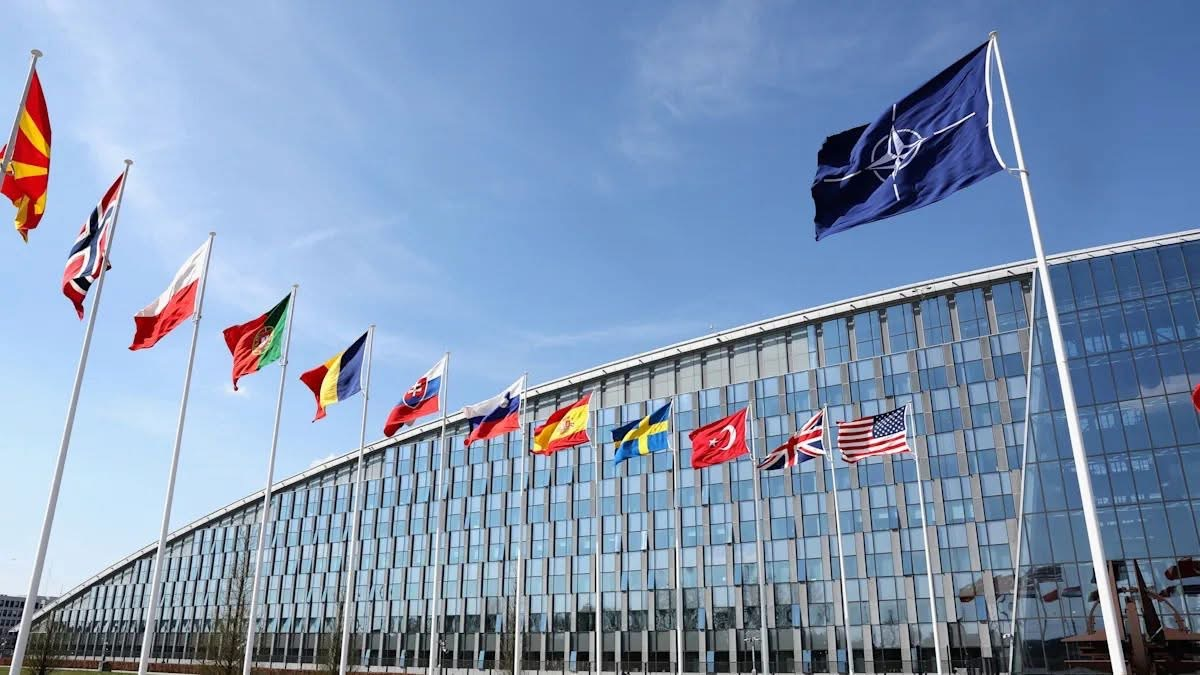
Rift over Iran war raises fears of alliance collapse and a new era of geopolitical fragmentation
MARKET INSIDER – The possibility that the United States could walk away from NATO is no longer theoretical—it’s a live geopolitical risk with global economic consequences. As President Donald Trump openly questions the value of the alliance amid tensions over the Iran conflict, investors and policymakers are confronting a scenario that could upend the post-World War II security architecture and destabilize markets from Europe to the Middle East.
At the center of the dispute is a widening transatlantic divide: Washington’s frustration over allies’ refusal to support U.S. military operations against Iran, particularly around securing the strategically vital Strait of Hormuz. For global markets, where roughly 20% of oil supply flows through that corridor, the stakes extend far beyond military strategy—they cut directly into energy prices, inflation trajectories, and risk sentiment worldwide.
Founded in 1949 to counter Soviet expansion, NATO has long functioned as the backbone of Western collective defense, anchored by Article 5—the principle that an attack on one member is an attack on all. The alliance has expanded from 12 to 32 members, most recently adding Sweden in 2024, reflecting renewed concerns over Russian aggression. Yet the current crisis exposes a structural tension: NATO is designed for collective defense, not coordinated offensive campaigns, a distinction now driving friction between Washington and European capitals.
Trump’s criticism of NATO is not new, but the context has shifted. His administration argues that the alliance has become a “one-way street,” with the U.S. bearing disproportionate military and financial burdens. Secretary of State Marco Rubio has echoed this view, suggesting a post-conflict reassessment of NATO’s strategic value. Meanwhile, European leaders—including Emmanuel Macron—warn that persistent doubts from Washington risk hollowing out the alliance itself. Trust, not just military capability, is NATO’s core currency—and it is now under strain.
The implications of a U.S. withdrawal would be profound. Without American military dominance, NATO’s deterrence power would weaken significantly, potentially emboldening adversaries such as Russia and reshaping security calculations across Europe and Asia. Financial markets would likely price in higher geopolitical risk premiums, driving volatility in defense stocks, commodities, and currencies. More fundamentally, the move could accelerate a shift toward a multipolar world, where regional alliances and independent defense strategies replace U.S.-led global coordination.
For now, no final decision has been made. But the mere signaling of a potential exit is already altering diplomatic dynamics and investor expectations. The real question is no longer whether NATO can function without the United States—it’s whether the global order built around it can survive the uncertainty.
