
Internal power struggle and war costs push Iran toward financial breakdown amid sanctions and rising inflation
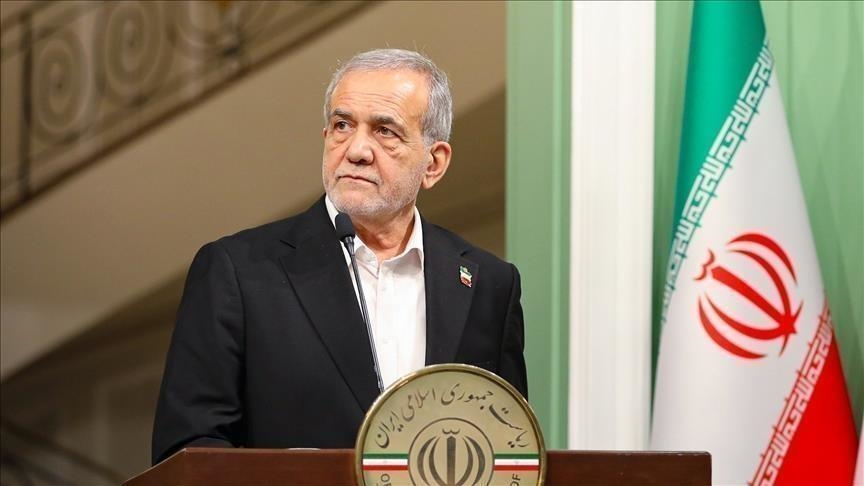
MARKET INSIDER – Iran may be just weeks away from economic collapse, according to President Masoud Pezeshkian—a warning that underscores how geopolitical conflict is rapidly translating into financial instability with potential ripple effects across global energy markets and emerging economies.
The alarm comes as tensions escalate not only externally—with Israel and the United States—but internally, where a growing power struggle between the civilian government and the Islamic Revolutionary Guard Corps threatens to paralyze decision-making at a critical moment.
According to reports from Iran International, Pezeshkian has clashed with senior Guard figures, including commander Ahmad Vahidi, over the economic toll of the ongoing conflict. The president is said to be pushing for a ceasefire within a month, warning that failure to de-escalate could trigger “total” economic failure. He has also demanded that key executive powers be restored to the civilian administration—an implicit acknowledgment that wartime governance has shifted heavily toward military control.
The economic signals are already flashing red. Reports describe empty ATMs, widespread online banking disruptions, and months-long delays in public-sector salaries. Inflation, already running at an estimated 105% to 115% before the latest escalation, has surged further, eroding purchasing power for basic goods and intensifying pressure on households. For investors, these indicators resemble the early stages of systemic financial breakdown seen in past crisis economies.
Vahidi and the Guard leadership have reportedly rejected calls for a ceasefire, prioritizing strategic objectives over short-term economic stability. This divergence highlights a structural tension within Iran’s governance model—where military priorities can override economic imperatives, even as the domestic economy edges toward dysfunction.
For global markets, the implications extend far beyond Iran’s borders. Any further destabilization could disrupt oil flows through the Persian Gulf, amplify volatility in energy prices, and complicate already fragile supply chains. More broadly, it reinforces a recurring pattern: geopolitical conflicts are increasingly becoming catalysts for rapid economic deterioration, particularly in heavily sanctioned economies.
If Tehran fails to stabilize both its political structure and its economy, the next phase of this crisis may not be defined by military escalation—but by financial contagion. And for global investors, the critical question is no longer whether Iran’s economy is under pressure, but whether its collapse could become the next shockwave in an already fragile world economy.
