
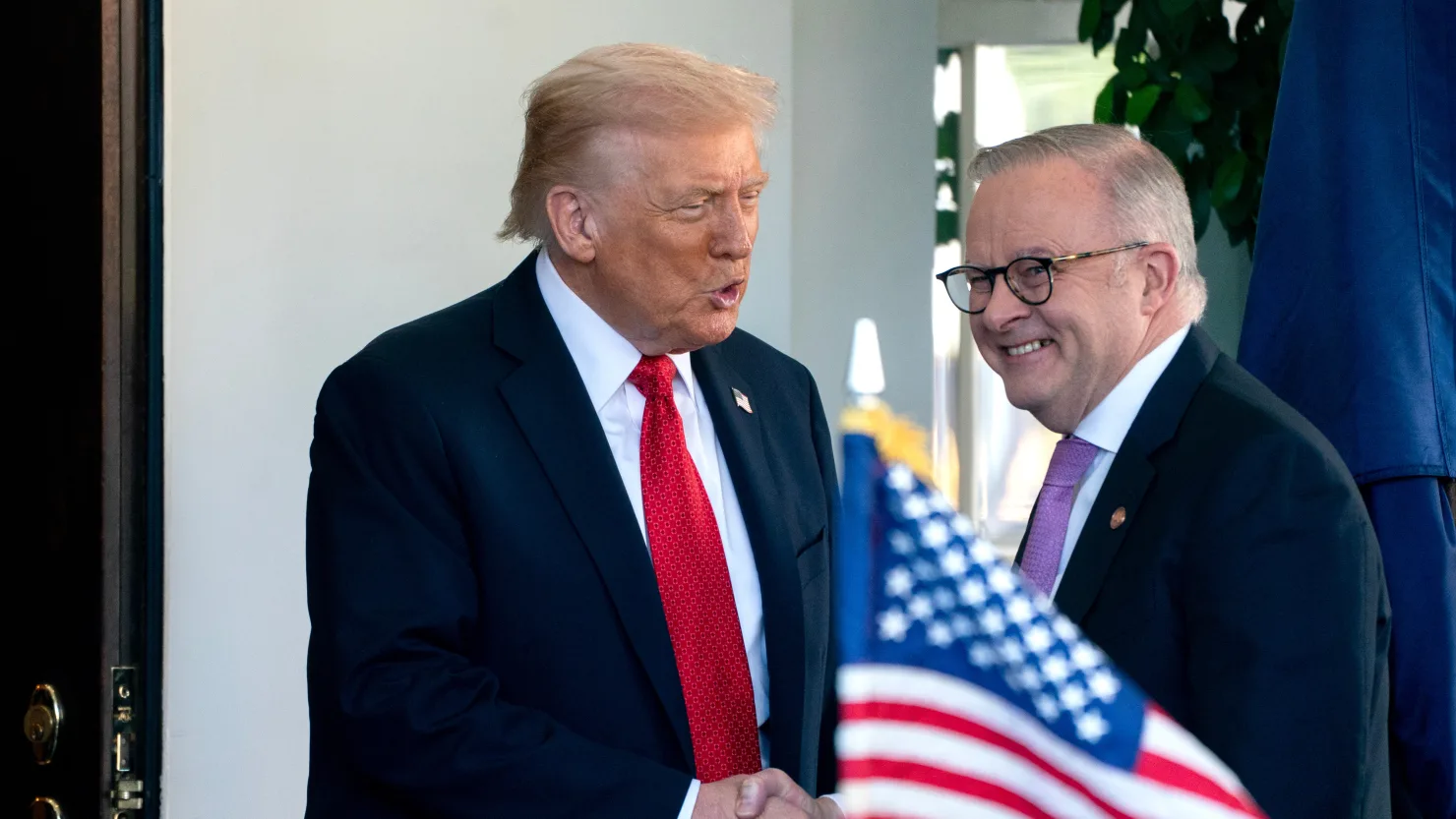
Australia – Shares of Australia’s largest critical metals and rare earths companies surged on Tuesday following the announcement of a massive minerals agreement between Washington and Canberra valued at up to $8.5 billion.
The deal, signed by U.S. President Donald Trump and Australian Prime Minister Anthony Albanese on Monday, is a decisive move aimed at diversifying global supply chains for key materials essential for defense manufacturing, energy security, electric vehicles, and high-tech products. The agreement positions Australia as a cornerstone supplier, directly challenging China’s dominance in the critical minerals sector.
Market Reaction: Miners See Significant Gains
The market’s enthusiasm was immediate and widespread across the Australian resources sector, with several miners posting sharp gains in early trading:
- Lynas Rare Earths (Australia’s largest rare earths producer by market capitalization) jumped approximately 4.7%.
- Mineral sand miner Iluka Resources advanced more than 9%.
- Lithium producer Pilbara Minerals added roughly 5%.
- Smaller miners saw some of the most dramatic increases: VHM soared around 30%, Northern Mineralspopped over 16%, and Latrobe Magnesium—Australia’s primary producer of the critical metal magnesium—rose nearly 47%.
The boost wasn’t limited to Australian-listed entities. NYSE-listed Alcoa, which is developing a project in Western Australia to recover and refine the critical metal gallium, was identified as one of the two priority projects under the new minerals deal and saw its Australian-listed depositary receipts rise nearly 10%. Washington plans to make an equity investment in this initiative, underscoring its strategic importance.
Deeper Investment and Geopolitical Context
The new framework is a strategic pivot by the US to secure reliable, allied-sourced supply chains in the face of escalating trade tensions with China. China, the global leader in the production and processing of rare earths and many other critical minerals, has recently tightened export controls on these materials.
The announced investment figures highlight the scale of the two nations’ commitment:
| Commitment Detail | Value | Period/Scope |
| Total Pipeline Value | Up to $8.5 Billion | Pipeline of priority projects |
| Initial Government Investment | $2 Billion ($1B from US, $1B from Australia) | Over the next six months for immediately available projects |
| US EXIM Bank Financing | Over $2.2 Billion | Letters of interest, potentially unlocking up to $5 billion in total investment |
While Prime Minister Albanese cited an $8.5 billion pipeline ready to go, a White House fact sheet described the agreement as a “framework” and noted that the two countries will invest more than $3 billion in critical mineral projects over the next six months, with the Export-Import Bank of the United States potentially unlocking a total of $5 billion in financing through seven Letters of Interest.
The core objective is clear: to establish an “allied metals bloc” that insulates Western economies and defense industries from geopolitical supply-chain risks. For investors, this signals long-term policy certainty and capital commitment into a sector otherwise characterized by high volatility and capital intensity. Companies with proven assets or advanced processing capabilities, like those seeing share price surges, are likely to be the primary beneficiaries as government-backed financing reduces risk and accelerates project timelines.
