
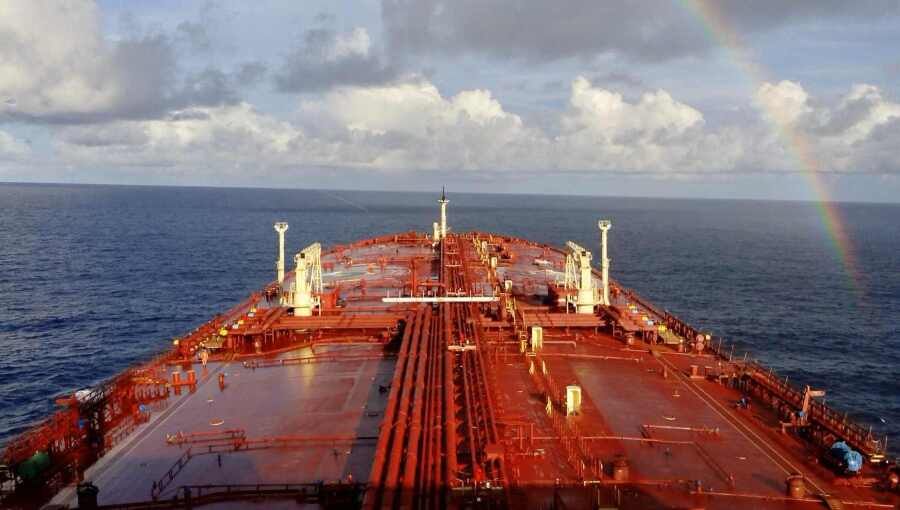
October 31 (Market Insider) — Nearly 40,000 tons of Russian naphtha have been stranded off India’s west coast for nearly a week after new U.S. sanctions made it almost impossible for Indian refiners to take delivery, according to Reuters.
The sanctions, expanded last week as Washington tightened its pressure on Moscow over the war in Ukraine, have disrupted the flow of Russian petroleum products to one of its key markets. The affected cargo, loaded at Russia’s Ust-Luga port on the Baltic Sea, was headed to India’s Mundra port in Gujarat but has been unable to unload since October 26.
The vessel’s buyer and seller remain unidentified, but market sources suggest the cargo was likely bound for HPCL-Mittal Energy, the operator of the Bathinda refinery in Punjab, which processes about 226,000 barrels of crude per day and typically receives its oil and naphtha shipments through Mundra.
In a statement on October 29, HPCL-Mittal Energy said it had suspended all purchases of Russian oil, pledging not to “engage in transactions with any sanctioned entities.” An internal source told Reuters the refinery was preparing for maintenance in November and already had enough naphtha reserves to sustain operations.
India has been Russia’s second-largest buyer of naphtha, trailing only Taiwan. The light hydrocarbon is a critical feedstock for the petrochemical and gasoline industries. In September alone, Russia shipped about 170,000 tons of naphtha to India — most of which was successfully offloaded before the latest sanctions took effect.
But the tide is turning. LSEG data shows Russia sent roughly 185,000 tons of naphtha to India in October, and much of it remains floating offshore. With refiners increasingly wary of secondary sanctions, trade flows between Moscow and New Delhi could be severely curtailed — a sharp reversal from the surge in Russian oil imports that followed the 2022 Ukraine invasion.
The latest episode underscores the mounting risks in the global energy trade, as U.S. financial pressure forces even Russia’s closest commercial partners to rethink their dependence on discounted oil supplies. For India, balancing its energy needs with growing geopolitical scrutiny from Washington could soon prove as tricky as navigating the volatile seas off Gujarat.
