
Beijing calls for dialogue ahead of potential Xi–Trump summit amid Iran war and geopolitical tensions
MARKET INSIDER – China is urging renewed dialogue with the United States as tensions between the world’s two largest economies intensify against the backdrop of a widening Middle East conflict. Beijing’s top diplomat warned that a breakdown in communication could trigger strategic miscalculations with far-reaching global consequences.
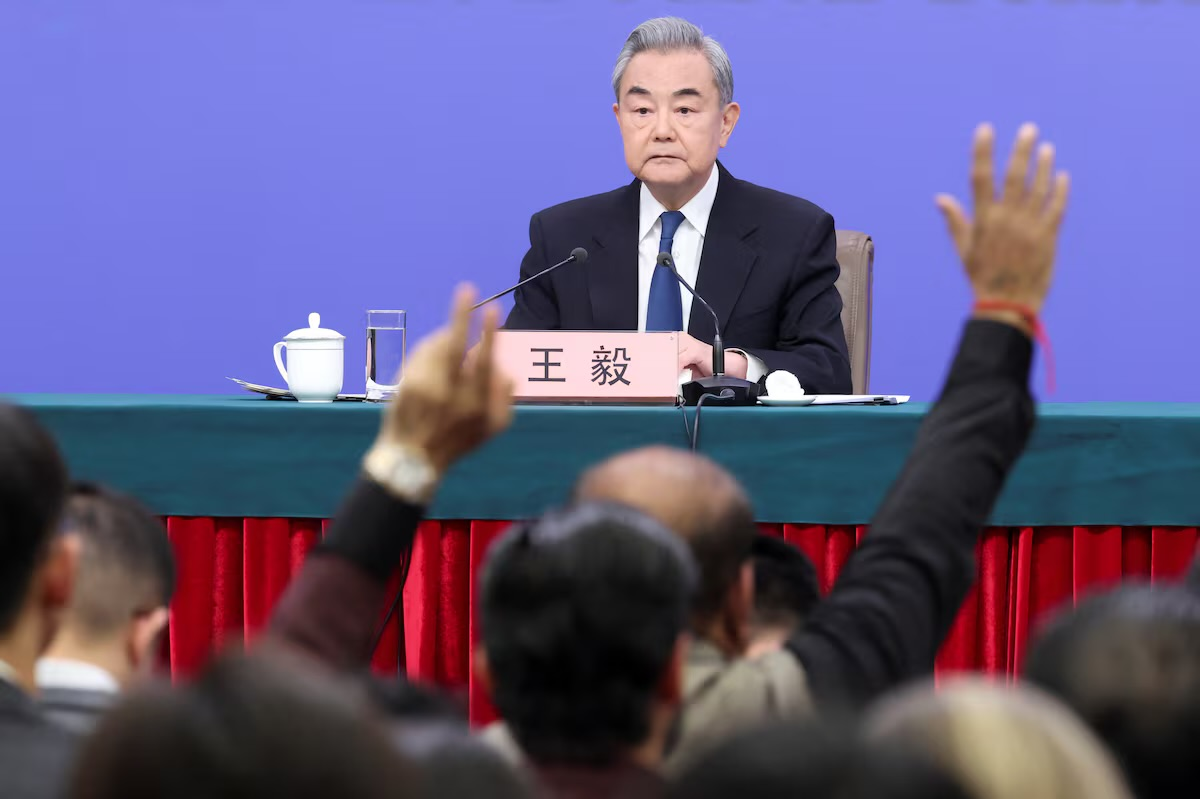
Speaking on the sidelines of China’s annual parliamentary meetings, Foreign Minister Wang Yi stressed that engagement between China and the United States remains essential. Without dialogue, he said, misunderstandings could escalate into direct confrontation—an outcome that would destabilize the global economy and international security.
The remarks come ahead of a potential summit between Chinese President Xi Jinping and U.S. President Donald Trump, reportedly planned for later this month. While Beijing has not formally confirmed the meeting, analysts say the summit could become one of the most consequential diplomatic encounters of the year as geopolitical tensions rise across multiple fronts.
One major flashpoint is the ongoing war in Iran, where U.S.-Israeli military operations have killed Supreme Leader Ali Khamenei and triggered a regional crisis affecting global energy markets. Beijing has called for an immediate halt to hostilities, arguing that military force cannot resolve complex international disputes.
At the same time, Washington’s broader geopolitical strategy is drawing scrutiny in Beijing. Trump’s proposed “Donroe Doctrine”—a modern reinterpretation of the Monroe Doctrine asserting U.S. influence in the Americas—has been viewed by Chinese analysts as a direct challenge to China’s global development initiatives, including the Belt and Road Initiative.
Recent U.S. actions targeting some of China’s strategic partners have further complicated the relationship. Washington authorized the capture of Venezuelan President Nicolas Maduro earlier this year and has issued warnings toward governments across Latin America, prompting questions about how China might respond if its economic partners come under pressure.
Despite rising tensions, Wang sought to position China as a stabilizing force in global affairs, contrasting Beijing’s emphasis on economic development with what he suggested is Washington’s reliance on military power. “The world cannot return to the law of the jungle,” he said, warning that force alone cannot sustain global leadership.
Yet China’s own regional posture has become increasingly assertive. Over the past year, Beijing has conducted large-scale military drills near Taiwan and intensified maritime confrontations with the Philippines in disputed waters of the South China Sea, while diplomatic tensions with Japan have also escalated.
For global markets and policymakers, the stakes are enormous. The U.S.-China relationship now sits at the center of multiple geopolitical fault lines—from energy security and military alliances to supply chains and technology competition. Whether the anticipated Xi–Trump summit leads to de-escalation or deeper rivalry may shape not only bilateral ties but the trajectory of global stability in the years ahead.
