
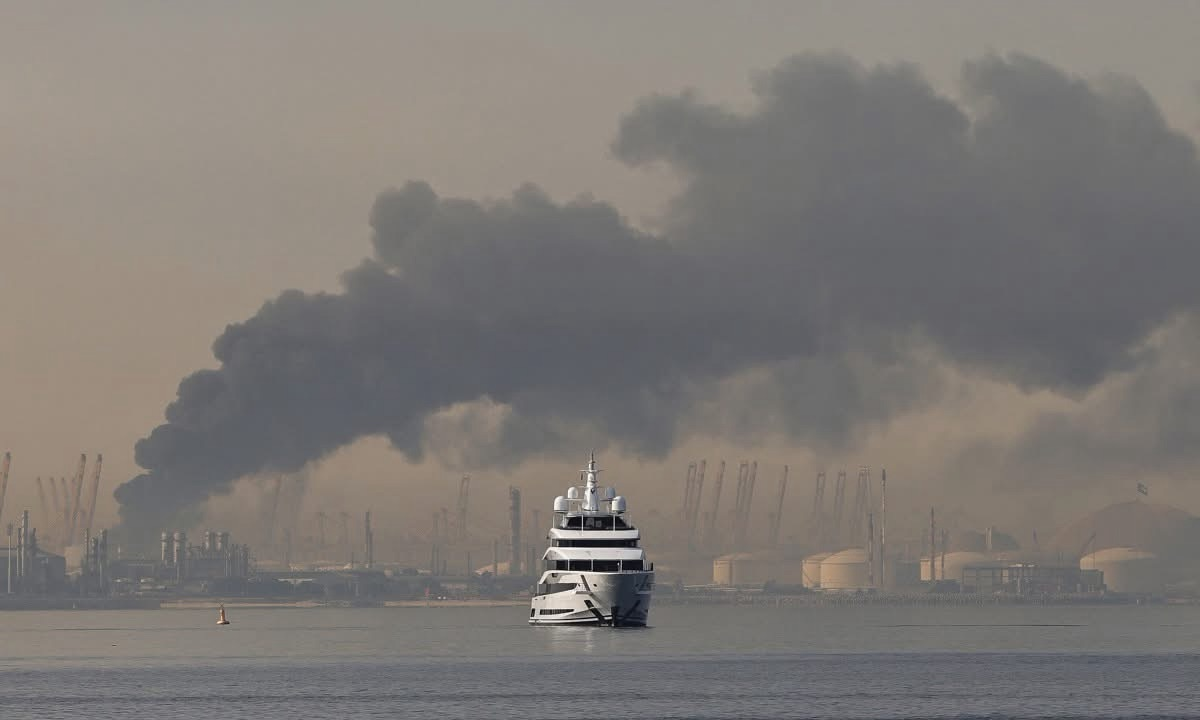
Tehran’s reassurance offers brief relief to energy markets, but risks remain high
MARKET INSIDER – Iran has stated that it has no intention of closing the Strait of Hormuz, the critical maritime corridor linking the Persian Gulf to the Indian Ocean, even as military tensions in the Middle East continue to escalate.
Iran’s ambassador to the United Nations, Amir Saeid Iravani, said Tehran respects the principle of freedom of navigation under international law and does not plan to block the strategic waterway.
The statement offers a measure of reassurance to global markets after days of heightened fears that the conflict could disrupt shipping through the narrow passage. Roughly one-fifth of global oil consumption passes through the Strait of Hormuz, making it one of the most important energy chokepoints in the world.
However, Tehran also emphasized its right to maintain security in the waterway. Iranian officials have previously hinted that the possibility of restricting passage through Hormuz could be used as leverage in geopolitical disputes, a suggestion that has repeatedly rattled energy markets.
Recent attacks on ships and energy infrastructure across the Gulf region have already prompted shipping companies and marine insurers to issue heightened risk warnings for vessels operating in the area. Those concerns helped push global oil prices sharply higher amid fears that tanker traffic could be disrupted.
Although Iran’s latest remarks suggest the strait will remain open for now, analysts warn that Hormuz will likely remain a major flashpoint in global energy markets. Any further escalation—military, political, or economic—could quickly disrupt shipping flows and trigger renewed volatility in oil prices and financial markets worldwide.
