
Tariffs, rare earths and Boeing deals risk taking a back seat as Washington and Beijing focus on Middle East tensions
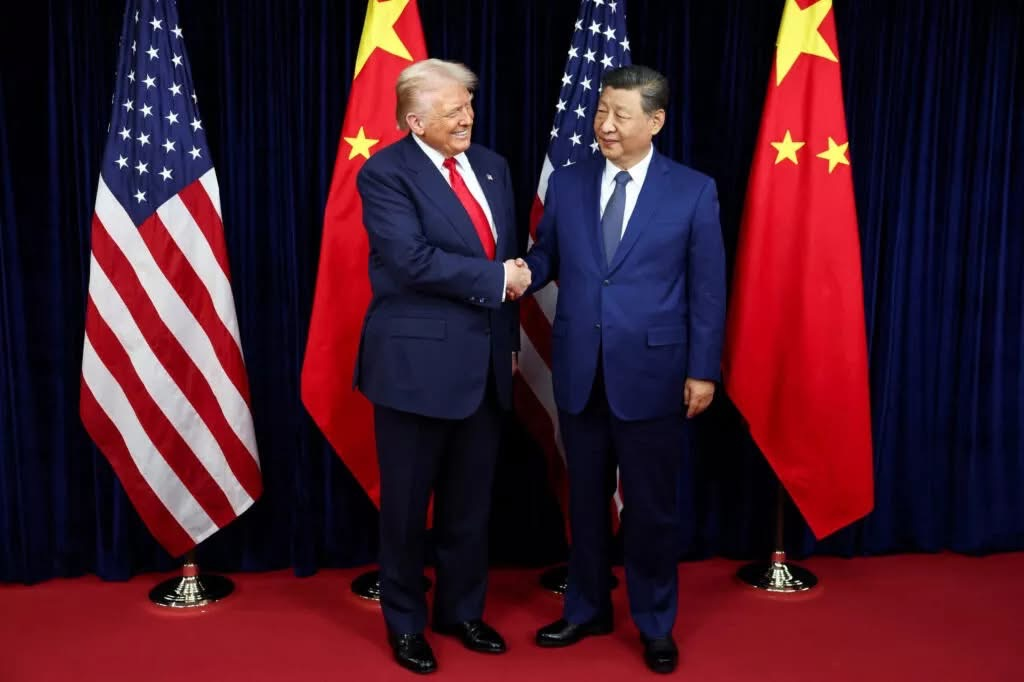
MARKET INSIDER – The long-awaited summit between Donald Trump and Xi Jinping may shape far more than U.S.-China trade relations. With tensions escalating around Iran and renewed instability in the Strait of Hormuz, the Beijing meeting on May 14–15 is increasingly becoming a geopolitical crisis summit rather than the economic reset global markets had hoped for.
For investors, the stakes extend well beyond tariffs. Roughly one-fifth of the world’s oil supply passes through Hormuz, making any disruption a direct threat to inflation, shipping costs, airline profitability and global supply chains. That reality has already pushed energy markets into volatility mode, while businesses from Wall Street to Silicon Valley watch closely for signs that Washington and Beijing can cooperate on stabilizing a fragile world order.
U.S. Treasury Secretary Scott Bessent has confirmed Iran will be a key topic during the talks, underscoring how rapidly Middle East security concerns have overtaken trade negotiations. China recently hosted Iran’s foreign minister for high-level discussions, fueling speculation that Beijing may attempt to position itself as a diplomatic broker capable of easing tensions. Oil prices briefly fell and global equities rallied on hopes of a possible de-escalation.
Yet the military situation remains unstable. Washington and Tehran have accused each other of renewed attacks in the Strait of Hormuz, while reports from Chinese outlet Caixin claimed a Chinese-owned oil tanker was struck in the region. The incident, though not independently confirmed, highlights how directly China’s economic interests are now tied to Middle East security.
Corporate America is still expected to maintain a presence at the summit, although on a smaller scale than previous Trump overseas visits. Kelly Ortberg is expected to join the delegation as Boeing seeks its first major Chinese aircraft order in nearly a decade. Jane Fraser has also confirmed attendance, emphasizing China’s importance to Citigroup after more than a century of operations in the country.
The reduced business delegation reflects a deeper shift in U.S.-China relations. According to sources familiar with preparations, the White House rejected Beijing’s proposal for industry-focused meetings involving Chinese leaders and American CEOs, concerned that such optics could make U.S. firms appear too closely aligned with China. The contrast with Trump’s 2017 China trip is striking: that visit produced 37 deals reportedly worth over $250 billion and was accompanied by nearly 30 major U.S. executives.
Still, markets may ultimately care less about headline trade deals than geopolitical stability. Analysts say a breakthrough on Iran could deliver a far greater economic boost than incremental tariff concessions. Global manufacturers, shipping firms and commodity traders are particularly sensitive to the possibility of prolonged disruptions in energy transit routes.
At the same time, core economic tensions remain unresolved. Beijing continues to prioritize tariff relief, Taiwan-related issues and reduced U.S. restrictions on advanced Chinese technology access. Rare earth exports — critical for electric vehicles, semiconductors, defense systems and renewable energy infrastructure — remain another pressure point with worldwide implications. Any easing or tightening of China’s export controls would ripple across industries from Detroit to Frankfurt to Seoul.
The summit may ultimately reveal a new reality for global markets: geopolitics is no longer a background risk to trade negotiations — it is the negotiation. And in a world increasingly shaped by supply-chain nationalism, energy insecurity and AI competition, investors may soon judge Trump and Xi less by the deals they sign and more by the crises they prevent.
