
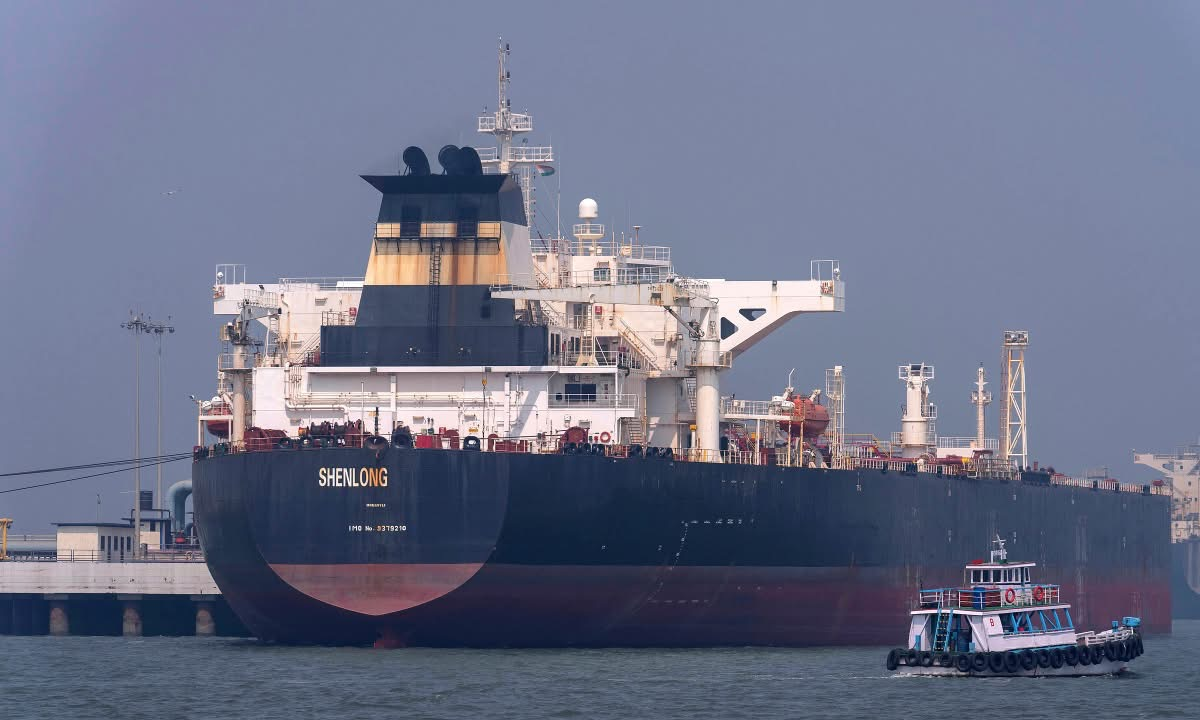
Fresh U.S.-Iran strikes reignite fears over Strait of Hormuz disruption and a new global energy shock
MARKET INSIDER – Global oil markets jolted higher Thursday after Iran claimed it targeted a U.S. military airbase following a fresh wave of American strikes, reigniting fears that the conflict could spiral into a direct threat against the Strait of Hormuz — the world’s most critical oil shipping chokepoint. The escalation immediately sent Brent crude soaring more than 3%, reviving concerns of another inflationary energy shock just as major economies were hoping to stabilize interest rates and consumer prices.
The renewed confrontation between Washington and Tehran is rapidly becoming more than a regional security crisis. Investors, central banks, airlines, shipping operators, and energy-intensive industries are now recalculating the risk of prolonged supply disruptions across the Middle East, which accounts for roughly a third of global seaborne oil exports.
Brent crude climbed above $97 per barrel while U.S. benchmark West Texas Intermediate rose to nearly $92 after Iran’s Revolutionary Guards announced they had struck a U.S. airbase at approximately 4:50 a.m. local time, according to Iran’s semi-official Tasnim news agency. The IRGC did not disclose the location of the base, adding further uncertainty to an already volatile geopolitical environment.
The announcement followed reports that American forces carried out new strikes inside Iran targeting a military site allegedly linked to threats against U.S. troops and commercial shipping routes through the Strait of Hormuz. U.S. officials also said several Iranian drones had been intercepted and destroyed, signaling the conflict is increasingly moving beyond proxy tensions into more direct military engagement.
Energy traders are particularly focused on the Strait of Hormuz, the narrow maritime corridor between Iran and Oman through which nearly 20% of the world’s oil supply passes daily. Any disruption — whether through military action, drone attacks, or shipping restrictions — could trigger a sharp spike in energy prices, freight costs, and global inflation expectations. The latest rally in crude also lifted shares of major oil producers including Valero Energy and other global refining giants exposed to Gulf supply dynamics.
Despite the latest surge, analysts at Citigroup noted that markets had recently begun pricing out worst-case disruption scenarios amid signs that Washington and Tehran might still move toward a diplomatic understanding. However, the bank warned that uncertainty surrounding the timing and durability of any agreement continues to keep central banks on edge, particularly as elevated oil prices feed broader inflation pressures across transportation, manufacturing, and food supply chains.
The bigger risk for global markets may no longer be oil alone, but the return of “second-round inflation effects” — the phenomenon policymakers feared most after the Russia-Ukraine energy shock. If crude remains near $100 or climbs higher, expectations for interest-rate cuts in the U.S. and Europe could quickly evaporate, potentially rattling equities, emerging markets, and consumer demand worldwide.
For investors, the latest Middle East flare-up is a reminder that geopolitics — not just earnings or economic data — may once again become the dominant force driving global markets. And if tensions continue escalating around the Strait of Hormuz, the next major shock may not begin on Wall Street, but in the world’s energy shipping lanes.
