
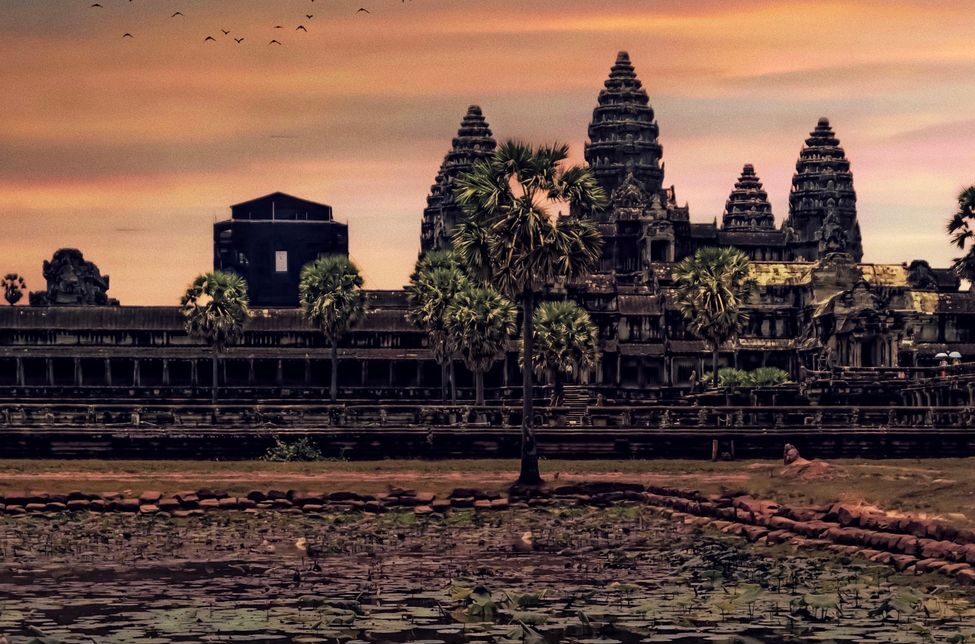
The collapse in Thai arrivals explains most of the immediate shock, but broad declines across Asia and Europe suggest Cambodia faces a deeper crisis of connectivity, confidence and tourism strategy.
MARKET INSIDER — Cambodia’s international tourist arrivals plunged 47.8% year on year to 1.539 million in the first five months of 2026, as its border dispute with Thailand virtually eliminated what had been the country’s largest source market. Thai arrivals collapsed 96.2%, while entries by land and water fell 67.5%, according to Cambodia’s Ministry of Tourism. Yet the downturn extended well beyond Thailand: excluding Thai visitors, arrivals still declined approximately 28%, pointing to wider concerns involving online scam compounds, regional security, limited air connectivity and Cambodia’s dependence on a narrow range of markets and tourism products.
Key takeaways
- Cambodia received 1,539,026 international visitors in January-May 2026, down from 2,950,824 a year earlier.
- Thai arrivals fell from 856,169 to 32,757, accounting for about 58% of the country’s total visitor decline.
- Even after excluding Thailand, international arrivals decreased by approximately 28%.
- Cambodia’s documented scam-compound problem may be damaging destination confidence, although available data cannot quantify its precise effect on tourist decisions.
- Recovery will require more than reopening borders: Cambodia must rebuild trust, diversify access and develop attractions beyond short visits to Angkor.
How severe is Cambodia’s tourism downturn?
The 47.8% decline represents one of the sharpest tourism contractions in Southeast Asia outside a global travel shutdown or major domestic crisis.
Cambodia received approximately 1.54 million international visitors during the first five months of 2026, compared with 2.95 million in the corresponding period of 2025, according to a Ministry of Tourism report released on June 22.
Arrivals in May alone fell 57.5% year on year, indicating that the deterioration was accelerating rather than stabilising.
| Tourism indicator | Jan-May 2025 | Jan-May 2026 | Change |
|---|---|---|---|
| Total international arrivals | 2,950,824 | 1,539,026 | -47.8% |
| Visitors from Thailand | 856,169 | 32,757 | -96.2% |
| Arrivals by land and water | 1,734,572 | 563,257 | -67.5% |
| Arrivals excluding Thailand | 2,094,655 | 1,506,269 | About -28.1% |
Tourism is one of Cambodia’s four principal economic sectors, alongside agriculture, construction and real estate, and garment and travel-goods exports. Cambodia attracted 5.57 million international visitors in 2025 and generated gross tourism revenue of about $3.87 billion, according to the ministry.
The 2026 decline therefore has implications extending beyond hotels and tour operators. It affects restaurants, transport companies, retailers, entertainment venues, informal workers and provincial economies dependent on visitor spending.
Why did Thai tourist arrivals collapse?
The most immediate explanation is the disruption of cross-border travel following the deterioration in relations between Cambodia and Thailand.
Thailand restricted border crossings in June 2025 after a territorial dispute escalated into armed clashes. The restrictions affected tourists, traders and transport connections across several Thai provinces bordering Cambodia.
Because Thailand was Cambodia’s largest tourism source market in the first five months of 2025, the impact was unusually large. The number of Thai visitors fell by 823,412, accounting for approximately 58% of Cambodia’s total loss of 1.412 million international arrivals.
The land-border shock also affected travellers of other nationalities who might ordinarily enter Cambodia through Thailand as part of a multi-country Southeast Asian itinerary.
Entries by land and water declined 67.5%, from about 1.735 million to 563,257. Air arrivals fell much less sharply—by approximately 20%—showing that the overall collapse was concentrated in cross-border movement.
This distinction matters. A large portion of Cambodia’s pre-crisis visitor volume depended on easily reversible regional traffic rather than travellers making Cambodia their principal destination.
Is Thailand the only reason for the crisis?
No. Removing Thai visitors from both years reduces the scale of the downturn, but the remaining market still contracted by approximately 28.1%.
The ministry’s figures show substantial declines across multiple source markets:
- Laos: more than 91%
- South Korea: nearly 60%
- Russia: more than 58%
- Indonesia: approximately 39%
- Philippines: approximately 35%
- Vietnam: approximately 26%
- China: approximately 19%
Arrivals also declined by double digits from Japan, Taiwan, Germany and several other European markets.
Regional data tell a similar story. ASEAN arrivals fell more than 67%, but the weakness was not confined to neighbouring countries. Northeast Asian arrivals decreased approximately 25%, European visitors fell nearly 24% and South Asian arrivals dropped more than 35%.
The breadth of these declines indicates that Cambodia is facing more than a bilateral border disruption. Slower regional demand, geopolitical tensions, higher travel costs, limited flight access and concerns about Cambodia’s international image may all be contributing.
Are scam compounds damaging Cambodia’s tourism reputation?
Cambodia’s association with online fraud operations has become a significant reputational risk, although it would be incorrect to claim that scam centres alone caused the 2026 tourism collapse.
International investigations, government advisories and human-rights organisations have documented compounds associated with online fraud, human trafficking, forced criminality, unlawful detention and physical abuse.
The operations often involve multinational criminal networks and victims recruited from numerous countries through false employment offers. Some alleged organisers and workers have been Chinese nationals, but the evidence does not support attributing the problem to Chinese people generally. The relevant issue is the ability of transnational criminal groups to operate from compounds inside Cambodia and the adequacy of enforcement against them.
Cambodian authorities said in February that they had sealed approximately 190 suspected scam locations, arrested 173 senior criminal figures and deported around 11,000 workers. The government described the campaign as a major escalation in its enforcement efforts.
However, Amnesty International reported in June that more than 70% of the 86 compounds it had identified appeared to have been bypassed by the crackdown. The organisation also alleged that trafficking victims were not consistently identified or protected. Cambodian authorities have previously disputed or played down some international allegations.
For tourism, perception can be as economically important as the underlying crime statistics. Potential visitors rarely possess enough information to distinguish between safe tourism areas and locations associated with organised crime. They may instead choose Thailand, Vietnam, Malaysia or another destination that they perceive as easier or safer.
Official travel advisories add to that problem. Canada’s current Cambodia travel advice, for example, warns of organised criminal activity, employment scams, trafficking and tourist scams, including reported incidents in Sihanoukville and border areas.
That does not mean Cambodia as a whole is unsafe or that visitors to Angkor are likely to encounter a scam compound. It does mean that repeated international coverage can weaken the country’s tourism brand far beyond the locations directly affected.
Did dependence on Chinese capital make tourism more vulnerable?
Chinese investment has played an important role in Cambodia’s recent development, financing infrastructure, property, hotels, casinos, special economic zones and other commercial projects. China has also been one of Cambodia’s most important tourism markets.
The vulnerability arises not from Chinese investment itself, but from excessive concentration and the type of development it encouraged in some locations.
Sihanoukville illustrates the risks of a rapid investment cycle built around casinos, property construction and a heavily concentrated foreign clientele. Such development can produce employment, infrastructure and tax revenue, but it may also create an economy weakly integrated with local suppliers and communities.
When property investment slows, gambling rules change or the principal tourism market weakens, locally owned businesses may struggle to replace the lost demand.
The original description of Cambodia as China’s “backyard” is therefore better treated as political commentary, not an established economic conclusion. A more defensible assessment is that Cambodia’s high exposure to Chinese finance and visitor flows has increased concentration risk and complicated efforts to build a diversified tourism economy.
China was nevertheless among Cambodia’s three largest inbound markets during the first five months of 2026. Its 19% decline was also considerably smaller than the fall in Thai, Lao or South Korean arrivals.
What structural weaknesses has the crisis exposed?
Dependence on land-border tourism
Cambodia historically benefited from large visitor flows from Thailand, Vietnam and Laos. These markets are geographically convenient, but travellers entering by land may stay for shorter periods and spend less than long-haul visitors.
More importantly, the flow can disappear immediately when border crossings close or bilateral tensions rise.
Concentration in a few source markets
Reliance on Thailand, Vietnam, China and Northeast Asia left Cambodia vulnerable to disruption in any one of those markets. The 2026 data demonstrate that diversification had not progressed far enough to absorb the disappearance of Thai demand.
Limited air connectivity
A destination dependent on overland access will remain vulnerable unless it also has competitive direct flights. Cambodia has invested in new airport capacity, including the Siem Reap-Angkor International Airport and Phnom Penh’s Techo International Airport.
Infrastructure alone, however, will not guarantee demand. Airlines require commercially viable routes, consistent passenger volumes and confidence that travellers will remain in the country long enough to support profitable services.
Heavy reliance on Angkor
Angkor is one of the world’s most important cultural sites, but Cambodia has struggled to turn it into the centre of a longer national itinerary.
Many international visitors spend only a few days in Siem Reap before travelling elsewhere. Phnom Penh, coastal destinations, the Mekong region and ecotourism locations have not yet achieved comparable international recognition or sufficiently consistent service standards.
The result is a tourism model with a globally recognised flagship attraction but limited capacity to extend visitor stays and increase spending across the country.
Development that outpaced regulation
Hotels, casinos and property projects expanded rapidly in several locations, while urban management, workforce training, environmental infrastructure and law enforcement did not always develop at the same pace.
Increasing room supply does not necessarily strengthen tourism if transport, cleanliness, public safety, destination management and service quality remain uneven.
What must Cambodia do to restore tourism growth?
The border relationship with Thailand is the immediate priority. Restoring predictable travel and transport links would remove the largest measurable cause of the decline.
That alone would not solve the wider problem.
Cambodia will need to demonstrate that its campaign against scam compounds is durable, transparent and directed at organisers, financial networks and those providing protection—not only low-level workers, many of whom may themselves be trafficking victims.
A credible recovery programme would also include:
- Independent and transparent reporting on raids, prosecutions and victim protection
- Expanded direct air connections to diversified source markets
- Joint itineraries and transport cooperation with neighbouring ASEAN countries
- Tourism products linking Angkor with Phnom Penh, coastal and ecological destinations
- Higher service, safety and environmental standards
- Greater participation by local businesses and communities
- Marketing based on verifiable improvements rather than promotion alone
What does the downturn mean for Vietnam and ASEAN?
Cambodia’s decline could redirect some regional travel toward Vietnam and Thailand, particularly among tourists planning multi-country cultural or coastal holidays.
Vietnam may benefit in the short term from travellers seeking an alternative destination with extensive air connectivity and a broader range of cities, beaches, heritage sites and natural attractions. However, prolonged Cambodia-Thailand tension would also weaken regional tourism integration.
Southeast Asia is often marketed as a connected destination. Border closures and security concerns make multi-country itineraries more difficult and can affect perceptions of the wider Mekong region.
For Vietnam, the broader lesson is to avoid excessive reliance on any single source market and ensure that rapid tourism and property development is accompanied by effective regulation, public safety, environmental management and benefits for local communities.
Why it matters
Cambodia’s tourism shock is partly the result of an identifiable border crisis, but the data reveal deeper weaknesses.
Thai visitors explain most of the initial collapse, yet the 28% decline among all other markets suggests that Cambodia is also confronting a confidence and competitiveness problem. Angkor remains an exceptional tourism asset, but heritage alone cannot offset damaged perceptions, limited connectivity and an industry concentrated in short-haul arrivals and a small number of source markets.
The downturn should not be described as “retribution,” as in the original source. Tourism declines are economic consequences, not moral judgments. The more useful conclusion is that short-term, concentrated development can create impressive headline growth while leaving a destination highly vulnerable when political relations, security perceptions or capital flows change.
Outlook: What should investors watch next?
The most important indicator will be whether Cambodia and Thailand restore regular border access. Investors should also monitor monthly air arrivals, new international routes, hotel occupancy in Siem Reap and Phnom Penh, Angkor ticket sales and Chinese visitor numbers.
Evidence of prosecutions and independently verifiable closures of scam compounds would be more valuable to Cambodia’s tourism reputation than another conventional advertising campaign. Without progress on security perceptions and market diversification, reopening the Thai border may generate a statistical rebound without resolving the industry’s structural vulnerabilities.
