
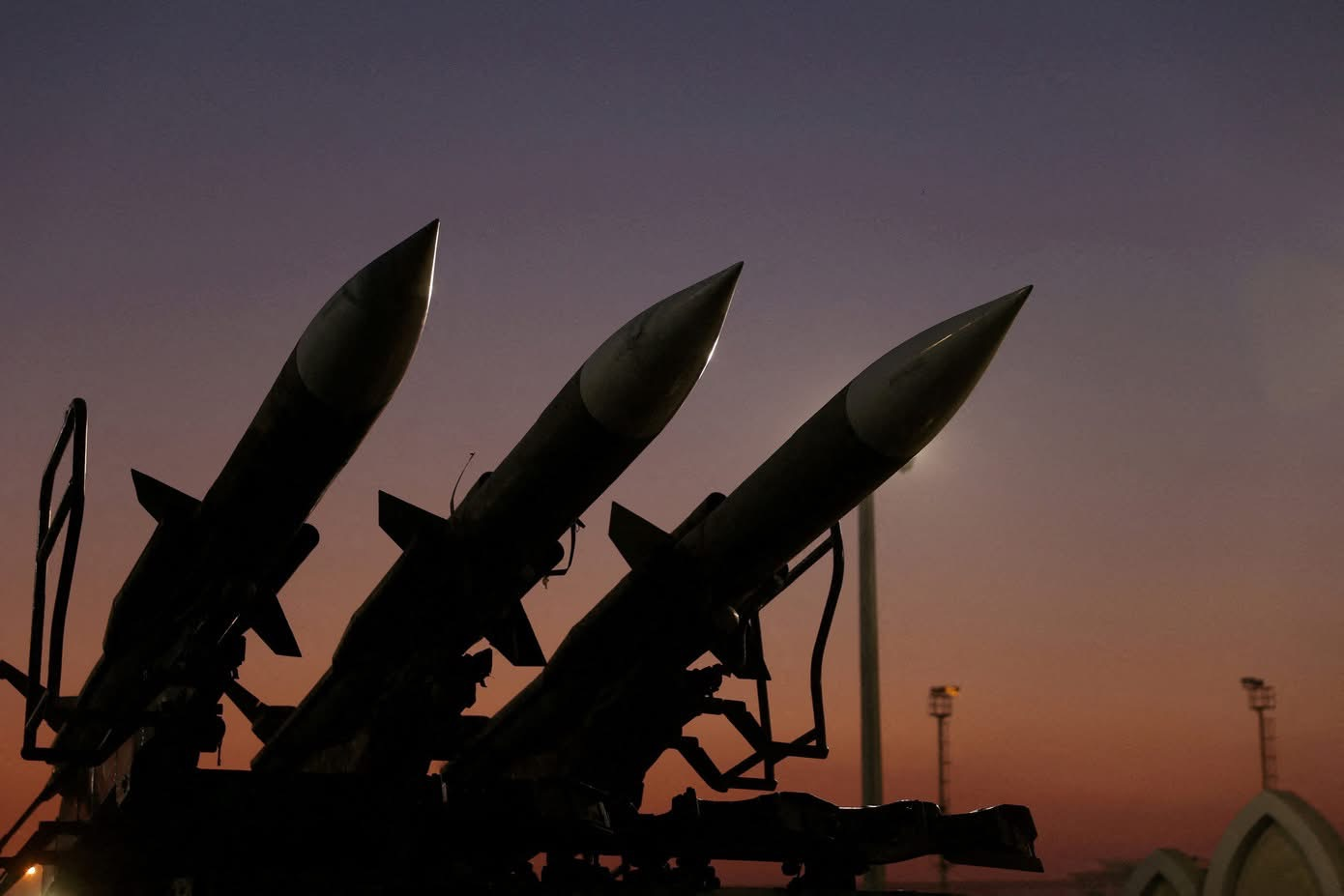
The proposal offers a narrow window to restore the June memorandum, but continued military deployments and reciprocal strikes underline how little trust remains between Washington and Tehran.
MARKET INSIDER — Regional mediators have proposed a 10-day ceasefire between Iran and the United States to halt their latest military escalation and explore whether an interim agreement reached in June can be revived, a senior Iranian official told Reuters. Tehran has not publicly accepted the proposal, and Washington’s response remains unclear. Iran’s chief negotiator, Mohammad Bagher Ghalibaf, meanwhile accused the United States of reinforcing its military presence while publicly calling for peace, illustrating the mistrust that could prevent a temporary pause from developing into a lasting settlement.
Key takeaways
- Mediators have presented Iran with a proposal for a 10-day ceasefire, according to an unnamed senior Iranian official.
- The pause is intended to revive the interim US-Iran agreement signed on June 17.
- Iran has not formally accepted the plan, and no US commitment has been publicly confirmed.
- Ghalibaf said continued US military deployments contradicted Washington’s stated desire to end the conflict.
- Oil prices eased slightly as markets weighed the diplomatic initiative against continuing attacks and broader shipping risks.
What have mediators proposed?
The proposal would suspend US-Iran hostilities for 10 days, providing mediators with time to identify a path back to the June 17 interim agreement, Reuters reported.
The report attributed the information to a senior Iranian official but did not identify the mediating countries or provide the full terms. Previous negotiations have involved Pakistan, Qatar and Oman, with European governments also supporting efforts to reduce tensions.
The proposal should therefore be treated as an emerging diplomatic initiative—not an agreed ceasefire. As of July 21, neither side had publicly committed to stopping military operations for the proposed period.
The distinction matters because financial markets have repeatedly reacted to reports of progress before the underlying political and military conditions were settled.
What was in the June memorandum?
The June 17 memorandum was designed to create a framework for ending the conflict, restoring commercial traffic through the Strait of Hormuz and beginning negotiations on more difficult issues.
According to previous statements from American, Iranian and Pakistani officials, its principal elements included:
- An end to military operations
- The gradual reopening of the Strait of Hormuz
- The lifting of the US blockade on Iranian ports
- A temporary freeze on further Iranian uranium enrichment
- Negotiations over Iran’s nuclear programme
- Limited sanctions relief and discussions over frozen Iranian assets
- A 60-day process intended to produce a more comprehensive settlement
Important differences remained between the two sides’ descriptions of the memorandum. Iranian officials said Washington had made extensive commitments on sanctions relief and frozen assets, while US statements were more cautious.
The disagreement over implementation, combined with renewed missile, drone and air attacks, prevented the preliminary arrangement from becoming a durable truce.
Why is Iran questioning US intentions?
Ghalibaf, Iran’s parliament speaker and chief negotiator, said the continued arrival of American military equipment in the region contradicted Washington’s public statements about ending the war.
“The Americans continue to bring new military equipment into the region and say they are seeking to stop the war,” Ghalibaf wrote on X, according to the source material.
He added that Iran had become highly experienced in recognising US tactics and had prepared for further action.
“Actions must support those statements, not contradict them,” Ghalibaf said.
His comments carry two messages. Publicly, Iran is presenting the US military build-up as evidence that Washington may be using negotiations to gain time or improve its battlefield position. Strategically, Tehran is signalling that it intends to maintain deterrence even while considering diplomatic proposals.
The US could argue that additional forces are necessary to protect American personnel, bases and regional allies while hostilities continue. Military reinforcement does not by itself prove that Washington has rejected diplomacy. It does, however, make confidence-building substantially more difficult.
Can a 10-day pause revive the agreement?
A temporary ceasefire could help only if both parties use it to address the immediate causes of the agreement’s collapse.
The first requirement would be a clearly defined halt to attacks. Any arrangement would need to specify whether it covered only direct US-Iran strikes or also operations involving Israel, Hezbollah, the Houthis and other Iran-aligned groups.
The second challenge would be verification. The parties would need procedures for reporting alleged violations and determining responsibility before an incident automatically triggered retaliation.
The third would involve military deployments. Iran may seek limits on new US forces entering the region, while Washington is unlikely to reduce its defensive posture without assurances that attacks on its bases and regional partners will stop.
The fourth—and economically most important—issue is the Strait of Hormuz. Any diplomatic progress would need to establish predictable and safe passage for commercial vessels. Questions over demining, Iranian control, inspection arrangements and possible transit restrictions have remained contentious.
Ten days would be insufficient to resolve the nuclear programme, sanctions, frozen assets and regional security. The pause could nevertheless create enough space to restore communications and prevent miscalculation.
Why is the Strait of Hormuz central to the negotiations?
The Strait of Hormuz is the principal route connecting Gulf oil and liquefied natural gas exporters with global markets. Before the conflict disrupted shipping, roughly one-fifth of global oil trade passed through the waterway, according to Reuters.
Iran’s ability to affect maritime traffic gives it substantial negotiating leverage. The United States and its allies, meanwhile, view uninterrupted navigation as a global economic and security priority.
The June framework envisaged reopening the strait to commercial shipping as the US blockade of Iranian ports was lifted. The two sides, however, differed over control and implementation.
Iran has insisted that it must direct demining and regulate passage in coordination with Oman. Washington and other governments are likely to seek stronger international guarantees.
Without a workable Hormuz arrangement, any wider ceasefire would remain economically fragile. A single tanker attack, mining incident or disputed interception could rapidly reverse diplomatic progress and push oil prices higher.
How did financial markets respond?
Oil prices softened in early Asian trading on July 21 as the prospect of mediation partially offset fears generated by continuing military operations.
Brent crude declined 0.4% to $88.87 a barrel, while US West Texas Intermediate traded around $82.47, according to Reuters. Both remained close to their highest levels in more than a month.
The limited decline showed that traders were attaching some probability to de-escalation, but were not yet pricing in a durable settlement.
Risk remained elevated because US and Iranian forces continued exchanging attacks while Yemen’s Iran-aligned Houthi movement threatened a naval blockade of Saudi Arabia. That threat could extend disruption beyond the Gulf to another major shipping route and oil exporter.
Market direction is therefore likely to depend less on diplomatic language than on observable developments:
- Whether attacks actually stop
- Whether Iran formally accepts the 10-day proposal
- Whether Washington endorses the same terms
- Whether commercial shipping through Hormuz improves
- Whether US military deployments stabilise or continue expanding
- Whether Iran-aligned groups join the pause
What does the proposal mean for Asian markets?
Asia is especially exposed because several of its largest economies depend heavily on imported Gulf energy.
Japan, South Korea, China and India could benefit from lower oil prices and safer shipping if the ceasefire takes effect. Energy-intensive manufacturers, airlines and transport companies would also face less pressure on costs.
Conversely, a failed negotiation followed by intensified attacks could weaken Asian currencies, widen trade deficits and increase inflation. Central banks would then face a more difficult balance between supporting economic growth and containing price pressures.
Oil-importing emerging markets are particularly vulnerable because higher crude prices can raise demand for US dollars, weaken domestic currencies and increase government fuel-subsidy expenses.
Why it matters
The 10-day proposal shows that diplomatic channels remain active despite escalating military operations. That is significant because both sides still have economic and political incentives to avoid an unrestricted regional war.
Yet the proposal also highlights how far the peace process has deteriorated. The June memorandum was intended to initiate a permanent settlement; only weeks later, mediators are seeking a short ceasefire simply to preserve it.
Ghalibaf’s language reflects the central obstacle: neither side believes the other’s public commitments without corresponding action.
A temporary pause can reduce immediate risk, but it will become meaningful only if it produces verifiable military restraint, safer maritime traffic and a timetable for implementing the June framework.
Outlook: What should investors watch next?
The first test is whether Iran formally accepts the proposed pause and whether the United States issues a matching commitment. The timing of any ceasefire, its geographical scope and its application to allied forces will also be important.
Markets should then monitor military activity, Strait of Hormuz shipping volumes, tanker insurance costs and Brent crude. A verified reduction in attacks and improved maritime traffic could push some of the geopolitical premium out of oil prices.
Renewed strikes during the proposed window—or disagreement over whether Israel and Iran-aligned groups are covered—would indicate that mediation has again failed. In that scenario, energy prices and safe-haven assets could rise while global equities and oil-importing currencies come under renewed pressure.
