
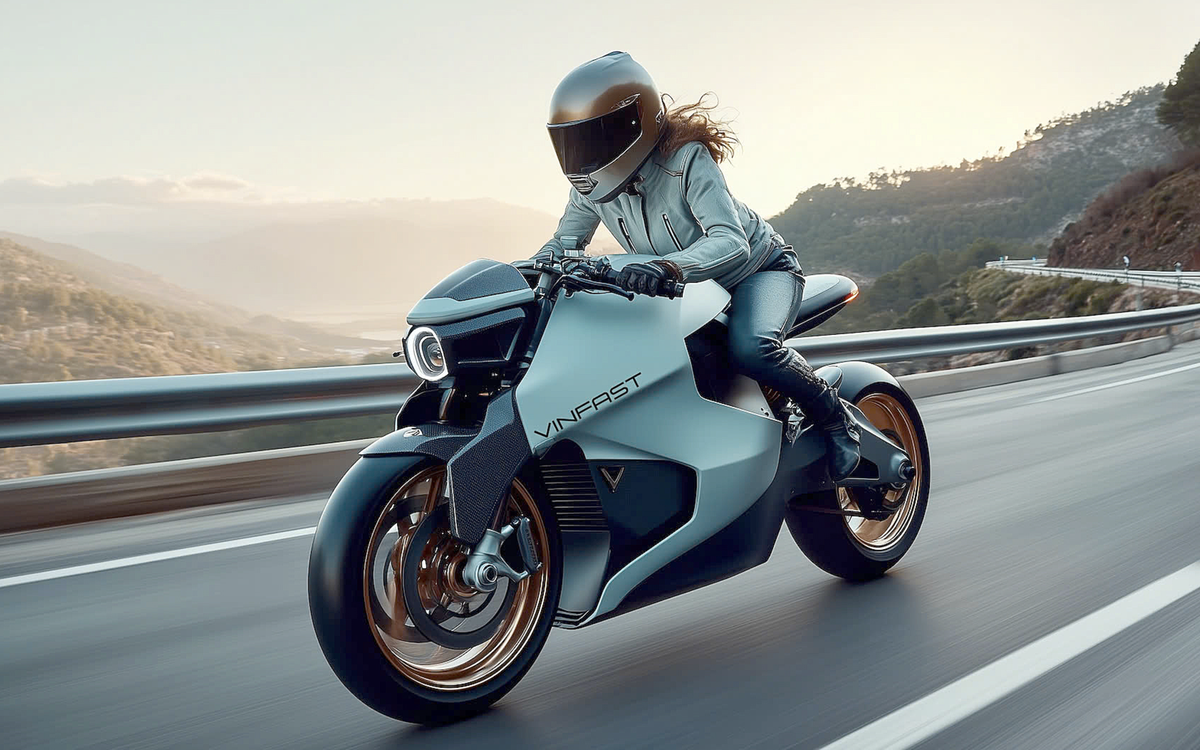
The Vietnamese EV maker is pairing three battery-swappable scooters with retail, charging and after-sales infrastructure as it targets Southeast Asia’s largest two-wheeler market.
MARKET INSIDER — Vietnamese electric-vehicle maker VinFast is opening 20 electric motorcycle dealerships across Indonesia, accelerating its expansion beyond passenger cars in one of the world’s largest two-wheeler markets.
The dealerships, scheduled to hold grand-opening activities from July 19 to 25, will sell and service the Evo, Feliz II and Viper electric scooters. Customers will also be able to test VinFast’s battery-swapping system and home-charging options. The rollout represents an important test of whether an integrated retail-and-energy network can overcome the cost, charging and resale concerns that have limited electric motorcycle adoption in Indonesia.
Key takeaways
- VinFast is opening 20 electric motorcycle dealerships in Indonesia during July. Locations include Jakarta, Bandung, Semarang, Yogyakarta, Medan, Palembang and Makassar. The three launch models use removable lithium iron phosphate batteries.
- VinFast says the scooters can travel as far as 145–150 kilometres with two fully charged batteries. Owners will receive one year of free battery swapping, subject to a maximum of 20 swaps per month.
- Indonesia sells more than six million motorcycles annually, but electric models still account for a small part of the market.
Where are the new VinFast dealerships?
VinFast said the 20 outlets are located across major cities and provinces, including Jakarta, Bandung, Semarang, Yogyakarta, Medan, Palembang and Makassar.
The dealerships will provide vehicle sales and product consultations, test rides, battery-swapping demonstrations, home-charging information, after-sales service, warranty and customer support
The expansion follows VinFast’s early-booking campaign, launched in June, under which customers could reserve an electric motorcycle with a deposit of IDR1 million.
VinFast said the program had attracted thousands of deposits. That figure is a company disclosure, however, and no independently audited order total or conversion rate has been published.
The official campaign offered qualifying buyers a discount of IDR1.6 million and allowed the reservation to be transferred between available models. Details of the early-booking terms are available on VinFast Indonesia’s official website.

Which electric motorcycles is VinFast selling?
VinFast is introducing three models positioned for different groups of urban riders.
| Model | Claimed top speed | Claimed range with two batteries | Positioning |
|---|---|---|---|
| VinFast Evo | 80 km/h | Up to 150 km | Everyday urban commuting |
| VinFast Feliz II | 90 km/h | Up to 145 km | Higher-performance commuting |
| VinFast Viper | 90 km/h | Up to 145 km | Sportier, technology-focused riders |
All three use a 5,200-watt brushless direct-current in-wheel motor and have two battery compartments beneath the seat. Each compartment accommodates a removable 1.5-kilowatt-hour lithium iron phosphate battery.
The stated ranges are based on standard testing conditions. Actual performance may vary according to speed, load, traffic, road conditions, temperature and battery condition.
Customers can either buy a motorcycle with its batteries or choose a subscription arrangement. The batteries may be exchanged at public swapping stations or charged at home.
VinFast’s Indonesian website now lists the Evo, Feliz II and Viper as part of its local product portfolio and provides a tool for locating dealers and charging facilities. VinFast Indonesia
Why is battery swapping central to the strategy?
Electric motorcycles can be charged from conventional power supplies, but charging time and access remain important barriers for riders without dedicated parking or home-charging facilities.
Battery swapping seeks to address that problem by allowing a rider to exchange a depleted removable battery for a charged one within minutes. It is particularly relevant in densely populated cities and for couriers, ride-hailing drivers and other high-mileage users who cannot leave a vehicle charging for long periods.
VinFast is developing the supporting energy network with V-Green, a charging-infrastructure company founded by Vingroup chairman Pham Nhat Vuong.
Under the launch policy described by VinFast, owners will receive free battery swapping for one year at participating V-Green stations, limited to 20 swaps per motorcycle each month.
The benefit may reduce initial operating costs, but its long-term value will depend on the number and location of operational swapping stations, battery availability during peak periods, subscription prices after the free period expires, compatibility across present and future models, battery maintenance and replacement standards and reliability of payment and station-management systems
A battery-swapping model becomes more attractive as its network grows. Conversely, limited station coverage can make customers reluctant to buy vehicles, creating the familiar challenge of building infrastructure and demand simultaneously.
How large is Indonesia’s motorcycle opportunity?
Indonesia is Southeast Asia’s largest motorcycle market, with annual sales exceeding six million units. Motorcycles are essential to commuting, delivery services and household mobility across the archipelago.
Industry data showed approximately 3.13 million motorcycles were sold during the first half of 2026. The Indonesian Motorcycle Industry Association expected full-year sales of roughly 6.4 million to 6.7 million units.
Yet electric motorcycles remain a small segment. Indonesia recorded about 55,000 electric motorcycle sales in 2025, according to Transportation Ministry approval data cited by the Jakarta Globe, compared with more than six million motorcycles sold across the overall market.
That gap gives VinFast substantial potential but also illustrates the challenge. Buyers remain sensitive to purchase prices, battery durability, charging availability, resale value and the convenience of maintaining an unfamiliar brand.
VinFast must also compete with established Japanese manufacturers, domestic electric motorcycle companies and other regional brands. Market leadership cannot be secured through specifications alone; financing, service coverage and spare-parts availability will be equally important.
What did VinFast say?
Vo Thi Cam Tu, managing director of VinFast’s overseas electric scooter business, said the company was seeking to build a complete ownership ecosystem rather than simply introducing electric vehicles.
“The launch of 20 dealerships across Indonesia, together with our battery swapping, charging, and after-sales service network, represents another important step toward realizing that vision,” she said.
VinFast argues that electric motorcycles can offer Indonesian consumers a more economical and sustainable form of transportation. The actual cost advantage will vary depending on purchase price, battery plan, electricity tariffs, daily mileage, maintenance expenses and the residual value of the vehicle.
What warranty does VinFast offer?
The company describes its Indonesian warranty as covering up to “4+2 years” or “60,000+12,000 kilometres,” whichever comes first.
That formulation should be explained carefully to buyers. It appears to distinguish between the core warranty and an additional coverage period, but eligibility, exclusions and covered components depend on the detailed policy.
Customers should confirm whether the battery is owned or rented, which components qualify for the additional two-year coverage, minimum battery-health guarantees, maintenance requirements, warranty transferability, commercial-use or ride-hailing exclusions, and procedures if a swapping station supplies a faulty battery
The warranty and free-swapping offers may reduce perceived ownership risk, but the complete terms are more important than the maximum headline duration.
Why Indonesia matters to VinFast
Indonesia is strategically important to VinFast for three reasons.
First, its enormous motorcycle population provides a larger addressable two-wheeler market than most countries where VinFast currently operates.
Second, two-wheelers offer a potentially lower-cost route to building brand familiarity than passenger cars. A successful scooter business could introduce customers to VinFast’s broader ecosystem, including cars, charging services and energy products.
Third, Indonesia is central to the regional battery supply chain because of its nickel resources and policy focus on downstream electric-vehicle manufacturing.
The dealership opening also shows VinFast extending a strategy already developed in Vietnam: combining vehicle sales with charging, battery services and after-sales support rather than relying on the product alone.
What does the expansion mean for investors?
For VinFast, the rollout expands physical distribution but does not yet demonstrate commercial success.
The most important indicators will be reservation conversion, deliveries and customer usage—not simply the number of dealerships opened. VinFast has not disclosed model-level Indonesian sales targets, final retail prices in the supplied announcement or the capital required to build the swapping network.
Investors should assess whether the company can generate sufficient vehicle volume to support dealership economics and infrastructure investment. If utilisation remains low, the retail and battery networks could increase near-term operating costs without producing proportional revenue.
A successful launch could establish Indonesia as a regional growth platform and provide evidence that VinFast’s integrated ecosystem works outside Vietnam. Weak sales or inconsistent infrastructure deployment would raise questions about the cost of pursuing multiple international markets simultaneously.
What should investors watch next?
The dealership launch is only the first stage. The next measurable tests include final retail and battery-subscription prices, conversion of deposits into completed purchases, monthly motorcycle registrations and deliveries, number of operational V-Green swapping stations, average battery-swapping frequency, dealer service and spare-parts availability, customer financing options, warranty claims and vehicle reliability, progress toward local assembly or component sourcing and cash requirements associated with network expansion
VinFast’s Indonesian motorcycle strategy has a plausible industrial logic: target a vast market with urban-friendly vehicles and address charging constraints through removable batteries.
Its success will ultimately depend less on opening 20 stores than on whether customers find the combined vehicle, battery and service package more convenient and economical than the gasoline motorcycles they already use.
