
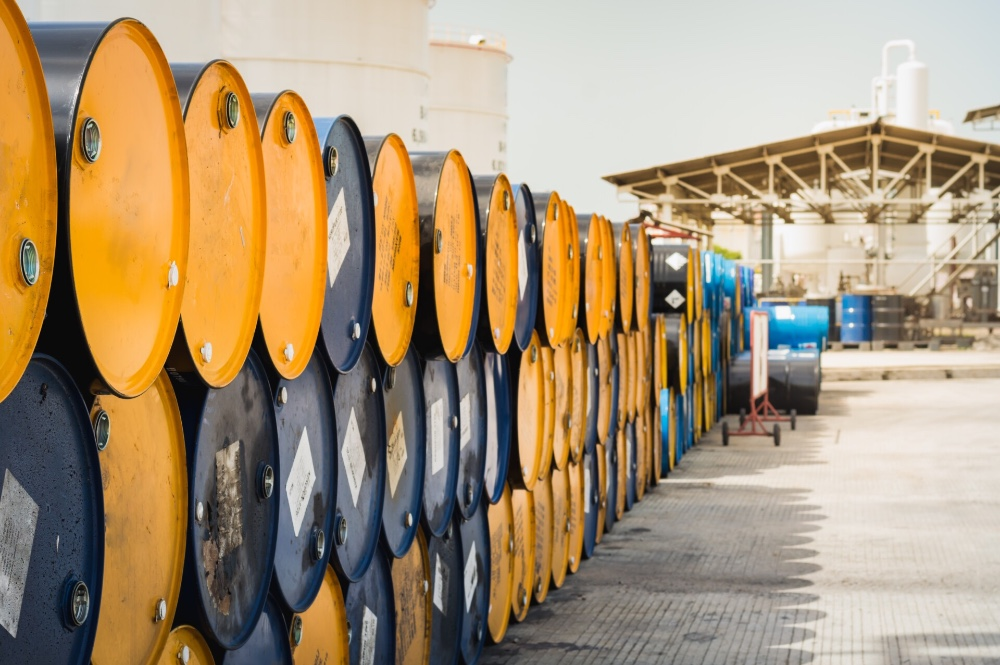
Brent climbed to a six-week high as tanker diversions in the Red Sea, constrained flows through the Strait of Hormuz and a temporary disruption to Kazakh exports intensified fears of a broader energy shock.
MARKET INSIDER — Oil prices extended their rally on Wednesday, July 22, with Brent crude rising above $94 a barrel as escalating Middle East hostilities threatened two of the principal maritime routes serving Asian energy markets.
The latest increase is being driven by more than the immediate loss of physical supply. Traders are pricing in the possibility that disruptions around the Strait of Hormuz could spread to the Red Sea, while a separate interruption involving Kazakhstan’s Black Sea export route adds another layer of risk. Higher freight costs, insurance premiums and longer voyages could tighten effective supply even if oil production remains unchanged.
Key highlights
- Brent rose to around $94.20 a barrel on July 22, its highest level in approximately six weeks. WTI also advanced after settling at $84.91 in the previous session.
- Three tankers carrying Saudi crude for China and India reversed course following a Houthi warning. Saudi crude exports fell to a record-low 3.43 million barrels per day in May.
- Kazakhstan’s principal Black Sea export system temporarily stopped accepting crude after loading operations were suspended.
- The simultaneous threats to Hormuz, Bab el-Mandeb and the Black Sea have strengthened oil’s geopolitical risk premium.
How high have oil prices risen?
Brent futures settled at $91.01 a barrel on July 21, gaining $1.79, or 2%, while US West Texas Intermediate rose $1.68 to $84.91. Both benchmarks closed at their highest levels in about five weeks.
The rally accelerated on July 22. Brent subsequently gained approximately 3.5% to trade around $94.22, its highest level in six weeks, as energy markets reacted to further shipping disruption. Prices remain highly volatile and may change sharply as military and diplomatic reports emerge. Reuters market coverage
The original report’s reference to Brent near $92 and WTI at $84.60 reflected an earlier stage of the session. Those figures should be refreshed before publication because the market has since moved higher.
Why is oil rising so sharply?
The immediate concern is that the conflict involving the United States, Iran and Iran-aligned forces could restrict several energy routes simultaneously.
Traffic through the Strait of Hormuz has already been disrupted by attacks, security risks and military operations. Before the conflict, roughly one-fifth of global oil supplies passed through the waterway, making it the world’s most important petroleum chokepoint.
Saudi Arabia can bypass part of Hormuz by transporting crude through its East-West pipeline to the Red Sea port of Yanbu. That alternative is now also facing uncertainty after Yemen’s Iran-aligned Houthi movement threatened vessels using Saudi ports.
The result is a potential two-sided constraint: reduced Gulf access through Hormuz and increased danger around Bab el-Mandeb, the narrow passage connecting the Red Sea with the Gulf of Aden.
The market is therefore not reacting solely to barrels already removed from circulation. It is assigning a higher probability to delayed cargoes, reduced tanker availability and further disruptions to Saudi exports.
How serious are the tanker diversions?
Three tankers carrying Saudi crude to China and India—Xin Long Yang, Rodos and Amazon—reversed course in the Red Sea after the Houthi warning, according to shipping data reported by Reuters.
The vessels had loaded at Saudi Arabia’s Yanbu terminal and were travelling toward Asia before turning north toward the Suez Canal. Avoiding Bab el-Mandeb could require cargoes to take a substantially longer route around Africa, delaying delivery and increasing fuel, chartering and insurance costs. Reuters tanker report
The development does not yet prove that Saudi exports have been broadly halted. Other vessels have continued operating, and a complete Houthi blockade would be difficult to enforce. Nevertheless, even sporadic attacks or credible threats can discourage shipowners and insurers from accepting the risk.
For market purposes, disruption does not need to take the form of a complete physical closure. Cargo delays and longer routes can reduce the effective capacity of the global tanker fleet, creating temporary scarcity and raising delivered crude costs.
Are Saudi oil exports already under pressure?
Saudi crude exports fell for a third consecutive month in May to 3.434 million barrels per day, according to data submitted to the Joint Organisations Data Initiative.
That was down from 3.986 million barrels per day in April and the lowest level in JODI data extending back to 2002. Saudi crude production recovered modestly to 6.56 million barrels per day, but exports remained constrained.
Domestic crude burning increased to 647,000 barrels per day, while refinery throughput rose to 2.386 million barrels per day. These figures indicate that the export decline cannot be attributed exclusively to maritime disruption; domestic consumption and refining requirements also played a role. Reuters on Saudi export data
The record-low export figure nevertheless leaves the market more sensitive to further shipping problems. If Red Sea risks prevent Saudi Arabia from fully using Yanbu as an alternative outlet, Asian refiners could face longer delays and higher replacement costs.
Why does the Black Sea matter?
Supply concerns are not confined to the Middle East. The Caspian Pipeline Consortium temporarily stopped accepting oil from Kazakh producers after suspending loading operations at its Black Sea terminal following attacks involving tankers near the port.
The CPC system handles most of Kazakhstan’s crude exports and is one of the principal routes bringing non-Russian oil through Russian territory to international markets. A prolonged shutdown could force producers to reduce output because Kazakhstan has limited alternative export capacity.
The initial interruption may prove temporary, but its timing is important. Oil markets are confronting possible disruption at Hormuz, Bab el-Mandeb and the Black Sea simultaneously. Individually manageable incidents can have a larger price effect when they occur across several supply corridors at once.
Is this a real shortage or primarily a risk premium?
At present, the price increase reflects both actual logistical disruption and expectations of what could happen next.
Saudi export volumes have already fallen, some tankers have changed course and Kazakh loading operations have experienced interruption. These are observable constraints. However, the market has not yet lost all Saudi Red Sea shipments, nor has the global oil supply system suffered the most severe scenario implied by current geopolitical threats.
A portion of the rally is therefore a geopolitical risk premium—the additional price buyers are willing to pay to secure supply before conditions deteriorate further.
That premium could unwind quickly if attacks stop, tankers resume normal routes and a credible US-Iran ceasefire emerges. Conversely, a confirmed closure or sustained attack campaign against commercial vessels could turn an anticipatory rally into a genuine physical supply shock.
Why Asia is particularly exposed
China and India are among the largest buyers of Middle Eastern crude, while Japan and South Korea remain heavily dependent on imported energy. Saudi cargoes turning back while travelling to China and India show that the effect is already reaching Asian supply chains.
Longer voyages would increase shipping expenses and could force refiners to compete for cargoes from the United States, West Africa, Latin America or other regions. Refiners designed for particular Middle Eastern crude grades may also face operational and pricing challenges when switching suppliers.
Higher oil prices can weaken trade balances, increase demand for US dollars and put pressure on Asian currencies. They also raise costs for airlines, shipping companies, chemicals manufacturers, construction businesses and road transport operators.
Japan faces additional vulnerability because the yen is trading near multi-decade lows, amplifying the domestic cost of dollar-denominated energy imports. Other Asian central banks may similarly find it more difficult to support growth if oil-driven inflation accelerates.
What does it mean for Vietnam?
Vietnam produces crude oil domestically but remains dependent on imported fuel, refinery feedstock and other petroleum products. A sustained Brent price above $90 would gradually feed into transportation, aviation, fisheries, construction and manufacturing costs.
Higher energy import bills could place pressure on Vietnam’s trade balance and the dong. Domestic retail fuel prices would depend on the timing of government price adjustments, taxes, stabilisation measures and inventory accumulated by distributors before the rally.
Vietnamese upstream oil and technical-service companies could benefit from higher crude prices and renewed exploration incentives. The effect on refiners and fuel distributors would be more complicated because rising feedstock costs do not automatically translate into higher margins.
Investors should therefore avoid treating every oil-related company as a direct beneficiary. Inventory timing, refinery configuration, regulated retail prices, debt levels and contractual arrangements can produce very different earnings outcomes.
Could diplomacy reverse the rally?
A diplomatic settlement remains the clearest downside risk to oil prices.
If negotiations produce a verifiable ceasefire, restore tanker traffic through Hormuz and reduce the Houthi threat around Bab el-Mandeb, part of the geopolitical premium could disappear quickly. Brent fell sharply after previous signs that Gulf traffic was normalising, demonstrating how sensitive the market remains to diplomatic headlines.
However, statements of negotiating intent alone may not be sufficient. Traders will look for observable evidence: fewer attacks, higher vessel traffic, lower war-risk insurance premiums and the resumption of normal loading schedules.
The most serious scenario would involve sustained disruption to both Hormuz and the Red Sea. That would constrain Gulf exports at both ends of Saudi Arabia’s pipeline alternative and create a much larger physical supply problem for Asia.
What should investors watch next?
The most important short-term indicators are tanker movements through Hormuz and Bab el-Mandeb, the status of Saudi loading operations at Yanbu, war-risk insurance rates and any further attacks on commercial shipping.
US inventory figures will provide an additional signal. Analysts surveyed ahead of the latest reports expected crude stocks to decline by roughly 500,000 barrels. Confirmation of a second consecutive weekly draw would reinforce the view that available supply is tightening, although geopolitical developments are currently the more powerful price driver. US Energy Information Administration
Investors should also monitor whether the CPC terminal resumes normal operations and whether Kazakhstan is forced to reduce production. In financial markets, the effects will be visible not only in crude futures but also in inflation expectations, Asian currencies, airline shares, shipping rates and energy-sector equities.
Outlook
Oil’s latest surge is being driven by a rare convergence of risks across three strategically important supply corridors. The market has moved beyond concern about Hormuz alone and is now confronting possible disruption in the Red Sea and Black Sea at the same time.
The current rally does not yet confirm a full-scale global supply shortage. It does show, however, that the system’s alternative routes are becoming less reliable precisely when they are most needed.
A restoration of secure shipping could pull Brent back rapidly. Continued tanker attacks, a prolonged CPC interruption or effective constraints on both Hormuz and Bab el-Mandeb could keep prices elevated and potentially push the market toward another inflationary energy shock.
