
Supplier approval is often presented as an administrative milestone: the quotation has been reviewed, the factory has passed an initial visit and the sample appears acceptable. The manufacturer is then added to the approved supplier list and the project moves forward.
In reality, this decision carries much greater weight. Once approval is granted, engineering information begins to flow more freely, purchasing may negotiate final terms, materials can be reserved and tooling development may start. Internal teams also tend to reduce their attention to alternative suppliers. What was previously a reversible evaluation gradually becomes a commercial and operational commitment.
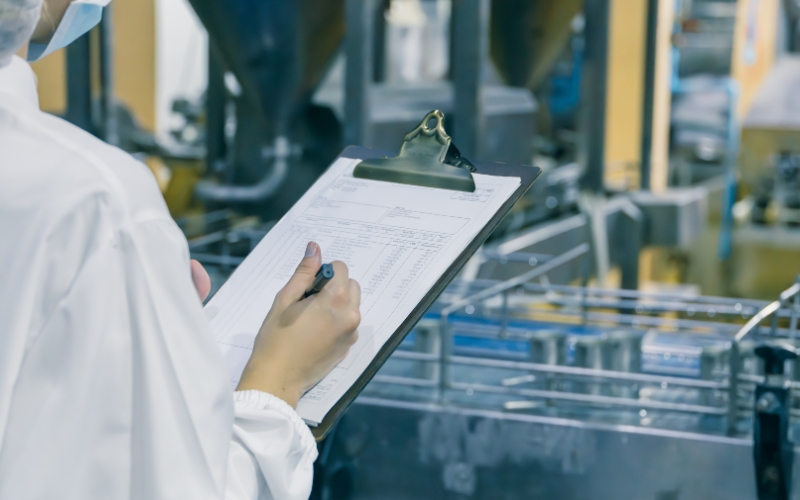
A manufacturing readiness assessment helps determine whether that commitment is justified. Its purpose is not to confirm that a factory looks professional or has experience in the right industry. It establishes whether the product, process, resources and controls are sufficiently prepared for the next stage of the project.
Approval Should Be a Decision Gate
During initial supplier screening, uncertainty is expected. Product requirements may still be refined, quotations may contain assumptions and several factories may be under consideration. At this stage, gaps can be investigated without immediately affecting the production schedule.
Approval changes that position.
After a supplier has been selected, unresolved questions no longer remain isolated assessment points. They begin to affect real activities. An unconfirmed material becomes a purchasing delay. An incomplete drawing causes repeated technical exchanges. A process that was assumed to be internal may turn out to depend on a subcontractor. A lead time that initially appeared competitive may exclude tooling, testing or imported components.
The problem is rarely that every detail must be final before a supplier can proceed. Product development naturally involves open issues. The more important question is whether those issues are visible, assigned and controlled.
A supplier may therefore be ready to continue development without being ready for serial production. Recognising this distinction allows the approval process to support progress without creating premature commitments.
Readiness Starts with a Usable Production Basis
A manufacturer cannot prepare a reliable production approach when the technical information remains inconsistent or open to several interpretations.
Drawings, specifications, samples and performance requirements do not need to be complete in every detail at the beginning of the relationship. They do, however, need to provide a stable basis for feasibility review. The supplier should understand which requirements are fixed, which points remain under discussion and where it is expected to contribute technical recommendations.
Consider an example of steel fabricated structure whose drawings show the overall dimensions but do not define the permitted distortion after welding. The factory may be able to quote material and labour, yet it cannot determine the appropriate jigging method, inspection sequence or rework allowance until the tolerance is clarified. In a consumer product project, the appearance may be well defined while durability, transport conditions or acceptable colour variation remain unspecified. The production route may appear straightforward until those missing requirements are introduced later.
These are not unusual development problems. They become risky when they are hidden behind a general approval decision.
A practical readiness review should identify the open points that can change cost, process selection, lead time or product performance. Each point needs an owner and a deadline linked to the project schedule. This creates a controlled development process instead of leaving the factory to fill technical gaps through assumptions.
It also improves quotation quality. When critical requirements are unclear, suppliers often protect themselves through higher pricing, exclude responsibilities from the offer or provide an attractive quotation that will later require adjustment. Better-defined inputs reduce this ambiguity before commercial expectations become fixed.
The Production Route Must Be Visible
A quotation states what the factory intends to charge. It does not necessarily show how the product will be made.
Before approval, the manufacturer should be able to describe the main production sequence, the equipment involved, the technical resources required and the stages where verification will occur. This does not mean preparing a complete set of final work instructions during supplier evaluation. It means presenting enough detail to show that the proposed process has been considered beyond a sales discussion.
The production route should expose its dependencies. New tooling may be required before a sample can be produced. A dedicated fixture may be needed to maintain alignment during assembly. Testing may depend on equipment that the factory does not currently own. Certain operations may require a trained technician whose availability is limited.
These supporting conditions are often more important than the main equipment list. A factory may own large machining centres but lack the fixture required to hold an irregular component accurately. It may have several assembly lines but no suitable method for testing the finished unit under load. The apparent capacity exists, while the resources that make the process repeatable are still missing.
External processing also needs to be included in this picture. A steel fabricator may perform cutting, assembly and welding internally but send the structure elsewhere for galvanising. The schedule then depends not only on the main factory but also on the coating provider’s capacity, handling practices and inspection process. If the external stage causes distortion or surface defects, responsibility for correction must already be understood.
Readiness is demonstrated when the supplier can connect the product requirements to a realistic sequence of operations and identify what still needs to be prepared. A vague promise that the factory will “arrange everything after the order” leaves too much of the execution model untested.
Materials Can Reshape the Entire Project
Material availability is frequently discussed as a purchasing matter, although it can influence design, cost, quality and delivery at the same time.
A supplier may confirm that a required material is available because a similar grade exists in the local market. The difference only becomes visible when certificates are reviewed or testing begins. Sample quantities may be easy to purchase through a distributor, while serial production requires a direct import with a longer lead time and a much higher minimum order quantity.
An electronics prototype illustrates this gap clearly. A small number of components can sometimes be purchased quickly from local stock or online distributors. Commercial production may require authorised sources, batch traceability and advance orders from overseas manufacturers. The assembly factory may be fully capable, yet the production plan is not ready until the component supply model has been confirmed.
The same issue appears in less technical products. A packaging material may match the expected appearance but fail compression testing. A fabric may have the correct fibre composition while behaving differently during cutting or washing. A substitute coating may reduce lead time but introduce a different surface finish or maintenance requirement.
Material readiness should therefore confirm the exact specification, proposed source, purchasing lead time, minimum quantity and supporting documentation for critical inputs. When alternatives are under consideration, the approval route for those alternatives should be established before they enter production.
This review also reveals commercial risks that a standard factory assessment may miss. A supplier might meet the target price at sample volume but require the customer to absorb excess material caused by a high minimum order. Another may depend on a single imported input that makes the quoted schedule vulnerable to disruption. These conditions do not necessarily disqualify the factory, but they need to be understood before approval.
Quality Must Be Designed into the Process

A general quality system provides a useful foundation, but it cannot replace product-specific planning.
Each project contains characteristics that have a greater influence on function, safety, appearance or assembly than others. Those characteristics need to be identified early enough for the factory to decide where and how they will be controlled. Waiting until final inspection may be ineffective because some defects become difficult to detect or correct once later operations have been completed.
Weld preparation and penetration, for instance, may need verification before coating conceals the joint. Bonding conditions may need to be monitored during assembly rather than assessed only through the appearance of the finished product. Internal packaging protection cannot be judged reliably after the carton has already failed during transportation.
The readiness discussion should therefore cover the logic of control, not merely the existence of inspectors. The supplier needs to understand which results will be measured, when checks will occur, what equipment will be used and how non-conforming goods will be isolated.
This planning often uncovers practical gaps. The required measuring device may not be available. The factory may use an inspection method that is too subjective for the agreed tolerance. Records may be maintained at final inspection but not linked to the batch or material lot. A critical outsourced process may return to the factory without sufficient documentation.
These issues are easier to correct while the process is still being developed. Once production has started, adding inspection stages can disrupt workflow, require new equipment and create disagreement over additional cost.
Quality readiness also includes the response to failure. The factory should know who can stop production, how affected units will be identified and when the customer must be informed. A control plan that only describes successful production is incomplete.
A Good Sample Is Only One Form of Evidence
Sample approval is an important achievement, but its meaning should not be overstated.
Development samples are often produced under conditions that differ considerably from normal manufacturing. Senior technicians may perform the work, materials may be selected carefully and adjustments may be made after each operation. This approach is appropriate when the goal is to prove the design or refine construction details.
Serial production introduces a different challenge: repeatability.
More operators become involved, material batches change and production must follow standard instructions rather than constant supervision from the development team. Output targets place additional pressure on cycle time and inspection. A result achieved once through careful manual adjustment may not remain stable when the same process is repeated hundreds or thousands of times.
A footwear factory may create an acceptable development sample with close attention to bonding pressure and curing time. During a larger batch, differences in operator technique or material handling can produce inconsistent adhesion. The first sample confirmed that the construction was possible; the pilot batch reveals whether the process itself is sufficiently controlled.
This is why sample approval and production release should remain separate decisions for projects involving new tooling, unfamiliar processes, strict performance requirements or significant volume. A pilot run can test work instructions, cycle time, inspection effectiveness, material consumption and coordination between production stages under more realistic conditions.
Not every order requires a formal pilot. A repeat product using an established process may move directly into production. The level of validation should match the consequences of failure rather than follow the same procedure for every supplier.
Approval Should Match the Evidence Available
A simple approved-or-rejected status can conceal important differences between suppliers and projects.
One manufacturer may have completed testing, confirmed material sources and demonstrated the required production rate. Another may have produced a successful sample but still be waiting for tooling validation. A third may be technically suitable while relying on an external treatment provider that has not yet been assessed.
Recording all three as fully approved creates a false sense that the remaining risks are equivalent.
A staged approach provides greater control. Full approval can be granted when critical resources, inputs, processes and validation activities have been confirmed. Conditional approval allows selected work to continue while specific issues remain open. Tooling preparation may proceed, for instance, while serial production remains blocked until a pilot run or material test is completed.
The conditions should be precise enough to close. “Improve quality control” gives neither party a measurable target. Requiring the factory to complete a defined batch, submit inspection results and demonstrate performance within an agreed limit creates a clear release point.
Approval should remain on hold when an unresolved issue could materially change product compliance, cost, delivery or production feasibility. An unconfirmed raw material, incomplete tooling or unsupported capacity promise may affect the entire project rather than a minor operational detail.
This does not mean rejecting the supplier. It means keeping the decision aligned with the evidence currently available.
Conclusion
Supplier approval should mark the point at which a project moves from evaluation into controlled execution.
That transition requires more than a positive factory visit, an attractive quotation or one acceptable sample. The product information must provide a workable basis for planning, the proposed production route must be credible and critical materials, external processes and quality controls must be understood.
The strongest approval decisions also recognise that readiness develops in stages. A supplier may be prepared for technical development before it is ready for pilot production, and prepared for a pilot before it is released for full-scale manufacturing.
By connecting each stage to clear evidence, companies can maintain project momentum without hiding unresolved risks behind a general approval status. The result is not a process without uncertainty, but one in which the remaining uncertainty is visible, assigned and proportionate to the next commitment.
