
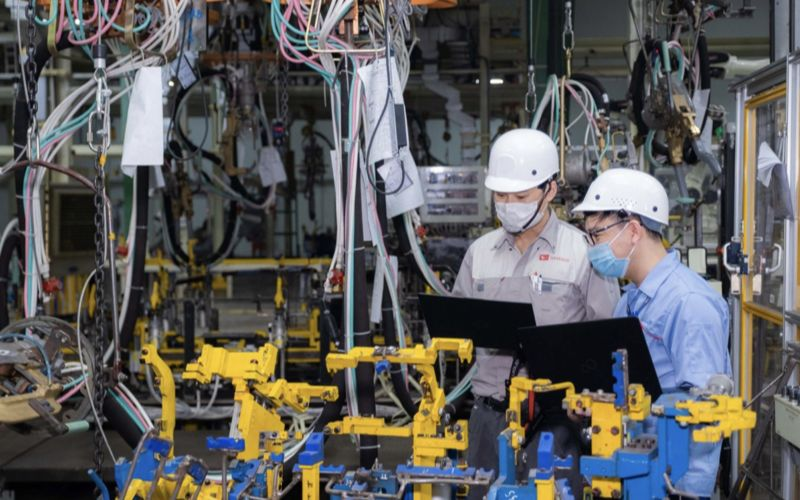
Vietnam’s industrial machinery manufacturing ecosystem extends beyond companies producing complete machines and equipment. It also includes component manufacturers, machining and metal fabrication specialists, engineering providers, and businesses offering assembly, testing, and other industrial services.
For international buyers, this creates several ways to work with Vietnamese manufacturers. Depending on the project, a company may source a complete machine, commission the production of specific components, or work with multiple suppliers to support different stages of manufacturing.
Understanding how these capabilities fit together is essential when evaluating Vietnam as a manufacturing destination. The right partner depends not only on the product being purchased, but also on the processes, technical expertise, and level of integration required.
What Makes Up the Ecosystem?
Vietnam’s industrial machinery ecosystem can be broadly divided into several interconnected groups.
Machinery and equipment manufacturers are responsible for producing complete machines, production equipment, and customized industrial systems. Depending on the project, they may handle engineering, assembly, testing, and final delivery themselves or work with external suppliers.
Component and parts suppliers provide the individual elements required for machinery production. These can include precision-machined parts, fabricated metal components, structures, and other custom-made parts based on technical drawings.
A third layer consists of specialized manufacturing services. CNC machining, sheet metal fabrication, welding, surface treatment, and other processes allow machinery manufacturers to source specific capabilities without having to perform every operation in-house.
The ecosystem is also supported by engineering, assembly, testing, and maintenance services. These capabilities become particularly relevant for customized equipment or projects involving complex technical requirements.
Vietnam’s supporting industries have expanded in recent years, with domestic manufacturers investing in CNC equipment, automation, ERP systems, and other production technologies. At the same time, industry reports continue to identify technology and higher-value manufacturing capabilities as areas that require further development.
How the Ecosystem Works
In practice, industrial machinery manufacturing often involves collaboration between a lead manufacturer and a network of specialized suppliers. While the lead manufacturer oversees the overall project, certain components or processes may require external expertise. The ability to manage these relationships is therefore an important part of delivering complex industrial equipment.
This becomes particularly relevant when international companies look to expand their manufacturing operations in Vietnam. Beyond identifying a factory with the right machinery, they need to understand how production responsibilities are distributed, which capabilities are available in-house, and how external suppliers are managed.
A practical example comes from a project supported by FVSource, a Vietnam-based market entry and contract manufacturing consultancy.
The project involved a German company specializing in large industrial machinery for the furniture industry. Already working with a manufacturing partner in Vietnam, the company was exploring an additional production facility to expand its capacity while maintaining its engineering and quality standards.
A key part of the assessment was understanding whether potential manufacturers could manage the technical requirements of the equipment, including any processes that might need to be handled by specialized subcontractors.
FVSource supported the identification and evaluation of potential partners, examining their manufacturing capabilities, engineering resources, production capacity, quality management systems, and ability to coordinate external suppliers.
The project illustrates why understanding a manufacturer’s wider production network matters. For international buyers, a reliable manufacturing partner is one that can take responsibility for the complete project while effectively coordinating the specialized capabilities it requires.
What Can International Buyers Source?
Vietnam offers several manufacturing options for international buyers, depending on their technical requirements, production volumes, and the level of manufacturing support needed. These opportunities can be grouped into three main categories.
Complete Machinery and Equipment
Vietnamese manufacturers can produce complete industrial machinery, production equipment, and customized systems based on specific project requirements. Depending on the manufacturer’s capabilities, these projects may involve engineering, fabrication, assembly, and testing before final delivery.
Components and Sub-assemblies
International buyers can source precision-machined parts, fabricated metal structures, and sub-assemblies used in larger industrial equipment. These components are typically manufactured according to technical drawings and specifications, allowing companies to integrate Vietnamese suppliers into their existing production processes.
Contract Manufacturing and Specialized Processes
Companies can also work with Vietnamese manufacturers for contract manufacturing, prototyping, and production based on existing designs. Specialized services such as CNC machining, welding, sheet metal fabrication, and surface treatment allow businesses to outsource specific manufacturing operations according to their technical and production needs.
These options allow international buyers to determine which parts of their manufacturing projects can be supported in Vietnam, whether through complete equipment production, component manufacturing, or specialized industrial services.

What Should Buyers Evaluate?
Industrial machinery projects often involve components and systems produced by different manufacturers. For international buyers, a key consideration is whether these elements can be integrated into equipment that performs reliably and meets the required technical specifications.
Component compatibility and system integration are critical. Mechanical parts, electrical systems, control units, and, where applicable, hydraulic or pneumatic components must function together. Buyers should verify how technical interfaces are defined, who is responsible for integration, and how compatibility issues are addressed.
Engineering changes and technical coordination require particular attention when multiple suppliers are involved. Updates to technical drawings, component specifications, or the bill of materials (BOM) need to be communicated consistently. A change to one component can affect other parts of the machine, potentially causing assembly problems, rework, or production delays.
Critical component dependencies and lead times can influence the entire production schedule. Specialized motors, drives, PLCs, and other essential components may have limited local availability or extended procurement times. Buyers should assess these dependencies early and understand how manufacturers manage component availability and approved alternatives.
System-level testing and acceptance are equally important. Individual components may meet their specifications but still require verification once integrated into the complete machine. Depending on the equipment, factory acceptance testing (FAT) can be used to assess functionality, performance, and safety against agreed requirements before shipment.
Spare parts and long-term technical support should also be considered, particularly for machinery exported to overseas markets. Access to replacement components, maintenance documentation, and technical assistance can significantly affect equipment downtime and operational continuity. Applicable machinery safety and conformity requirements in the destination market should also be verified.
These considerations help international buyers evaluate the reliability of the complete manufacturing process, particularly where multiple suppliers and technical systems contribute to the final equipment.
Conclusion
Vietnam’s industrial machinery manufacturing ecosystem is not built around a single type of manufacturer. It is a network of machinery producers, component suppliers, specialized processors, engineering providers, and supporting industrial services.
For international buyers, this creates opportunities to source complete equipment as well as individual components and manufacturing processes. But navigating the ecosystem requires looking beyond a supplier’s product catalogue and verifying its actual technical capability, quality system, production capacity, and ability to support the project.
The objective is therefore not simply to find a factory in Vietnam, but to identify the manufacturing partner whose capabilities fit the requirements of the project.
