
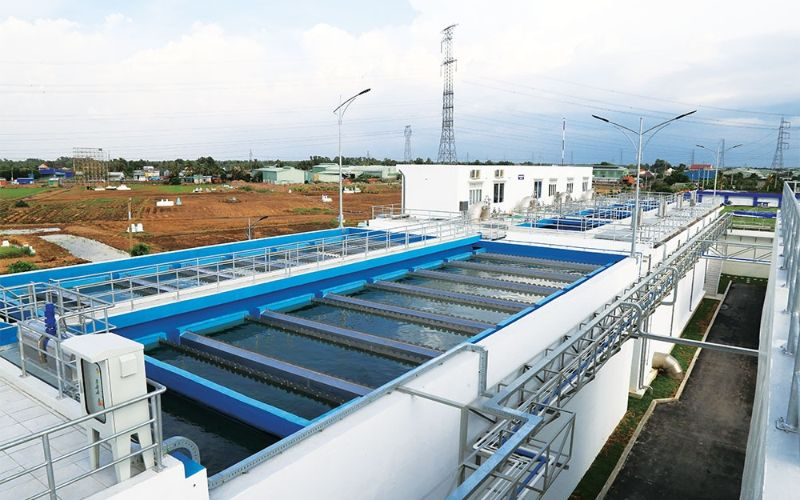
Vietnam’s wastewater sector is becoming an increasingly important part of the country’s infrastructure agenda. Rapid urbanization, industrial expansion, and tighter environmental requirements are putting more pressure on existing treatment systems. At the same time, businesses are paying closer attention to water consumption, reuse, and operational efficiency.
The result is a market with a clear underlying need for investment. But wastewater is not a single investment opportunity. Municipal treatment plants, industrial facilities, water reuse systems, and supporting services each have different customers, economics, and levels of complexity.
For investors, the question is therefore not simply whether Vietnam needs more wastewater infrastructure. It is where demand is strongest, which projects can generate sustainable returns, and what challenges need to be addressed before capital is committed.
Why Vietnam’s Wastewater Sector Is Attracting Investment
Vietnam’s urban population has grown rapidly over the past two decades, while industrial parks and manufacturing facilities have expanded across the country. More people and more production inevitably mean more wastewater.
Infrastructure has not always developed at the same pace. Wastewater collection networks and treatment facilities remain unevenly distributed, particularly outside the largest urban centers. In some locations, existing plants also need upgrades as populations and industrial activity increase.
This creates a relatively straightforward investment case: treatment capacity needs to expand, existing infrastructure needs to be improved, and collection systems need to connect more users to treatment facilities.
Regulation adds another layer to the opportunity. Wastewater management is no longer only an environmental concern for public authorities. Industrial companies must also manage discharge requirements as part of their wider compliance obligations. For manufacturers operating in Vietnam, reliable wastewater treatment is becoming part of the cost and risk of running a facility.
That combination of infrastructure demand and compliance requirements gives the sector a stronger commercial foundation than it had when wastewater treatment was viewed mainly as a public-service issue.
What Is Driving Investment Demand?
Urbanization and Infrastructure Expansion
Vietnam’s cities continue to expand, creating demand for water and wastewater infrastructure. New residential areas, commercial developments, and urban districts all add to the volume that existing systems need to handle.
The opportunity is not limited to building entirely new treatment plants. Existing facilities may require additional capacity, modernization, or improvements in efficiency. Collection networks are equally important because a treatment plant has limited value if wastewater cannot be effectively collected and transported to it.
This creates several layers of infrastructure demand, from large centralized facilities to smaller systems serving individual developments or growing urban areas.
Secondary cities may also become increasingly relevant. As development spreads beyond Hanoi and Ho Chi Minh City, wastewater infrastructure will need to catch up with urban growth in other parts of the country.
Industrial Growth and Environmental Compliance
Industrial wastewater presents a different type of opportunity.
Vietnam has attracted significant manufacturing investment in sectors ranging from electronics and machinery to textiles, food processing, chemicals, and other industrial activities. These facilities generate wastewater with different characteristics and treatment requirements.
Industrial parks therefore need reliable centralized treatment infrastructure, while individual factories may require their own treatment systems before discharge or reuse.
For investors, the commercial logic can be clearer here than in some municipal projects. Industrial operators have a direct need to comply with environmental requirements, maintain production continuity, and avoid operational problems associated with inadequate treatment.
This has created opportunities not only for companies that build treatment plants, but also for technology providers, engineering firms, operators, and companies offering long-term maintenance and treatment services.
Water Reuse and Resource Efficiency
Wastewater investment is also beginning to move beyond the traditional model of simply treating and discharging water.
For some industrial users, treated wastewater can become a potential source of non-potable water for suitable applications. Reusing water can reduce dependence on freshwater supplies and, in some cases, lower long-term operating costs.
This changes the investment proposition. Instead of looking at wastewater solely as something that needs to be disposed of, businesses can increasingly treat it as a resource.
The opportunity will not be the same for every industry or location. Water reuse depends on technical requirements, economics, regulation, and the quality of the treated output. Still, as water efficiency becomes more important, reuse and resource recovery are likely to receive greater attention.
Where Are the Investment Opportunities?

The wastewater value chain offers several entry points, but three areas stand out.
Municipal Wastewater Infrastructure
Municipal wastewater remains one of the largest infrastructure opportunities because many growing urban areas need additional collection and treatment capacity.
Investment can take different forms. Developers may participate in new treatment facilities, upgrade existing plants, or provide infrastructure and services around collection and treatment. Public-private partnership models can also create opportunities for private capital where government authorities seek external financing or operating expertise.
The scale can be attractive, but municipal projects tend to involve longer development cycles and more complex relationships with public authorities. Investors therefore need to assess not just technical feasibility, but also the project’s funding structure, tariff arrangements, approvals, and long-term operating model.
Industrial Wastewater Treatment
Industrial wastewater may offer a more commercially focused entry point.
Factories and industrial parks need treatment solutions that match their production processes and discharge requirements. As industrial activity grows, demand can emerge for new systems as well as upgrades to existing facilities.
Opportunities range from engineering and construction to equipment supply and long-term operation. In some cases, a treatment provider can work directly with an industrial customer rather than depending on a municipal funding structure.
The diversity of manufacturing in Vietnam also creates room for specialized solutions. A food-processing facility, electronics manufacturer, and chemical plant will not necessarily have the same wastewater profile, which means investors with strong technical capabilities can potentially compete through specialization rather than scale alone.
Water Reuse and Resource Recovery
Water reuse is a smaller but potentially higher-value part of the market.
Industrial users that consume substantial amounts of water may have an economic incentive to recover and reuse treated water where the technical and regulatory conditions allow it. Treatment technologies that improve water quality, reduce sludge, recover energy, or capture other useful resources can also create additional value.
For technology companies, this can provide an alternative route into the Vietnamese market. Rather than financing an entire infrastructure project, they may supply technology or partner with local engineering and operating companies.
What Could Limit Investment?
The size of the wastewater need should not be confused with the number of projects that are immediately investable.
Regulatory and Institutional Complexity
Wastewater projects can involve multiple stakeholders, particularly on the municipal side. Government authorities, utilities, developers, industrial operators, contractors, and technology providers may all have different responsibilities.
Approvals and environmental requirements can affect project schedules, while the division of responsibilities between public and private parties can influence how a project is financed and operated.
For foreign investors, understanding this institutional environment can be just as important as selecting the right treatment technology.
Project Economics and Bankability
Wastewater infrastructure is capital-intensive. Treatment plants, collection networks, pumping systems, and related infrastructure can require substantial upfront investment, while returns may take years to materialize.
This makes the revenue model critical.
A project may address a genuine environmental need but still struggle to attract private capital if tariffs, payment mechanisms, customer commitments, or other revenue sources do not provide sufficient visibility.
Industrial projects can sometimes offer a more direct commercial relationship with the customer. Municipal projects, meanwhile, may require more careful consideration of public funding, tariffs, concessions, or partnership structures.
In other words, demand alone does not make a wastewater project bankable.
Infrastructure and Execution
Treatment plants are only one part of the system. Collection networks, connections, pumping infrastructure, land availability, and long-term operations can all determine whether an investment performs as expected.
Operations and maintenance deserve particular attention. Wastewater assets are not simply built and left to operate. Treatment performance depends on continuous monitoring, equipment maintenance, process control, and skilled personnel.
Investors that underestimate these requirements may find that an apparently attractive project becomes more difficult to operate profitably over time.
What Does This Mean for Investors Entering Vietnam?
The most suitable entry point will depend on the investor’s capabilities and preferred level of risk.
Infrastructure developers may find larger opportunities in municipal treatment and collection projects, particularly where public authorities are looking for private participation.
Industrial companies have a more direct route through on-site treatment, water reuse, and efficiency projects. For manufacturers with high water consumption, these investments can serve both environmental and operational objectives.
Technology providers, meanwhile, do not necessarily need to finance entire projects. Partnerships with local EPC contractors, developers, operators, and industrial customers can provide a way to enter the market while limiting capital exposure.
Whatever the model, investors should assess the project rather than the market headline. Regulatory conditions, customer commitments, capital requirements, technology suitability, operating costs, and long-term revenue visibility all matter.
Local partnerships can also be valuable. Vietnamese partners may bring knowledge of permitting, construction conditions, customer relationships, and local project development that is difficult to build from outside the market.
Outlook: From Wastewater Treatment to Water Management
Vietnam’s wastewater sector is likely to remain a long-term infrastructure opportunity as cities expand and industrial activity continues to develop.
The direction of the market is also changing. Future projects will not necessarily focus only on increasing treatment capacity. Greater attention is likely to go toward improving efficiency, reusing treated water, reducing freshwater consumption, and recovering value from wastewater where the economics support it.
That shift could broaden the market beyond traditional infrastructure developers. Technology companies, industrial service providers, EPC contractors, and specialist operators may all have roles to play.
The key question is whether Vietnam can develop project structures that turn growing environmental needs into commercially viable investments. Better coordination between public authorities, industrial users, developers, and private capital will be important in making that happen.
Conclusion
Vietnam’s wastewater sector offers a growing range of investment opportunities, driven by urbanization, industrial development, environmental compliance, and increasing interest in water efficiency.
The opportunity, however, is not uniform. Municipal infrastructure can offer scale but may involve more complex public-sector structures. Industrial treatment can provide clearer commercial demand, while water reuse and resource recovery open the door to technology-led opportunities.
For investors, success will depend on looking beyond the size of the wastewater problem. The strongest opportunities are likely to be projects where real demand is matched by a workable revenue model, clear regulatory conditions, capable operators, and a realistic path to long-term returns.
