
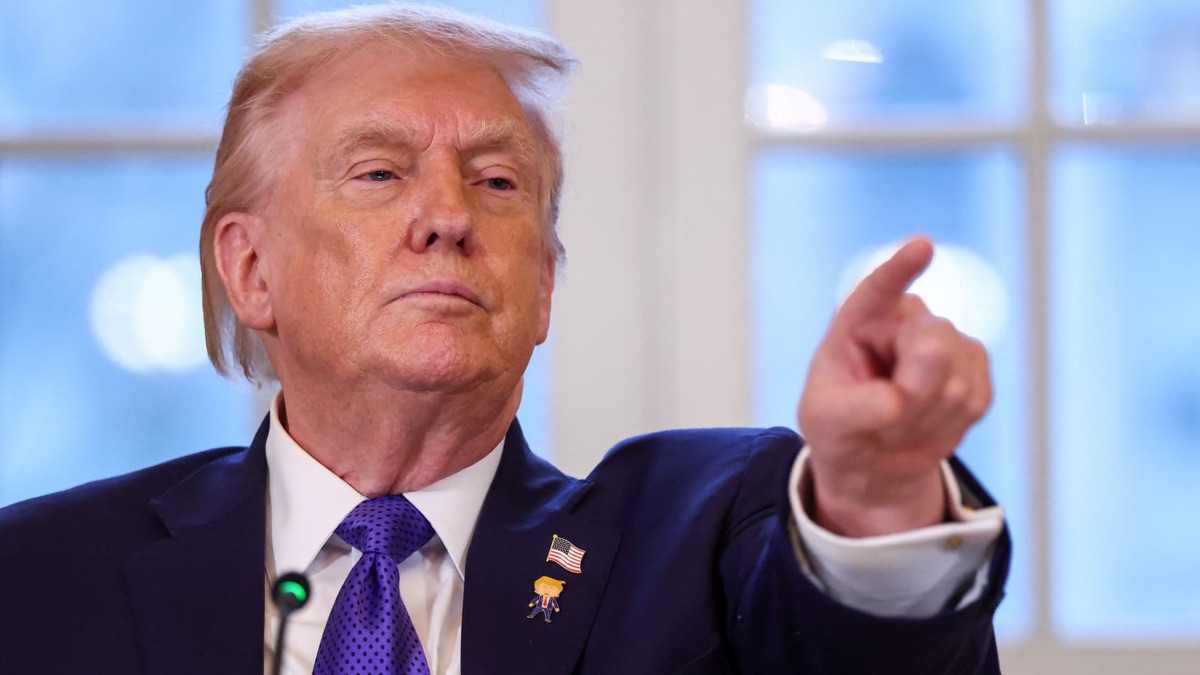
The White House is seeking to isolate Tehran by targeting oil buyers, banks, shipping networks and foreign governments, but the campaign’s effectiveness will depend heavily on China and the UAE.
MARKET INSIDER — U.S President Donald Trump has announced an intensified campaign of “economic warfare” against Iran, warning that countries, financial institutions and companies providing Tehran with an economic lifeline could face severe U.S. penalties.
The threat expands Washington’s existing Economic Fury sanctions campaign following the collapse of a 60-day negotiating period. Its immediate market impact was limited, with Brent crude trading near $92 a barrel, but the consequences could become more significant if the U.S. aggressively targets Chinese oil buyers or Iran responds by escalating attacks around the Strait of Hormuz.
Key Highlights
- Trump threatened penalties against countries and businesses supporting Iranian oil sales, banking transactions, currency swaps, ship registrations and sanctions-evasion networks.
- The UAE’s suspension of trade and financial dealings with Iran removes one of Tehran’s most important commercial and foreign-currency channels.
- China will determine the campaign’s effectiveness, but aggressive secondary sanctions risk retaliation and additional disruption to global energy markets.
Trump promises unprecedented economic isolation
In a Truth Social post, Trump said the United States would launch what he described as the most severe economic operation ever imposed on a country.
“This will be Economic Warfare and Isolation on an unprecedented scale,” the president wrote, accusing Tehran of rejecting repeated opportunities to reach an agreement.
Trump said foreign banks, companies, airports, government agencies and other entities helping Iran could face “tremendous” economic consequences. He specifically identified oil smuggling, currency-swap arrangements, cash transfers, exchange houses, ship registries and front companies as channels Washington intends to close.
The statement did not specify the exact sanctions, tariff measures or financial restrictions to be imposed. The practical consequences will therefore depend on how the Treasury Department and other agencies implement the policy.
Trump also claimed that Iran’s navy, air force and military-production facilities had been destroyed, its currency had become worthless and its government was “hanging by a thread.” These are presidential assertions rather than independently verified assessments of Iran’s remaining capabilities.
Economic Fury has already targeted global networks
The announcement expands a campaign the Treasury Department has pursued since April under the Economic Fury label.
Previous measures have targeted Iranian oil sales, foreign exchange houses, shadow banks, weapons-procurement networks, crypto exchanges and vessels operating in Iran’s shadow fleet.
In April, the Treasury sanctioned a Chinese independent refinery and approximately 40 shipping companies and vessels accused of handling Iranian petroleum. Officials have also warned that foreign financial institutions facilitating Iranian transactions could face secondary sanctions.
In June, Washington designated Iran’s largest digital-asset exchange, Nobitex, and three other Iranian platforms, accusing them of helping sanctioned actors transfer money and evade restrictions.
Treasury has additionally targeted networks that allegedly disguised Iranian liquefied petroleum gas as Omani supply and used front companies, bank accounts and maritime infrastructure in China and the UAE, according to U.S. Treasury Department
The new threat signals that Washington may move beyond targeting individual entities toward a broader effort to force governments and major commercial institutions to choose between Iran and access to the U.S. financial system.
UAE embargo closes a critical economic route
The campaign gained significant momentum after the United Arab Emirates suspended all trade, commercial exchanges and financial transactions with Iran.
Abu Dhabi announced the embargo after reporting that two ballistic missiles launched from Iran and directed toward maritime traffic had fallen into the sea. Iran denied responsibility and called the accusation baseless.
The allegations have not been independently established, making attribution an important point of caution. The economic decision, however, is confirmed.
Before the war, the UAE was Iran’s largest source of imported goods, supplying more than 30% of its imports in 2024, according to World Trade Organization data.
Dubai has also served as an important center for Iranian exchange houses, re-export businesses and commercial intermediaries. Its proximity, transport links and large Iranian business community made the emirate a critical bridge between Iran and the international financial system.
Suspending formal commerce could restrict Iran’s access to machinery, electronics, consumer goods and foreign currency. It may also make it harder for Iranian companies to establish front businesses or process payments through Emirati institutions.
Enforcement will determine the embargo’s effectiveness. Trade could move through informal channels or alternative hubs, while intermediaries may attempt to conceal the origin, destination or beneficial ownership of transactions.
The UAE also faces costs. Abu Dhabi’s stock index fell 0.9% following the missile scare and embargo announcement, while Dubai’s market declined 0.3%. Banks were among the weakest shares. Reuters reported.
China is the decisive test
China presents a much larger challenge than the UAE.
Chinese refiners have been among the most important buyers of Iranian crude, while companies and financial intermediaries in mainland China and Hong Kong have appeared repeatedly in U.S. sanctions announcements concerning oil, shipping and weapons procurement.
Washington can sanction individual refineries, banks, tankers and trading companies. It may also threaten institutions with restricted access to dollar clearing or the U.S. financial system.
However, a broad campaign against major Chinese entities would carry substantial geopolitical and economic risks.
Beijing could retaliate against U.S. companies, restrict exports of strategically important materials or challenge American measures through diplomatic and commercial channels. Chinese buyers may also continue using smaller refiners, local currencies, barter, offshore intermediaries and vessels with obscured ownership.
The pressure campaign will therefore confront a difficult trade-off. Measures limited to smaller intermediaries may not eliminate Iranian exports, while sanctions strong enough to affect major Chinese institutions could intensify the wider U.S.-China confrontation.
Why oil markets reacted cautiously
Brent crude traded near $92 a barrel on Thursday, while West Texas Intermediate remained around $86. Both benchmarks had risen for four consecutive sessions and reached their highest levels since late July.
The restrained reaction suggests traders do not expect Trump’s announcement alone to remove substantial additional supply immediately.
Iranian oil has already been heavily sanctioned, and markets have become accustomed to enforcement announcements. Traders will focus instead on whether Washington can reduce actual export volumes or provoke military retaliation.
U.S. inventory data also moderated the price response. American crude stockpiles unexpectedly increased by 4.4 million barrels, providing evidence of near-term supply availability, according to Reuters
A more aggressive confrontation with Chinese buyers could lift prices by reducing Iranian exports. Conversely, Iran could respond by increasing attacks on commercial vessels or Gulf energy infrastructure, creating a larger geopolitical premium.
Hormuz traffic remains severely depressed
Shipping through the Strait of Hormuz continues to operate far below pre-war levels.
Lloyd’s List Intelligence recorded 73 transits during the week ending August 16, down from 91 in the preceding week. A relatively small group of operators accounted for much of the continuing traffic.
The decline reflects the combined effect of attacks on vessels, high insurance costs and the U.S. blockade of Iranian ports.
This means the global oil market is already operating with a significant security constraint. New economic penalties may have a limited immediate effect if Iranian exports and Gulf shipping are already heavily disrupted.
The greater risk is escalation. If Iran retaliates against the economic campaign by expanding maritime attacks, shipowners could withdraw further and insurance costs could increase across the region.
Implications for Asia and emerging markets
Asian economies are the principal consumers of Gulf energy and therefore face the greatest exposure to any escalation.
China must balance access to discounted Iranian oil against the risk of U.S. penalties. India, Japan and South Korea could face higher import costs if reduced Iranian supply or shipping disruption pushes global prices upward.
Southeast Asian economies would be affected through fuel prices, inflation, exchange rates and freight expenses. Vietnam’s airlines, transport companies, plastics producers, fishing businesses and energy-intensive manufacturers would be particularly sensitive to sustained oil prices above $90.
Financial institutions and commodity traders across Asia should also review exposure to vessels, ship registries, exchange houses and counterparties with indirect Iranian links. Trump’s statement suggests Washington intends to pursue not only direct trading partners but also entities providing logistical or financial support.
What investors should watch
The first signal will be new Treasury designations, particularly whether they target large Chinese banks, refineries or state-connected enterprises rather than smaller intermediaries.
Iranian oil-export volumes will show whether the campaign is reducing revenue or merely changing the routes and entities used to complete transactions.
Enforcement of the UAE embargo will also matter. A sustained shutdown of Dubai-based trade and financial channels would create substantially more pressure than a formal prohibition with extensive informal leakage.
Finally, investors should monitor shipping flows, insurance premiums and attacks around Hormuz. The sanctions announcement itself may not move oil dramatically, but an Iranian military response could.
Trump’s strategy is intended to make Iran economically isolated without relying exclusively on further military action. Its success will depend on whether Washington can persuade—or coerce—major trading partners to participate without provoking a broader confrontation that damages global energy supplies.
