
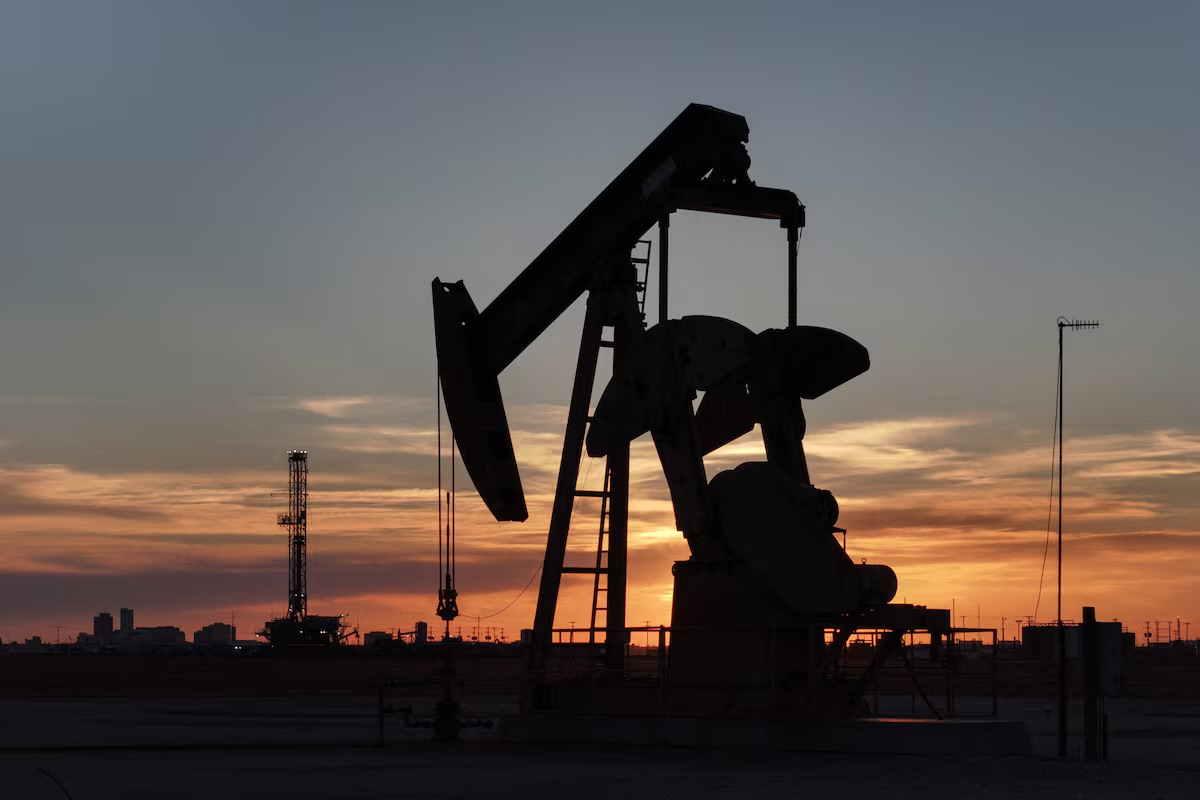
Oil’s renewed advance puts energy costs back in focus for investors, with Asian importers exposed to both higher crude prices and potential shipping disruption.
MARKET INSIDER — Brent crude climbed above $112 a barrel Thursday as reports of preparations for renewed U.S. and Israeli strikes against Iran increased concerns about Middle Eastern oil supplies.
Brent futures rose 3.1% to $112.20 a barrel at 4:12 a.m. Eastern Time, while U.S. West Texas Intermediate gained 2.79% to $99.86.
The rise followed reporting that military planners were preparing options for strikes after November’s U.S. midterm elections. Washington also ordered non-emergency government employees and their families to leave Saudi Arabia amid Houthi attacks. For markets, the immediate question is whether heightened security risks will translate into further disruption to production and shipping.
Key Highlights
- Brent climbed above $112, while WTI approached $100 as concerns about renewed military escalation intensified.
- Reported strike preparations do not establish that a final decision to launch an operation has been made.
- Higher energy costs could pressure inflation and corporate margins, particularly in economies dependent on imported fuel.
Reported military preparations lift oil-market uncertainty
The New York Times reported that U.S. and Israeli forces had developed specific plans for renewed strikes against Iran after the American midterm elections, citing unnamed U.S. officials. Preparations reportedly involve a short, intensive operation.
The report describes military planning rather than an announced decision to carry out attacks. Nevertheless, the prospect of renewed strikes gives traders another reason to reassess the security of regional supply routes. Reporting published by The Business Times also described preparations for post-election strikes.
Separately, State Department spokesman Tommy Pigott said the departure order covered non-emergency U.S. government employees and their families in Saudi Arabia only. He linked the measure to increasing attacks by Iran-aligned Houthis on civilian targets.
That geographic distinction matters: the statement does not describe a blanket departure order across the Gulf.
Reuters also reported a sharp increase in oil prices Thursday as regional attacks heightened concern about supply disruption.
Prices can rise before supply falls
Oil markets price the possibility of future shortages as well as current deliveries.
A greater perceived probability of attacks on export terminals, pipelines or vessels can encourage buyers to secure supplies earlier. Shipowners and insurers may also reassess the cost of operating in affected waters.
These responses can make oil more expensive to deliver even when production continues.
The distinction between physical disruption and a geopolitical risk premium is therefore important. Thursday’s price increase does not, by itself, establish that an equivalent new loss of supply has occurred.
For investors, actual export loadings, shipping activity and delivery delays will help determine whether the price move reflects a lasting deterioration in availability or heightened concern about what could happen next.
Why the economic impact varies
David Wagner, head of equity and portfolio manager at Aptus Capital Advisors, told CNBC that consumers may be better positioned to absorb expensive oil than in earlier decades.
His argument rests on two considerations: crude prices remain below their inflation-adjusted historical peaks, and gasoline accounts for a smaller share of aggregate disposable income than it once did.
That perspective helps explain why a return to triple-digit oil does not automatically produce the same economic consequences as a previous energy shock.
However, aggregate measures conceal substantial differences among households and businesses. People with long commutes or limited transport alternatives may face a heavier burden. Airlines, freight operators and other fuel-intensive businesses can experience significant cost increases even when economy-wide energy spending remains manageable.
The duration of the increase also matters. A brief price spike can be absorbed through inventories, hedging or lower margins. Persistently high prices are more likely to influence purchasing decisions, operating budgets and investment plans.
Inflation risk extends beyond the petrol pump
Higher crude prices can feed into gasoline, diesel and other petroleum products, although the timing and scale depend on refining margins, inventories, taxes and distribution costs.
A sustained increase can also affect freight expenses and production costs. Companies then face a choice between accepting lower margins and passing some of those costs to customers.
For central banks, the challenge is assessing how widely the pressure spreads. An isolated rise in energy prices has different implications from a broader acceleration in wages, services prices and inflation expectations.
Higher oil therefore adds uncertainty to the interest-rate outlook without determining the policy response on its own. Investors will need to assess energy prices alongside underlying inflation and economic demand.
Asian importers face a direct exposure
For Asian economies reliant on imported energy, more expensive crude can raise import bills and reduce purchasing power.
The effect on individual companies depends on their contracts and ability to adjust prices. Airlines and logistics operators may face higher fuel expenses, while manufacturers can encounter additional transport and input costs. Energy producers may benefit from higher selling prices, provided their operations remain secure.
For Vietnam, the implications are similarly uneven. Upstream producers and fuel-consuming businesses have different exposures, while refiners’ profitability also depends on the relationship between crude costs and refined-product prices.
Currency movements can compound the effect. If a local currency weakens against the dollar while dollar-denominated oil prices rise, the domestic cost increase becomes larger.
These are potential transmission channels rather than evidence that every regional market or company will respond in the same way.
What investors should watch next
Official statements on military decisions will be more consequential than additional reports of contingency planning.
Physical indicators will also matter: export volumes, tanker movements, freight costs and insurance availability can reveal whether heightened tensions are constraining deliveries.
Finally, corporate commentary will show how companies are managing the increase through hedging, surcharges or changes to operations. Brent above $112 raises the stakes, but the economic damage will depend on how long prices remain elevated and whether threatened supply disruptions become actual losses.
