
Meta and Tesla beat expectations, but investors remain focused on AI spending, valuations and the economic pressure from rising energy costs.
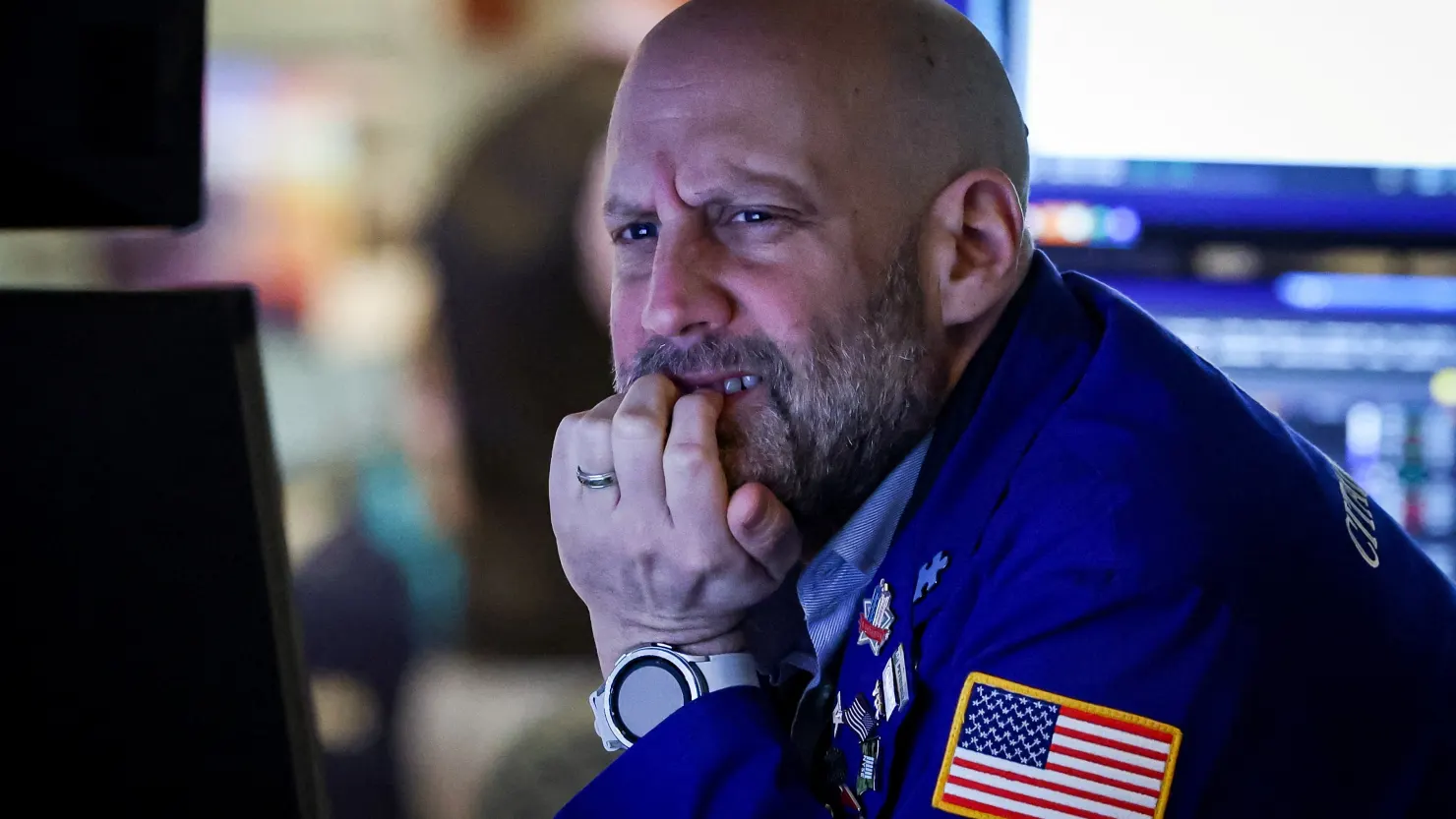
MARKET INSIDER — U.S. stock futures fell sharply Thursday as investors assessed earnings from Meta Platforms and Tesla alongside another increase in oil prices, threatening to interrupt Wall Street’s three-day recovery.
Nasdaq-100 futures dropped 1.8%, while S&P 500 futures declined 1.02% and Dow Jones Industrial Average futures lost 0.66%.
Both technology companies delivered stronger-than-expected quarterly figures, but their shares moved in opposite directions in the supplied premarket snapshot. The divergence highlights the challenge facing this earnings season: strong results must also convince investors that future growth can justify valuations and the expense of expanding AI infrastructure.
Key Highlights
- Nasdaq-100 futures fell 1.8% as rising oil prices added to uncertainty surrounding technology earnings.
- Meta gained 0.74% in the supplied premarket snapshot, while Tesla fell 4.59%, despite both companies beating expectations.
- Meta narrowed its capital-spending forecast by raising the lower end, leaving its maximum planned expenditure unchanged.
Meta offers reassurance on revenue, while spending remains substantial
Meta reported revenue above expectations and issued strong guidance for the current quarter, providing evidence of continued momentum in its business.
Dan Ives, partner and senior managing director at Yorkville Ives, interpreted the results as evidence that AI investment was benefiting Meta’s core operations. He also described spending as better controlled than investors had feared.
However, the change in Meta’s capital-expenditure guidance requires careful interpretation.
The company now expects 2026 capital expenditure, including principal payments on finance leases, of $135 billion–$145 billion, compared with its previous range of $130 billion–$145 billion. It raised the floor while retaining the ceiling, increasing the midpoint of the forecast. This was a narrower spending range rather than a spending cut.
That distinction matters because investors are assessing both the commercial benefits of AI and the cash required to support them.
Strong revenue can help fund expansion, but the longer-term return depends on how effectively new infrastructure improves products, attracts customers or increases profitability. A favourable quarterly report provides evidence on that process without settling the economics of the entire investment programme.
Tesla’s decline shows that an earnings beat is only one test
Tesla reported revenue and earnings above expectations, yet its shares were 4.59% lower in the supplied premarket snapshot.
The reaction illustrates why beating analysts’ quarterly estimates does not guarantee a higher share price. Investors also reassess guidance, investment plans, cash generation and the assumptions embedded in valuations.
Reuters reported that Tesla’s lower annual capital-spending forecast contributed to questions about the pace of its AI and robotics expansion. That adds another consideration beyond the latest quarter’s financial performance.
The contrasting reactions to Meta and Tesla also show why investors cannot apply a single interpretation to changes in spending.
Lower expenditure may improve near-term cash flow, but it can also raise questions about project timing or growth ambitions. Higher spending may support future revenue while increasing the returns a business must generate to justify its investment.
Wednesday’s rally had stronger corporate support
Thursday’s futures decline followed a positive Wednesday session. The S&P 500 extended its winning streak to three days, the Dow gained approximately 360 points, and the Nasdaq Composite closed 1% higher.
Strong SpaceX results helped support technology sentiment, while Micron Technology and Advanced Micro Devices advanced.
Super Micro Computer also lifted its fiscal first-quarter revenue outlook in a preliminary business update. Preliminary figures provide an early indication of performance and remain distinct from the company’s full earnings release.
Nvidia added another signal of continued investment, announcing plans with supply-chain partners to expand manufacturing capacity for its accelerated-computing and AI infrastructure products.
These announcements support expectations of ongoing infrastructure demand. For investors, the next question is how that demand translates into margins and cash flow across suppliers and customers, whose financing requirements differ considerably.
Higher oil prices complicate the earnings outlook
The renewed rise in crude prices introduced a broader economic concern alongside company-specific results.
Elevated energy costs can reduce household spending power and increase expenses for transport, manufacturing and other fuel-intensive businesses. If those costs persist, they may also complicate efforts to contain inflation.
For technology valuations, the potential transmission runs through interest-rate expectations as well as operating costs. Persistent inflation can keep borrowing costs elevated and reduce the value investors assign to profits expected far into the future.
Thursday’s market moves cannot be attributed to oil alone. But the combination of expensive energy and heavy investment commitments makes investors more sensitive to evidence about future returns.
Global declines show the limits of the recovery
European and Asian markets also traded lower in the supplied snapshot.
Europe’s Stoxx 600 declined 1%, while France’s CAC 40 fell 1.34%. South Korea’s Kospi lost more than 1%, Japan’s Nikkei 225 dropped 0.73%, and Hong Kong’s Hang Seng Index declined more than 2%. Mainland China’s CSI 300 eased 0.37%.
For Asian economies, the combination presents competing pressures. Technology suppliers may benefit from continued infrastructure investment, while energy importers face higher costs.
The implications for individual businesses depend on their customer exposure, financing arrangements and ability to pass on expenses. Regional share-price declines alone do not establish that technology orders are weakening.
Earnings and employment data provide the next checks
Thursday’s reporting schedule includes Procter & Gamble, Lockheed Martin, Valero Energy and Honeywell, broadening attention beyond the largest technology companies.
Their results and guidance can help investors assess consumer demand, industrial activity and the uneven effects of energy-market volatility.
Weekly initial jobless claims are also due Thursday morning, offering another indication of labour-market conditions.
The immediate test for equities is whether earnings strength can sustain confidence as investors revise their assumptions about spending and economic costs. Management guidance on margins, financing and cash generation will help determine whether the recent recovery can extend beyond a brief rebound.
